Floor Guard Matting Manufacturing Company Limited — Supplier
About Floor Guard Matting Manufacturing Company Limited - Mats Supplier in China
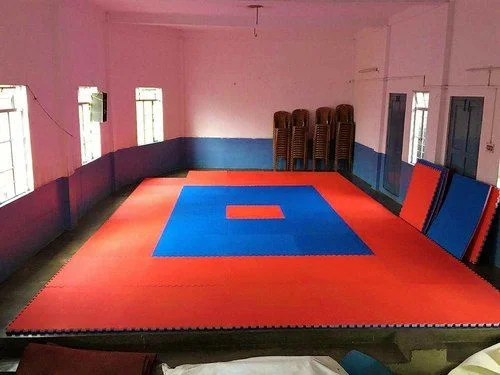
Floor Guard Matting Manufacturing Company Limited is based in China; the precise city or province is not disclosed in the source data. The company lists five active products and classifies its output under the categories “Mats” and “Rubber Items”. The catalogue includes Action Mat, Ris Mat, M4000 Mat, Hexguard, and Anti‑fatigue Mat, each falling within the broader rubber‑based floor protection segment. The product titles indicate a focus on industrial and commercial floor safety solutions, with the HS‑code family for rubber mats typically recorded under chapter 40 of the Harmonized System, though no specific codes are attached to the individual items in the supplied data.
The five listed items cover a range of functional purposes: entrance protection (Action Mat, Ris Mat, M4000 Mat), high‑traffic durability (Hexguard), and ergonomic support (Anti‑fatigue Mat). Industry practice for such products includes specifications such as slip‑resistance ratings (ASTM D2859), load‑bearing capacities measured in kilonewtons, and thicknesses from 5 mm to 15 mm depending on use. Materials are generally natural or synthetic rubber blends, sometimes reinforced with nylon or polyester fibers to improve tear strength. Buyers typically verify compliance with standards like EN 13329 for anti‑fatigue mats or ISO 20345 for safety footwear compatibility, which are independent of the supplier’s own claims.
Product Range and Specialties of Floor Guard Matting Manufacturing Company Limited
The supplier’s catalogue enumerates five distinct mat types: Action Mat, Ris Mat, M4000 Mat, Hexguard and Anti‑fatigue Mat. Action and Ris mats are commonly employed at building entrances to trap dirt and moisture, often produced in 6 mm to 10 mm thicknesses with a rubber density of 1.2 g/cm³. The M4000 Mat is a heavy‑duty variant that can carry loads up to 2 kN per square meter, while Hexguard typically features a hexagonal tread pattern designed for slip resistance on wet surfaces. The Anti‑fatigue Mat targets workplace ergonomics, usually offering a 12 mm to 20 mm thickness and a compression set below 5 % after prolonged use.
In the broader market, rubber floor mats are graded by hardness (Shore A 40‑70), abrasion resistance (ISO 4649), and chemical resistance (ASTM D2240). Standard product specifications also include a minimum tensile strength of 2 MPa and a tear strength above 5 kN. Buyers often request material safety data sheets (MSDS) and third‑party test reports to confirm these parameters before placing orders.
Trade and Export Information - Floor Guard Matting Manufacturing Company Limited
China remains a leading exporter of industrial rubber products, with the majority of shipments destined for North America, the European Union, and Southeast Asian manufacturing hubs. Export logistics for floor mats typically involve 20‑foot or 40‑foot containers, each capable of holding between 1,200 and 2,500 units depending on pallet configuration. Common Incoterms used by Chinese suppliers include FOB Shanghai or CIF Hamburg, reflecting the established maritime routes for bulk floor‑covering materials.
Importers usually require certifications such as CE marking for European markets, ISO 9001 quality management documentation, and SGS or Intertek test certificates confirming slip‑resistance and fire‑retardancy. Regulatory checks often involve customs inspection of HS‑code 4015 (rubber mats) and verification that the product complies with REACH or TSCA chemical restrictions where applicable. Packaging standards favor double‑wall corrugated cartons or shrink‑wrapped pallets to protect the mats during long sea voyages.
Sourcing from Floor Guard Matting Manufacturing Company Limited - Buyer Guidance
Prospective buyers should request a detailed product data sheet that lists material composition, thickness, density, Shore hardness, and load‑bearing capacity for each mat type. In addition, a third‑party laboratory report covering ASTM D2859 slip resistance and ISO 20345 ergonomic compliance is standard practice for validating performance claims. Samples of at least one square meter per model are advisable to assess texture, edge finish, and dimensional stability before confirming a bulk order.
Typical minimum order quantities for Chinese rubber mat manufacturers range from 500 to 1,000 pieces per model, with lead times of 30 to 45 days after order confirmation. Buyers are encouraged to verify the supplier’s export licenses, request the latest ISO 9001 certificate, and confirm that the packaging meets ISPM 15 standards for wooden pallets when shipping to markets with strict phytosanitary regulations.
Frequently Asked Questions About Floor Guard Matting Manufacturing Company Limited
What types of mats are listed in the supplier’s catalogue?
The catalogue includes Action Mat, Ris Mat, M4000 Mat, Hexguard and Anti‑fatigue Mat, all classified under rubber‑based floor protection products.
Are any certifications mentioned for these mats?
No certifications are listed in the supplied data; buyers should request CE, ISO 9001 or SGS test reports as appropriate for their target market.
What material are the mats made from?
The products are described under the broader category “Rubber Items”, indicating they are manufactured from natural or synthetic rubber blends, often reinforced with fibers for strength.
What typical dimensions or thicknesses should a buyer expect?
Industry standards for similar rubber mats range from 5 mm to 20 mm thickness, with densities around 1.2 g/cm³; exact specifications should be confirmed with the supplier’s data sheet.
Which markets commonly import Chinese rubber floor mats?
Major import destinations include the United States, European Union countries, and Southeast Asian industrial regions, reflecting demand in commercial, institutional and manufacturing sectors.
What documentation is advisable to request before ordering?
Buyers should ask for material safety data sheets, slip‑resistance test reports (ASTM D2859), load‑bearing capacity data, and any applicable quality‑management certificates.
What are typical packaging and shipping methods for these mats?
Exports usually use double‑wall cartons or shrink‑wrapped pallets loaded into 20‑foot or 40‑foot containers, with FOB or CIF terms depending on the buyer’s preference.
What is a common lead time for orders from this supplier?
Lead times reported for comparable Chinese rubber‑mat manufacturers are generally 30 to 45 days after order confirmation, subject to production scheduling and shipping arrangements.




 , China