Zhejiang Sanwei Rubber Item Co., Ltd. — Verified Supplier

About Zhejiang Sanwei Rubber Item Co., Ltd. - Conveyor Systems & Parts Supplier in China

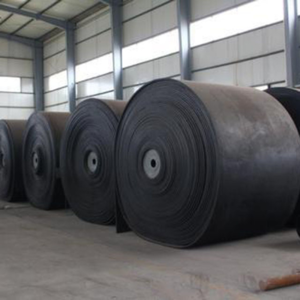
Located in China, Zhejiang Sanwei Rubber Item Co., Ltd. currently lists six active products across its catalogue. The catalogue covers various conveyor belt types including polyester, EP (ethylene‑propene), rubber V‑belt, standard rubber conveyor belt, steel‑cord conveyor belt and nylon conveyor belt. These items fall under the broader categories of Conveyor Systems & Parts, Industrial Machinery, Heavy Machinery and Rubber Items as indicated in the supplier profile. The product list reflects both textile‑reinforced and rubber‑based belt solutions used in material handling.

Each belt is identified by its material composition: polyester fabric with rubber cover, EP rubber compound, vulcanised rubber in V‑shape, steel‑cord reinforced rubber, and nylon polymer construction. The supplier’s catalogue does not provide HS codes, dimensions or performance data, but the six entries represent the typical range of belt technologies supplied by manufacturers in China. The focus on conveyor belts aligns with China’s large domestic production of material‑handling equipment and its export of belt systems to manufacturing hubs worldwide.

Product Range and Specialties of Zhejiang Sanwei Rubber Item Co., Ltd.

The polyester conveyor belt in the catalogue is a fabric‑reinforced belt where polyester yarn provides tensile strength and a rubber cover offers wear resistance. In the industry, polyester belts are commonly supplied in widths from 300 mm to 2000 mm, thicknesses between 3 mm and 12 mm, and tensile strengths of 200 kN to 800 kN, meeting ISO 9001 quality management and often complying with IEC 60204 safety standards.

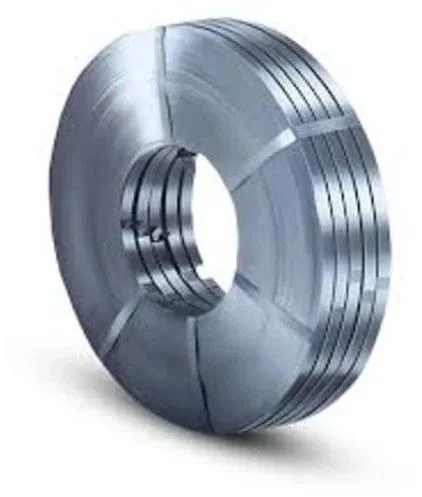
The EP conveyor belt uses an EP rubber compound that delivers good oil and heat resistance, typically graded to ISO 9001 and CE marking, with hardness values around 70 Shore A. Rubber V‑belts are classic power‑transmission belts, usually specified by size series (e.g., V‑Belt 3M, 5M) and hardness 60‑80 Shore A. Steel‑cord belts incorporate high‑strength steel cords, delivering tensile loads up to 1500 kN, while nylon belts provide high elasticity and are rated for temperatures up to 120 °C. These specifications are standard for buyers selecting belts for mining, food processing, or automotive assembly lines.

Trade and Export Information - Zhejiang Sanwei Rubber Item Co., Ltd.

China is among the world’s largest exporters of conveyor belt systems, shipping primarily to Southeast Asia, the Middle East, Europe and North America. HS chapter 40 (rubber and plastics articles) and chapter 56 (textile articles) cover most belt types; typical HS codes include 4010 for rubber belts and 5603 for textile‑reinforced belts. Importers frequently require CE conformity, ISO 9001 certification, and test reports such as tensile strength, elongation and heat‑age resistance. Shipping is usually performed in 20 ft or 40 ft containers, with belts coiled on wooden pallets or cardboard cores.

Buyers of conveyor belts often specify Incoterms CIF or FOB, and they must arrange for pre‑shipment inspection by agencies like SGS or Bureau Veritas, especially for large‑scale projects. Chinese exporters commonly provide product data sheets, material safety data sheets (MSDS) and compliance certificates upon request. The logistics chain benefits from the belts’ compact roll form, allowing efficient loading and reduced freight cost per metre of belt.

Sourcing from Zhejiang Sanwei Rubber Item Co., Ltd. - Buyer Guidance

When sourcing belts from Zhejiang Sanwei Rubber Item Co., Ltd., buyers should request detailed product data sheets that list width, thickness, tensile strength, hardness, temperature range and recommended service life. Samples of a representative length (e.g., 5 m) are useful for onsite testing of fit and performance, and buyers should ask for third‑party test reports that verify ISO 9001 compliance and relevant mechanical properties.

Verification of CE marking or equivalent conformity certificates is advisable before placing a bulk order. Clarify the packaging format - whether the belts are shipped on wooden pallets, in shrink‑wrapped rolls, or in custom crates - and confirm the container size to avoid damage. Lead times for standard belt sizes in China typically range from 4 to 8 weeks, with longer periods for custom widths or reinforced steel‑cord variants.

Frequently Asked Questions About Zhejiang Sanwei Rubber Item Co., Ltd.

What types of conveyor belts does Zhejiang Sanwei Rubber Item Co., Ltd. offer?

The supplier lists polyester conveyor belt, EP conveyor belt, rubber V‑belt, standard rubber conveyor belt, steel‑cord conveyor belt and nylon conveyor belt. These cover both textile‑reinforced and fully rubber‑based belt technologies.

Can the belts be produced in custom dimensions?

Standard belts are available in common widths from 300 mm to 2000 mm and thicknesses between 3 mm and 12 mm. Custom widths, lengths or reinforced constructions can usually be arranged by prior agreement with the supplier.

Which certifications should a buyer verify for these belts?

Buyers should request ISO 9001 quality‑management certification and CE conformity or equivalent regional certification. Additional test reports for tensile strength, hardness and temperature resistance are typical for industrial belt purchases.

What documentation is recommended before placing an order?

Obtain a product data sheet, a material safety data sheet (MSDS), and third‑party test reports that confirm mechanical properties. A compliance certificate (e.g., CE) should also be provided.

What are typical minimum order quantities and lead times?

Minimum orders are often one full roll or a full container load, depending on the belt width and length. Lead times for standard specifications generally range from four to eight weeks after order confirmation.

How are the belts packaged for export?

Belts are typically coiled, shrink‑wrapped and placed on wooden pallets or in cardboard cores. Packaging is designed to protect the belt surface and facilitate loading into 20 ft or 40 ft containers.

Which markets commonly import Chinese conveyor belts?

Major import destinations include countries in Southeast Asia, the Middle East, the European Union and North America. These regions use belts in manufacturing, logistics, mining and food‑processing facilities.

What HS codes are generally applicable to these belt products?

Rubber‑based belts usually fall under HS code 4010, while textile‑reinforced belts are classified under HS code 5603. The exact sub‑heading depends on the material composition and construction of the specific belt.


Other Suppliers in Conveyor Systems & Parts

Top Trusted Suppliers

Related Products in Conveyor Systems & Parts

Trending in Parent Category

More Suppliers in Parent Category

Related Products

Other Suppliers

EximNext
58.5K+ live requirements
Register Free🎁 Reach verified global buyers
Post Requirement
🌍 Trusted by 224.6K+ businesses in 200+ countries|
58.5K+ active requirements right now
✉️ [email protected]
|
Sell on EximNextPost Requirement
EximNext
AgricultureApparelConstructionElectronicFoodHomeIndustrialMineralsMiscellaneous
🔥 Deals|✨ AI Match|🏭 Suppliers|📋 Buy Leads|💰 Trade Finance
58.5K+ live RFQs·194.6K+ suppliers
🎁 Reach global buyers →
EximNext
EximNext
Register Free
🎁 Reach verified global buyers
Sign In
📋Post Requirement💬Get QuotesAI Match📋RFQ Marketplace
All Categories
Services & Tools
🏭Supplier Directory🔥Today's Deals💰Trade Finance
Sell on EximNext
AboutContactBlogHelp
🏭

Zhejiang Sanwei Rubber Item Co., Ltd.

Harbor
Country flag , China
🛡️
56/100
Trust Score

Zhejiang Sanwei Rubber Item Co., Ltd. Product Catalog

Showing 6 of 6 products
View all products →
Steel cord conveyor belt
Harbor
Steel cord conveyor belt
Contact
MOQ: 1 Unit
Nylon conveyor belt
Harbor
Nylon conveyor belt
Contact
MOQ: 1 Unit
Rubber Conveyor Belt
Harbor
Rubber Conveyor Belt
Contact
MOQ: 1 Unit
Rubber v-belt
Harbor
Rubber v-belt
Contact
MOQ: 1 Unit
Ep conveyor belt
Harbor
Ep conveyor belt
Contact
MOQ: 1 Unit
Polyester conveyor belt
Harbor
Polyester conveyor belt
Contact
MOQ: 1 Unit

About Zhejiang Sanwei Rubber Item Co., Ltd. - Conveyor Systems & Parts Supplier in China

Located in China, Zhejiang Sanwei Rubber Item Co., Ltd. currently lists six active products across its catalogue. The catalogue covers various conveyor belt types including polyester, EP (ethylene‑propene), rubber V‑belt, standard rubber conveyor belt, steel‑cord conveyor belt and nylon conveyor belt. These items fall under the broader categories of Conveyor Systems & Parts, Industrial Machinery, Heavy Machinery and Rubber Items as indicated in the supplier profile. The product list reflects both textile‑reinforced and rubber‑based belt solutions used in material handling.

Each belt is identified by its material composition: polyester fabric with rubber cover, EP rubber compound, vulcanised rubber in V‑shape, steel‑cord reinforced rubber, and nylon polymer construction. The supplier’s catalogue does not provide HS codes, dimensions or performance data, but the six entries represent the typical range of belt technologies supplied by manufacturers in China. The focus on conveyor belts aligns with China’s large domestic production of material‑handling equipment and its export of belt systems to manufacturing hubs worldwide.

Product Range and Specialties of Zhejiang Sanwei Rubber Item Co., Ltd.

The polyester conveyor belt in the catalogue is a fabric‑reinforced belt where polyester yarn provides tensile strength and a rubber cover offers wear resistance. In the industry, polyester belts are commonly supplied in widths from 300 mm to 2000 mm, thicknesses between 3 mm and 12 mm, and tensile strengths of 200 kN to 800 kN, meeting ISO 9001 quality management and often complying with IEC 60204 safety standards.

The EP conveyor belt uses an EP rubber compound that delivers good oil and heat resistance, typically graded to ISO 9001 and CE marking, with hardness values around 70 Shore A. Rubber V‑belts are classic power‑transmission belts, usually specified by size series (e.g., V‑Belt 3M, 5M) and hardness 60‑80 Shore A. Steel‑cord belts incorporate high‑strength steel cords, delivering tensile loads up to 1500 kN, while nylon belts provide high elasticity and are rated for temperatures up to 120 °C. These specifications are standard for buyers selecting belts for mining, food processing, or automotive assembly lines.

Trade and Export Information - Zhejiang Sanwei Rubber Item Co., Ltd.

China is among the world’s largest exporters of conveyor belt systems, shipping primarily to Southeast Asia, the Middle East, Europe and North America. HS chapter 40 (rubber and plastics articles) and chapter 56 (textile articles) cover most belt types; typical HS codes include 4010 for rubber belts and 5603 for textile‑reinforced belts. Importers frequently require CE conformity, ISO 9001 certification, and test reports such as tensile strength, elongation and heat‑age resistance. Shipping is usually performed in 20 ft or 40 ft containers, with belts coiled on wooden pallets or cardboard cores.

Buyers of conveyor belts often specify Incoterms CIF or FOB, and they must arrange for pre‑shipment inspection by agencies like SGS or Bureau Veritas, especially for large‑scale projects. Chinese exporters commonly provide product data sheets, material safety data sheets (MSDS) and compliance certificates upon request. The logistics chain benefits from the belts’ compact roll form, allowing efficient loading and reduced freight cost per metre of belt.

Sourcing from Zhejiang Sanwei Rubber Item Co., Ltd. - Buyer Guidance

When sourcing belts from Zhejiang Sanwei Rubber Item Co., Ltd., buyers should request detailed product data sheets that list width, thickness, tensile strength, hardness, temperature range and recommended service life. Samples of a representative length (e.g., 5 m) are useful for onsite testing of fit and performance, and buyers should ask for third‑party test reports that verify ISO 9001 compliance and relevant mechanical properties.

Verification of CE marking or equivalent conformity certificates is advisable before placing a bulk order. Clarify the packaging format - whether the belts are shipped on wooden pallets, in shrink‑wrapped rolls, or in custom crates - and confirm the container size to avoid damage. Lead times for standard belt sizes in China typically range from 4 to 8 weeks, with longer periods for custom widths or reinforced steel‑cord variants.

Frequently Asked Questions About Zhejiang Sanwei Rubber Item Co., Ltd.

What types of conveyor belts does Zhejiang Sanwei Rubber Item Co., Ltd. offer?

The supplier lists polyester conveyor belt, EP conveyor belt, rubber V‑belt, standard rubber conveyor belt, steel‑cord conveyor belt and nylon conveyor belt. These cover both textile‑reinforced and fully rubber‑based belt technologies.

Can the belts be produced in custom dimensions?

Standard belts are available in common widths from 300 mm to 2000 mm and thicknesses between 3 mm and 12 mm. Custom widths, lengths or reinforced constructions can usually be arranged by prior agreement with the supplier.

Which certifications should a buyer verify for these belts?

Buyers should request ISO 9001 quality‑management certification and CE conformity or equivalent regional certification. Additional test reports for tensile strength, hardness and temperature resistance are typical for industrial belt purchases.

What documentation is recommended before placing an order?

Obtain a product data sheet, a material safety data sheet (MSDS), and third‑party test reports that confirm mechanical properties. A compliance certificate (e.g., CE) should also be provided.

What are typical minimum order quantities and lead times?

Minimum orders are often one full roll or a full container load, depending on the belt width and length. Lead times for standard specifications generally range from four to eight weeks after order confirmation.

How are the belts packaged for export?

Belts are typically coiled, shrink‑wrapped and placed on wooden pallets or in cardboard cores. Packaging is designed to protect the belt surface and facilitate loading into 20 ft or 40 ft containers.

Which markets commonly import Chinese conveyor belts?

Major import destinations include countries in Southeast Asia, the Middle East, the European Union and North America. These regions use belts in manufacturing, logistics, mining and food‑processing facilities.

What HS codes are generally applicable to these belt products?

Rubber‑based belts usually fall under HS code 4010, while textile‑reinforced belts are classified under HS code 5603. The exact sub‑heading depends on the material composition and construction of the specific belt.

About Zhejiang Sanwei Rubber Item Co., Ltd. - Conveyor Systems & Parts Supplier in China

Located in China, Zhejiang Sanwei Rubber Item Co., Ltd. currently lists six active products across its catalogue. The catalogue covers various conveyor belt types including polyester, EP (ethylene‑propene), rubber V‑belt, standard rubber conveyor belt, steel‑cord conveyor belt and nylon conveyor belt. These items fall under the broader categories of Conveyor Systems & Parts, Industrial Machinery, Heavy Machinery and Rubber Items as indicated in the supplier profile. The product list reflects both textile‑reinforced and rubber‑based belt solutions used in material handling.

Each belt is identified by its material composition: polyester fabric with rubber cover, EP rubber compound, vulcanised rubber in V‑shape, steel‑cord reinforced rubber, and nylon polymer construction. The supplier’s catalogue does not provide HS codes, dimensions or performance data, but the six entries represent the typical range of belt technologies supplied by manufacturers in China. The focus on conveyor belts aligns with China’s large domestic production of material‑handling equipment and its export of belt systems to manufacturing hubs worldwide.

Product Range and Specialties of Zhejiang Sanwei Rubber Item Co., Ltd.

The polyester conveyor belt in the catalogue is a fabric‑reinforced belt where polyester yarn provides tensile strength and a rubber cover offers wear resistance. In the industry, polyester belts are commonly supplied in widths from 300 mm to 2000 mm, thicknesses between 3 mm and 12 mm, and tensile strengths of 200 kN to 800 kN, meeting ISO 9001 quality management and often complying with IEC 60204 safety standards.

The EP conveyor belt uses an EP rubber compound that delivers good oil and heat resistance, typically graded to ISO 9001 and CE marking, with hardness values around 70 Shore A. Rubber V‑belts are classic power‑transmission belts, usually specified by size series (e.g., V‑Belt 3M, 5M) and hardness 60‑80 Shore A. Steel‑cord belts incorporate high‑strength steel cords, delivering tensile loads up to 1500 kN, while nylon belts provide high elasticity and are rated for temperatures up to 120 °C. These specifications are standard for buyers selecting belts for mining, food processing, or automotive assembly lines.

Trade and Export Information - Zhejiang Sanwei Rubber Item Co., Ltd.

China is among the world’s largest exporters of conveyor belt systems, shipping primarily to Southeast Asia, the Middle East, Europe and North America. HS chapter 40 (rubber and plastics articles) and chapter 56 (textile articles) cover most belt types; typical HS codes include 4010 for rubber belts and 5603 for textile‑reinforced belts. Importers frequently require CE conformity, ISO 9001 certification, and test reports such as tensile strength, elongation and heat‑age resistance. Shipping is usually performed in 20 ft or 40 ft containers, with belts coiled on wooden pallets or cardboard cores.

Buyers of conveyor belts often specify Incoterms CIF or FOB, and they must arrange for pre‑shipment inspection by agencies like SGS or Bureau Veritas, especially for large‑scale projects. Chinese exporters commonly provide product data sheets, material safety data sheets (MSDS) and compliance certificates upon request. The logistics chain benefits from the belts’ compact roll form, allowing efficient loading and reduced freight cost per metre of belt.

Sourcing from Zhejiang Sanwei Rubber Item Co., Ltd. - Buyer Guidance

When sourcing belts from Zhejiang Sanwei Rubber Item Co., Ltd., buyers should request detailed product data sheets that list width, thickness, tensile strength, hardness, temperature range and recommended service life. Samples of a representative length (e.g., 5 m) are useful for onsite testing of fit and performance, and buyers should ask for third‑party test reports that verify ISO 9001 compliance and relevant mechanical properties.

Verification of CE marking or equivalent conformity certificates is advisable before placing a bulk order. Clarify the packaging format - whether the belts are shipped on wooden pallets, in shrink‑wrapped rolls, or in custom crates - and confirm the container size to avoid damage. Lead times for standard belt sizes in China typically range from 4 to 8 weeks, with longer periods for custom widths or reinforced steel‑cord variants.

Frequently Asked Questions About Zhejiang Sanwei Rubber Item Co., Ltd.
What types of conveyor belts does Zhejiang Sanwei Rubber Item Co., Ltd. offer?
The supplier lists polyester conveyor belt, EP conveyor belt, rubber V‑belt, standard rubber conveyor belt, steel‑cord conveyor belt and nylon conveyor belt. These cover both textile‑reinforced and fully rubber‑based belt technologies.
Can the belts be produced in custom dimensions?
Standard belts are available in common widths from 300 mm to 2000 mm and thicknesses between 3 mm and 12 mm. Custom widths, lengths or reinforced constructions can usually be arranged by prior agreement with the supplier.
Which certifications should a buyer verify for these belts?
Buyers should request ISO 9001 quality‑management certification and CE conformity or equivalent regional certification. Additional test reports for tensile strength, hardness and temperature resistance are typical for industrial belt purchases.
What documentation is recommended before placing an order?
Obtain a product data sheet, a material safety data sheet (MSDS), and third‑party test reports that confirm mechanical properties. A compliance certificate (e.g., CE) should also be provided.
What are typical minimum order quantities and lead times?
Minimum orders are often one full roll or a full container load, depending on the belt width and length. Lead times for standard specifications generally range from four to eight weeks after order confirmation.
How are the belts packaged for export?
Belts are typically coiled, shrink‑wrapped and placed on wooden pallets or in cardboard cores. Packaging is designed to protect the belt surface and facilitate loading into 20 ft or 40 ft containers.
Which markets commonly import Chinese conveyor belts?
Major import destinations include countries in Southeast Asia, the Middle East, the European Union and North America. These regions use belts in manufacturing, logistics, mining and food‑processing facilities.
What HS codes are generally applicable to these belt products?
Rubber‑based belts usually fall under HS code 4010, while textile‑reinforced belts are classified under HS code 5603. The exact sub‑heading depends on the material composition and construction of the specific belt.

🏭
Zhejiang Sanwei Rubber Item Co., Ltd.
Country flag , China
Harbor
56/100
Trust Score
📦
6
Products
Free to contact — no commission
Escrow payment available
Verified business identity
Compare more suppliers
Post a requirement — get 10 quotes free
Let verified suppliers compete for your business. Free, fast, no commitment.
EximNext Verified Supplier
Business identity verified
Physical address confirmed
Financial history checked
Certifications authenticated
Trade references validated
Due Diligence
Verify this supplier's real shipping history.
Every shipment, every buyer, every port. Trade data that can't be faked.
Run due diligence →
Discover More

Related Suppliers & Products

Explore similar suppliers, related products and trending categories

Other Suppliers in Conveyor Systems & Parts

Top Trusted Suppliers

Related Products in Conveyor Systems & Parts

Trending in Parent Category

More Suppliers in Parent Category

Stay ahead in global trade
Weekly market insights & new supplier alerts.
EximNext
Exim Next is a leading global B2B marketplace, connecting over 205,000 verified suppliers and buyers across 200+ countries. As a trusted import export marketplace, it serves as the essential B2B portal for businesses worldwide, empowering them to expand their international reach. With Exim Next, businesses can trade smarter and grow faster.
SECURE PAYMENTS
VISAMastercardPayPalSWIFTL/CEscrow
Follow us
© 2026 EximNext