Xingtai Starck Trading Co., Ltd. — Verified Supplier
About Xingtai Starck Trading Co., Ltd. - Conveyor Systems & Parts Supplier in China
China‑based Xingtai Starck Trading Co., Ltd. currently lists 17 active products in its catalogue. All entries belong to the conveyor belt segment, covering ordinary belts, nylon‑and‑polyester belts, oil‑resistant, heat‑resistant, acid‑and‑alkali resistant, whole‑core flame‑resistant, wave‑shape sidewall, steel‑cord, and circular belts. The catalogue also includes branded variants prefixed with “Cnstarck” that duplicate each of the core product types. These items fall under the HS‑4000 chapter for rubber products, specifically HS 4010.20 which classifies conveyor and transmission belts.
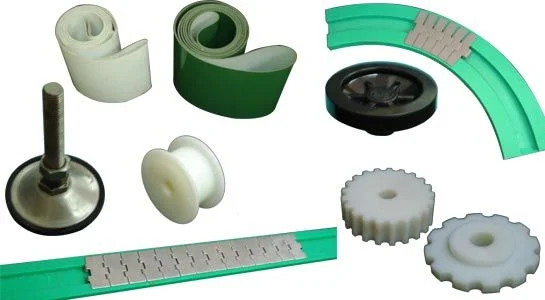
The supplier’s offering includes both fabric‑reinforced PVC belts and steel‑cord reinforced belts, designed for continuous‑flow handling in manufacturing and bulk material movement. Product titles indicate special resistance features such as oil, heat, acids, alkalis and flame, which align with industry needs for durability in harsh environments. Widths typically range from 500 mm to 1500 mm and lengths are supplied in standard coil sizes of 20 - 30 m, matching common plant specifications.
Product Range and Specialties of Xingtai Starck Trading Co., Ltd.
The catalogue covers standard PVC and PU conveyor belts as well as high‑strength steel‑cord belts. Industry practice grades PVC belts by durometer (e.g., 45 - 65 Shore A) and specifies tensile strength in the range of 100 - 150 N/mm, while heat‑resistant belts are often rated for continuous service up to 120 °C. Oil‑resistant belts usually meet ASTM D412 for oil immersion resistance, and flame‑resistant belts are tested to FMVSS‑302 or EN 13501‑1 fire classifications. Sidewall designs such as wave‑shape provide additional tracking stability for high‑speed applications. Buyers typically select belt thickness between 2 mm and 6 mm depending on load and speed requirements.
Trade and Export Information - Xingtai Starck Trading Co., Ltd.
China is a major exporter of rubber‑based conveyor belts, with shipments frequently directed to Europe, North America, the Middle East and Southeast Asia. The HS code family 4010.20 is routinely inspected for compliance with material safety data sheet (MSDS) requirements and may be subject to anti‑dumping duties in certain markets. Common buyer‑required certifications include ISO 9001 quality management, CE marking for EU entry, UL or FM fire‑safety approvals, and compliance with REACH for hazardous substances. Export packaging usually involves coiled belts placed on wooden pallets, wrapped in moisture‑proof film, and loaded in 20‑ft or 40‑ft containers; Incoterms such as FOB Shanghai or CIF destination port are standard for this product class.
Sourcing from Xingtai Starck Trading Co., Ltd. - Buyer Guidance
When sourcing these belts, request a detailed product data sheet that lists material composition (PVC, PU, polyester, steel cord), tensile strength, durometer, temperature range and fire‑rating test results. Verify that the supplier can provide a current MSDS, any applicable fire‑safety certification (FMVSS‑302, EN 13501‑1) and a third‑party test report for oil or chemical resistance. Confirm coil dimensions, weight per metre and packaging method before finalising the order, and consider ordering a short sample to validate fit and performance on the intended equipment.
Frequently Asked Questions About Xingtai Starck Trading Co., Ltd.
What types of conveyor belts does Xingtai Starck Trading Co., Ltd. offer?
The supplier lists ordinary, nylon‑and‑polyester, oil‑resistant, heat‑resistant, acid‑and‑alkali resistant, whole‑core flame‑resistant, wave‑shape sidewall, steel‑cord and circular belts, each also available under the Cnstarck brand name.
Which HS code applies to the belts in this catalogue?
All listed belts fall under HS chapter 40, specifically HS 4010.20 which covers rubber conveyor and transmission belts.
What certifications should a buyer request for these belts?
Buyers should ask for ISO 9001 quality management certification, any CE marking for EU markets, fire‑safety certificates such as FMVSS‑302 or EN 13501‑1, and a current REACH compliance statement.
What are the typical dimensions and packaging for the belts?
Standard widths range from 500 mm to 1500 mm, lengths are supplied in 20‑30 m coils, and coils are usually wrapped in moisture‑proof film and stacked on wooden pallets for container loading.
How is temperature resistance specified for heat‑resistant belts?
Heat‑resistant belts are commonly rated for continuous service up to 120 °C and are tested according to ASTM D1505 for thermal stability.
What quality tests are relevant for oil‑resistant belts?
Oil‑resistant belts are typically evaluated by ASTM D412 oil immersion testing and may also be subjected to ISO 2039 tensile strength measurements.
What lead time and minimum order quantity (MOQ) are typical?
Suppliers in China usually quote a lead time of 15‑30 days for standard coils, with MOQs ranging from one 20‑ft container (approximately 1,200 kg) to larger volumes depending on belt width and thickness.
How can a buyer obtain a sample before a full order?
A short coil or cut‑length sample can be requested; the supplier generally ships samples in a small package under FOB terms, allowing the buyer to verify dimensions, material feel and performance.




 , China