Wenzhou Longsun Electrical Alloy Co., Ltd. — Supplier
About Wenzhou Longsun Electrical Alloy Co., Ltd. - Electrical Contacts Supplier in China
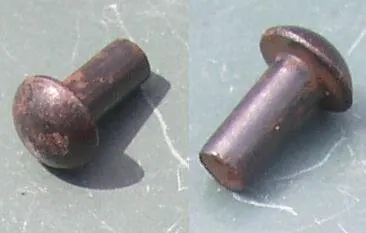
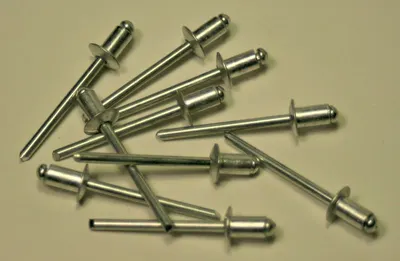
Wenzhou Longsun Electrical Alloy Co., Ltd. is based in China and currently lists 19 distinct electrical component products in its catalogue. The company’s portfolio focuses on various forms of electrical contacts used in switching and relay applications. Items include generic "Electrical Contacts" as well as more specific parts such as "Contact Points", "Silver Tungsten Contacts", and "Bimetal Strips". The catalogue also references specialized rivet and pin components like "Silver Rivet Contacts" and "Relay Pin Contacts". Each entry is identified by its product name without additional technical specifications in the public listing.
These 19 items belong to the HS chapter 85 family, most commonly classified under heading 8536 for electrical apparatus of a kind used with automatic controls. The product types cover conductive alloys, bimetallic elements, and precision‑machined pins that are typical in circuit breakers, relays, and contactors. Materials cited in the names - silver, tungsten, and bimetal - suggest high‑conductivity or temperature‑responsive characteristics required by IEC standards. The range therefore addresses both low‑voltage switching hardware and higher‑current contact applications across industrial and consumer equipment sectors.
Product Range and Specialties of Wenzhou Longsun Electrical Alloy Co., Ltd.
The catalogue enumerates a variety of contact components: Contact Points, Silver Tungsten Contacts, Switch Electrical Contacts, Metal Welding Contacts, Silver Alloy Contacts, Bimetal Strips, Silver Alloy Wire, Silver Rivet Contacts, Riveting Electrical Component, Relay Pin Contacts, Relays Contacts Part, Electrical Contact Rivet, Electrical Contacts, Bimetal Rivet Contacts, Electrical Contact Points, Circuit Breaker Contact Part, Electrical Pin Contacts, Agni Rivet Contacts For Contactor, and Agsno2 Rivet Contacts For Relays. In the electrical‑contact industry, silver‑based alloys typically contain 80‑95 % silver with copper or tungsten as the balance, providing conductivity above 30 % IACS and melting points exceeding 900 °C. Bimetal strips are commonly engineered from a copper‑nickel layer bonded to an iron‑chromium layer, delivering a Curie temperature in the 150‑250 °C range for thermal‑actuated switches. Standard specifications such as IEC 60947‑4 (contact resistance) and UL 508 (general purpose motor controllers) are frequently referenced for these parts.
Typical product dimensions include pin diameters from 0.2 mm to 2 mm, lengths of 5 mm to 20 mm, and wire gauges ranging from 0.1 mm² to 2.5 mm². Buyers often request data sheets that list tensile strength (≈400 MPa for silver‑copper alloys), hardness (Rockwell B ≈80), and surface finish (≤0.8 µm Ra). Packaging for small contacts is usually anti‑static poly‑bag bundles placed in corrugated cartons, while larger wire or strip coils are shipped on wooden pallets wrapped in moisture‑resistant film.
Trade and Export Information - Wenzhou Longsun Electrical Alloy Co., Ltd.
China is a global exporter of electrical components, and suppliers of contact assemblies typically ship to Europe, North America, and the rapidly growing markets of Southeast Asia. The products listed by Wenzhou Longsun fall under HS heading 8536 (electrical apparatus for switching or controlling) and occasionally HS 8537 for parts of such apparatus, which guides customs classification and duty rates. Importers commonly require compliance with RoHS, REACH, and ISO 9001 quality management systems, and may request CE marking for EU shipments or UL listing for the United States. Logistics are usually handled on a FOB Shanghai basis, with full‑container loads (20‑ft) accommodating up to 12 000 small contact units, while smaller orders are consolidated into LCL shipments with anti‑static packaging.
Chinese export regulations mandate that electrical contacts meet electromagnetic compatibility (EMC) standards and that test reports for conductivity, contact resistance, and temperature cycling be available on request. Buyers should anticipate inspection by third‑party labs such as SGS or Intertek to verify material composition (e.g., silver content) and mechanical properties before release. Typical incoterms used by Chinese contact manufacturers include FOB, CIF to European ports, and DAP to major Asian hubs, allowing flexibility in freight planning and customs clearance.
Sourcing from Wenzhou Longsun Electrical Alloy Co., Ltd. - Buyer Guidance
When sourcing from Wenzhou Longsun, buyers should request a material declaration that specifies alloy composition (e.g., Ag‑Cu % or Ag‑W % for the silver‑tungsten contacts) and a RoHS compliance certificate. Test reports covering contact resistance (≤10 mΩ), tensile strength (≈400 MPa), and thermal cycling performance (‑40 °C to +150 °C, 500 cycles) are standard documentation that helps verify product suitability. It is advisable to obtain a physical sample of the exact pin size or strip width before placing a bulk order, and to confirm the HS code classification (likely 8536) to avoid customs delays.
Typical minimum order quantities for precision contacts range from 5 000 to 20 000 pieces, depending on the part geometry, with lead times of 30‑45 days after order confirmation. Verify that the supplier can provide the required certifications (ISO 9001, IEC 60947 compliance) and that packaging meets anti‑static and moisture‑barrier requirements for safe transit. Prior to shipment, request a pre‑shipment inspection report that confirms dimensions, material purity, and compliance with any regional standards required by the buyer’s market.
Frequently Asked Questions About Wenzhou Longsun Electrical Alloy Co., Ltd.
What types of electrical contacts are listed by Wenzhou Longsun Electrical Alloy Co., Ltd.?
The catalogue includes Contact Points, Silver Tungsten Contacts, Switch Electrical Contacts, Metal Welding Contacts, Silver Alloy Contacts, Bimetal Strips, Silver Alloy Wire, Silver Rivet Contacts, Riveting Electrical Component, Relay Pin Contacts, Relays Contacts Part, Electrical Contact Rivet, Bimetal Rivet Contacts, Electrical Contact Points, Circuit Breaker Contact Part, Electrical Pin Contacts, Agni Rivet Contacts for Contactor, and Agsno2 Rivet Contacts for Relays.
Which material standards are typical for the silver‑based contacts offered?
Silver contacts are usually produced from Ag‑Cu alloys containing 80‑95 % silver, delivering conductivity above 30 % IACS and a melting point near 960 °C. Buyers often request a certificate of analysis confirming the exact silver percentage and copper balance.
What HS code is generally applied to these contact components?
Electrical contact parts are commonly classified under HS heading 8536, which covers electrical apparatus for switching or controlling. Specific sub‑headings may be used depending on the exact form of the part (e.g., pins versus strips).
Which certifications should a buyer verify before purchasing?
Typical certifications include ISO 9001 for quality management, RoHS compliance for hazardous substance restrictions, and IEC 60947‑4 for contact resistance specifications. Regional markets may also require CE marking (EU) or UL listing (USA).
What is a realistic minimum order quantity and lead time for these items?
Most manufacturers set MOQs between 5 000 and 20 000 pieces per part, with standard lead times of 30 to 45 days after order confirmation, subject to material availability.
How are the contacts usually packaged for export?
Small pins and rivets are packed in anti‑static poly‑bags, then placed in double‑wall corrugated cartons. Larger wire coils or bimetal strips are wrapped in moisture‑resistant film and secured on wooden pallets for container loading.
What documentation should a buyer request prior to shipment?
Buyers should obtain a material composition certificate, RoHS compliance statement, test reports for contact resistance and tensile strength, and a pre‑shipment inspection report confirming dimensions and packaging integrity.
Which regions are the primary import markets for Chinese electrical contact components?
Key import destinations include the European Union, the United States, Japan, South Korea, and emerging markets in Southeast Asia such as Vietnam and Thailand, where automotive and consumer electronics manufacturers source these parts.




 , China