Stone Land — Verified Supplier

About Stone Land - Sandstones & Sands Supplier in India

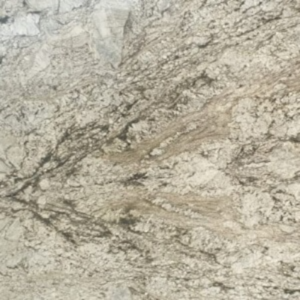
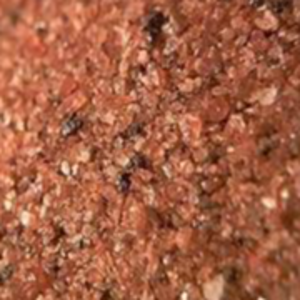
Stone Land is located in India and is listed as an imported‑tier supplier. The company currently offers five active sandstone products. All items fall under the “Sandstones & Sands” category in its catalogue. The product list includes Royal Grey Honed Sandstone, Dholpur Beige sandstone, Dholpur Beige Natural Sandstone, Agra Red Natural Sandstone and Kandla Grey Natural Sandstone. Each entry is presented without additional branding or client references.

The listed sandstones are natural stone quarried from Indian deposits such as Dholpur, Agra and Kandla. They are supplied in honed or natural finishes suitable for flooring, cladding and landscaping. Typical dimensions offered by Indian stone exporters range from 600 × 600 mm up to 1200 × 2400 mm slabs, with thicknesses of 20 mm to 30 mm. Standard quality checks for Indian sandstone include visual grading for colour uniformity and water absorption below 0.5 %. The catalogue does not specify HS codes, certifications or packaging details for the individual items.

Product Range and Specialties of Stone Land

Stone Land’s catalogue comprises five natural sandstone varieties, each identified by colour and origin: Royal Grey, Dholpur Beige, Agra Red and Kandla Grey. These stones are classified under the broader “Sandstones & Sands” segment, which in trade statistics is recorded under HS chapter 68 for natural stone. In the Indian market, sandstones are commonly extracted from quarries with compressive strengths ranging from 30 MPa to 150 MPa, depending on mineral composition. The honed finish of the Royal Grey product indicates a smooth, low‑gloss surface achieved by abrasive grinding. The natural finishes of the Dholpur and Agra products retain the stone’s original texture and are often used where a rustic appearance is desired.

Buyers typically request technical data sheets that list bulk density (approximately 2.3 t/m³ for Indian sandstones), water absorption (≤0.5 %), and flexural strength (10‑30 MPa). Standard industry grades for sandstone are expressed by colour consistency and surface defect limits, for example “Grade A” allowing less than 2 % visible fissures per slab. Common dimensions supplied include slab sizes of 600 × 600 mm, 800 × 800 mm and larger custom formats up to 2400 mm length, with thicknesses from 20 mm to 30 mm. Export‑ready packaging often involves wooden crates or steel frames with polyethylene wrap to protect against chipping during sea freight. While the catalogue does not list certifications, Indian stone exporters frequently hold ISO 9001 quality management certificates and may provide CE conformity for EU markets.

Trade and Export Information - Stone Land

Indian sandstone exporters mainly ship to construction and design markets in the Middle East, Europe and North America, where natural stone is used for high‑end flooring, façade cladding and landscape projects. The HS code 6810.10 covers natural ornamental stone, which includes the sandstones listed by Stone Land, and is subject to customs duties that vary by destination country. Sea freight from Indian ports such as Mumbai or Kandla typically uses 20‑foot containers holding up to 15 tonnes of slab‑packed stone, while 40‑foot containers can accommodate 25‑30 tonnes. Common Incoterms for stone shipments are FOB (Free on Board) from the loading port, with buyers often arranging CIF (Cost, Insurance, Freight) to their destination. Inspection agencies such as SGS or Bureau Veritas are regularly engaged to verify dimensions, surface quality and compliance with destination standards before loading.

Buyers importing sandstones from India frequently request ISO 9001 certification, a test report confirming compressive strength and water absorption, and a CE Declaration of Conformity for EU projects. Indian export regulations require a phytosanitary certificate only for timber, so stone shipments are exempt, but a commercial invoice and packing list must detail slab dimensions and weight. The typical packaging solution is a wooden crate reinforced with steel brackets, lined with foam or corrugated board to prevent impact damage during handling. For large projects, consolidated shipments are coordinated through freight forwarders who schedule container loading to match the slab thickness and weight distribution, optimizing stowage and reducing risk of breakage. Environmental considerations increasingly encourage suppliers to provide evidence of responsible quarrying, such as a Sustainable Quarry Management Plan, although this is not mandatory.

Sourcing from Stone Land - Buyer Guidance

When sourcing sandstones from Stone Land, buyers should request a product data sheet that includes compressive strength, bulk density, water absorption and dimensional tolerances (typically ±2 mm on length and width, ±1 mm on thickness). Sample slabs of each colour can be ordered to assess surface finish, colour consistency and suitability for the intended application; most suppliers provide a 1 % of order volume as a free sample. Verify whether the supplier can supply ISO 9001 or other quality management certificates and whether test reports are performed by an accredited laboratory such as SGS or Intertek. Confirm the packaging method (e.g., wooden crate with polyethylene wrap) and the container size to ensure the slabs will fit without excessive handling. Clarify the lead time, which for Indian sandstone typically ranges from 30 to 45 days from order confirmation to vessel loading, depending on quarry output and cut schedule.

Buyers should also inquire about the supplier’s ability to produce custom slab dimensions or edge profiles, as many projects require specific sizes beyond the standard catalogue. Final acceptance criteria often include a visual inspection upon arrival and a comparison of the received test report against the pre‑shipment data.

Frequently Asked Questions About Stone Land

What types of sandstone does Stone Land offer?

Stone Land lists five natural sandstone varieties - Royal Grey Honed, Dholpur Beige (standard and natural finish), Agra Red Natural, and Kandla Grey Natural. All products belong to the “Sandstones & Sands” category and are sourced from Indian quarries.

Are technical specifications available for the sandstones?

The supplier can provide data sheets that state typical bulk density (≈2.3 t/m³), compressive strength (30‑150 MPa), water absorption (≤0.5 %) and dimensional tolerances (±2 mm length/width, ±1 mm thickness). Test reports are usually issued by an accredited laboratory.

What are the standard slab sizes and thicknesses offered?

Common slab dimensions include 600 × 600 mm, 800 × 800 mm, 1200 × 2400 mm and other custom sizes, with thicknesses of 20 mm or 30 mm. Larger formats can be cut to order, subject to quarry yield.

Which certifications should a buyer request?

Buyers should ask for ISO 9001 quality‑management certification and any applicable CE Declaration of Conformity for EU projects. Independent test reports for strength and absorption are also standard.

How are the sandstones packaged for export?

Export packs typically consist of wooden crates reinforced with steel brackets, each slab wrapped in polyethylene film and cushioned with foam or corrugated board. Crates are loaded into 20‑foot or 40‑foot containers depending on volume.

What Incoterms are commonly used for shipments from India?

Suppliers often quote FOB from ports such as Mumbai or Kandla, with buyers arranging CIF to the destination port. The chosen term defines responsibility for freight, insurance and customs clearance.

What is the typical lead time and minimum order quantity?

Lead time from order confirmation to vessel loading is generally 30‑45 days, varying with quarry production schedules. Minimum order quantities are usually based on container capacity, roughly 15 tonnes for a 20‑foot container.

Other Suppliers in Sandstones & Sands

Top Trusted Suppliers

Related Products in Sandstones & Sands

Trending in Parent Category

More Suppliers in Parent Category

Related Products

Other Suppliers

EximNext
58.5K+ live requirements
Register Free🎁 Reach verified global buyers
Post Requirement
🌍 Trusted by 224.6K+ businesses in 200+ countries|
58.5K+ active requirements right now
✉️ [email protected]
|
Sell on EximNextPost Requirement
EximNext
AgricultureApparelConstructionElectronicFoodHomeIndustrialMineralsMiscellaneous
🔥 Deals|✨ AI Match|🏭 Suppliers|📋 Buy Leads|💰 Trade Finance
58.5K+ live RFQs·194.6K+ suppliers
🎁 Reach global buyers →
EximNext
EximNext
Register Free
🎁 Reach verified global buyers
Sign In
📋Post Requirement💬Get QuotesAI Match📋RFQ Marketplace
All Categories
Services & Tools
🏭Supplier Directory🔥Today's Deals💰Trade Finance
Sell on EximNext
AboutContactBlogHelp
🏭

Stone Land

Harbor
Country flag , India
🛡️
55/100
Trust Score

Stone Land Product Catalog

Showing 5 of 5 products
View all products →
Dholpur Beige Natural Sandstone
Harbor
Dholpur Beige Natural Sandstone
Contact
MOQ: 1 Unit
Agra Red Natural Sandstone
Harbor
Agra Red Natural Sandstone
Contact
MOQ: 1 Unit
Kandla Grey Natural Sandstone
Harbor
Kandla Grey Natural Sandstone
Contact
MOQ: 1 Unit
Dholpur beige sandstone
Harbor
Dholpur beige sandstone
Contact
MOQ: 1 Unit
Royal Grey Honed Sandstone
Harbor
Royal Grey Honed Sandstone
Contact
MOQ: 1 Unit

About Stone Land - Sandstones & Sands Supplier in India

Stone Land is located in India and is listed as an imported‑tier supplier. The company currently offers five active sandstone products. All items fall under the “Sandstones & Sands” category in its catalogue. The product list includes Royal Grey Honed Sandstone, Dholpur Beige sandstone, Dholpur Beige Natural Sandstone, Agra Red Natural Sandstone and Kandla Grey Natural Sandstone. Each entry is presented without additional branding or client references.

The listed sandstones are natural stone quarried from Indian deposits such as Dholpur, Agra and Kandla. They are supplied in honed or natural finishes suitable for flooring, cladding and landscaping. Typical dimensions offered by Indian stone exporters range from 600 × 600 mm up to 1200 × 2400 mm slabs, with thicknesses of 20 mm to 30 mm. Standard quality checks for Indian sandstone include visual grading for colour uniformity and water absorption below 0.5 %. The catalogue does not specify HS codes, certifications or packaging details for the individual items.

Product Range and Specialties of Stone Land

Stone Land’s catalogue comprises five natural sandstone varieties, each identified by colour and origin: Royal Grey, Dholpur Beige, Agra Red and Kandla Grey. These stones are classified under the broader “Sandstones & Sands” segment, which in trade statistics is recorded under HS chapter 68 for natural stone. In the Indian market, sandstones are commonly extracted from quarries with compressive strengths ranging from 30 MPa to 150 MPa, depending on mineral composition. The honed finish of the Royal Grey product indicates a smooth, low‑gloss surface achieved by abrasive grinding. The natural finishes of the Dholpur and Agra products retain the stone’s original texture and are often used where a rustic appearance is desired.

Buyers typically request technical data sheets that list bulk density (approximately 2.3 t/m³ for Indian sandstones), water absorption (≤0.5 %), and flexural strength (10‑30 MPa). Standard industry grades for sandstone are expressed by colour consistency and surface defect limits, for example “Grade A” allowing less than 2 % visible fissures per slab. Common dimensions supplied include slab sizes of 600 × 600 mm, 800 × 800 mm and larger custom formats up to 2400 mm length, with thicknesses from 20 mm to 30 mm. Export‑ready packaging often involves wooden crates or steel frames with polyethylene wrap to protect against chipping during sea freight. While the catalogue does not list certifications, Indian stone exporters frequently hold ISO 9001 quality management certificates and may provide CE conformity for EU markets.

Trade and Export Information - Stone Land

Indian sandstone exporters mainly ship to construction and design markets in the Middle East, Europe and North America, where natural stone is used for high‑end flooring, façade cladding and landscape projects. The HS code 6810.10 covers natural ornamental stone, which includes the sandstones listed by Stone Land, and is subject to customs duties that vary by destination country. Sea freight from Indian ports such as Mumbai or Kandla typically uses 20‑foot containers holding up to 15 tonnes of slab‑packed stone, while 40‑foot containers can accommodate 25‑30 tonnes. Common Incoterms for stone shipments are FOB (Free on Board) from the loading port, with buyers often arranging CIF (Cost, Insurance, Freight) to their destination. Inspection agencies such as SGS or Bureau Veritas are regularly engaged to verify dimensions, surface quality and compliance with destination standards before loading.

Buyers importing sandstones from India frequently request ISO 9001 certification, a test report confirming compressive strength and water absorption, and a CE Declaration of Conformity for EU projects. Indian export regulations require a phytosanitary certificate only for timber, so stone shipments are exempt, but a commercial invoice and packing list must detail slab dimensions and weight. The typical packaging solution is a wooden crate reinforced with steel brackets, lined with foam or corrugated board to prevent impact damage during handling. For large projects, consolidated shipments are coordinated through freight forwarders who schedule container loading to match the slab thickness and weight distribution, optimizing stowage and reducing risk of breakage. Environmental considerations increasingly encourage suppliers to provide evidence of responsible quarrying, such as a Sustainable Quarry Management Plan, although this is not mandatory.

Sourcing from Stone Land - Buyer Guidance

When sourcing sandstones from Stone Land, buyers should request a product data sheet that includes compressive strength, bulk density, water absorption and dimensional tolerances (typically ±2 mm on length and width, ±1 mm on thickness). Sample slabs of each colour can be ordered to assess surface finish, colour consistency and suitability for the intended application; most suppliers provide a 1 % of order volume as a free sample. Verify whether the supplier can supply ISO 9001 or other quality management certificates and whether test reports are performed by an accredited laboratory such as SGS or Intertek. Confirm the packaging method (e.g., wooden crate with polyethylene wrap) and the container size to ensure the slabs will fit without excessive handling. Clarify the lead time, which for Indian sandstone typically ranges from 30 to 45 days from order confirmation to vessel loading, depending on quarry output and cut schedule.

Buyers should also inquire about the supplier’s ability to produce custom slab dimensions or edge profiles, as many projects require specific sizes beyond the standard catalogue. Final acceptance criteria often include a visual inspection upon arrival and a comparison of the received test report against the pre‑shipment data.

Frequently Asked Questions About Stone Land

What types of sandstone does Stone Land offer?

Stone Land lists five natural sandstone varieties - Royal Grey Honed, Dholpur Beige (standard and natural finish), Agra Red Natural, and Kandla Grey Natural. All products belong to the “Sandstones & Sands” category and are sourced from Indian quarries.

Are technical specifications available for the sandstones?

The supplier can provide data sheets that state typical bulk density (≈2.3 t/m³), compressive strength (30‑150 MPa), water absorption (≤0.5 %) and dimensional tolerances (±2 mm length/width, ±1 mm thickness). Test reports are usually issued by an accredited laboratory.

What are the standard slab sizes and thicknesses offered?

Common slab dimensions include 600 × 600 mm, 800 × 800 mm, 1200 × 2400 mm and other custom sizes, with thicknesses of 20 mm or 30 mm. Larger formats can be cut to order, subject to quarry yield.

Which certifications should a buyer request?

Buyers should ask for ISO 9001 quality‑management certification and any applicable CE Declaration of Conformity for EU projects. Independent test reports for strength and absorption are also standard.

How are the sandstones packaged for export?

Export packs typically consist of wooden crates reinforced with steel brackets, each slab wrapped in polyethylene film and cushioned with foam or corrugated board. Crates are loaded into 20‑foot or 40‑foot containers depending on volume.

What Incoterms are commonly used for shipments from India?

Suppliers often quote FOB from ports such as Mumbai or Kandla, with buyers arranging CIF to the destination port. The chosen term defines responsibility for freight, insurance and customs clearance.

What is the typical lead time and minimum order quantity?

Lead time from order confirmation to vessel loading is generally 30‑45 days, varying with quarry production schedules. Minimum order quantities are usually based on container capacity, roughly 15 tonnes for a 20‑foot container.

About Stone Land - Sandstones & Sands Supplier in India

Stone Land is located in India and is listed as an imported‑tier supplier. The company currently offers five active sandstone products. All items fall under the “Sandstones & Sands” category in its catalogue. The product list includes Royal Grey Honed Sandstone, Dholpur Beige sandstone, Dholpur Beige Natural Sandstone, Agra Red Natural Sandstone and Kandla Grey Natural Sandstone. Each entry is presented without additional branding or client references.

The listed sandstones are natural stone quarried from Indian deposits such as Dholpur, Agra and Kandla. They are supplied in honed or natural finishes suitable for flooring, cladding and landscaping. Typical dimensions offered by Indian stone exporters range from 600 × 600 mm up to 1200 × 2400 mm slabs, with thicknesses of 20 mm to 30 mm. Standard quality checks for Indian sandstone include visual grading for colour uniformity and water absorption below 0.5 %. The catalogue does not specify HS codes, certifications or packaging details for the individual items.

Product Range and Specialties of Stone Land

Stone Land’s catalogue comprises five natural sandstone varieties, each identified by colour and origin: Royal Grey, Dholpur Beige, Agra Red and Kandla Grey. These stones are classified under the broader “Sandstones & Sands” segment, which in trade statistics is recorded under HS chapter 68 for natural stone. In the Indian market, sandstones are commonly extracted from quarries with compressive strengths ranging from 30 MPa to 150 MPa, depending on mineral composition. The honed finish of the Royal Grey product indicates a smooth, low‑gloss surface achieved by abrasive grinding. The natural finishes of the Dholpur and Agra products retain the stone’s original texture and are often used where a rustic appearance is desired.

Buyers typically request technical data sheets that list bulk density (approximately 2.3 t/m³ for Indian sandstones), water absorption (≤0.5 %), and flexural strength (10‑30 MPa). Standard industry grades for sandstone are expressed by colour consistency and surface defect limits, for example “Grade A” allowing less than 2 % visible fissures per slab. Common dimensions supplied include slab sizes of 600 × 600 mm, 800 × 800 mm and larger custom formats up to 2400 mm length, with thicknesses from 20 mm to 30 mm. Export‑ready packaging often involves wooden crates or steel frames with polyethylene wrap to protect against chipping during sea freight. While the catalogue does not list certifications, Indian stone exporters frequently hold ISO 9001 quality management certificates and may provide CE conformity for EU markets.

Trade and Export Information - Stone Land

Indian sandstone exporters mainly ship to construction and design markets in the Middle East, Europe and North America, where natural stone is used for high‑end flooring, façade cladding and landscape projects. The HS code 6810.10 covers natural ornamental stone, which includes the sandstones listed by Stone Land, and is subject to customs duties that vary by destination country. Sea freight from Indian ports such as Mumbai or Kandla typically uses 20‑foot containers holding up to 15 tonnes of slab‑packed stone, while 40‑foot containers can accommodate 25‑30 tonnes. Common Incoterms for stone shipments are FOB (Free on Board) from the loading port, with buyers often arranging CIF (Cost, Insurance, Freight) to their destination. Inspection agencies such as SGS or Bureau Veritas are regularly engaged to verify dimensions, surface quality and compliance with destination standards before loading.

Buyers importing sandstones from India frequently request ISO 9001 certification, a test report confirming compressive strength and water absorption, and a CE Declaration of Conformity for EU projects. Indian export regulations require a phytosanitary certificate only for timber, so stone shipments are exempt, but a commercial invoice and packing list must detail slab dimensions and weight. The typical packaging solution is a wooden crate reinforced with steel brackets, lined with foam or corrugated board to prevent impact damage during handling. For large projects, consolidated shipments are coordinated through freight forwarders who schedule container loading to match the slab thickness and weight distribution, optimizing stowage and reducing risk of breakage. Environmental considerations increasingly encourage suppliers to provide evidence of responsible quarrying, such as a Sustainable Quarry Management Plan, although this is not mandatory.

Sourcing from Stone Land - Buyer Guidance

When sourcing sandstones from Stone Land, buyers should request a product data sheet that includes compressive strength, bulk density, water absorption and dimensional tolerances (typically ±2 mm on length and width, ±1 mm on thickness). Sample slabs of each colour can be ordered to assess surface finish, colour consistency and suitability for the intended application; most suppliers provide a 1 % of order volume as a free sample. Verify whether the supplier can supply ISO 9001 or other quality management certificates and whether test reports are performed by an accredited laboratory such as SGS or Intertek. Confirm the packaging method (e.g., wooden crate with polyethylene wrap) and the container size to ensure the slabs will fit without excessive handling. Clarify the lead time, which for Indian sandstone typically ranges from 30 to 45 days from order confirmation to vessel loading, depending on quarry output and cut schedule.

Buyers should also inquire about the supplier’s ability to produce custom slab dimensions or edge profiles, as many projects require specific sizes beyond the standard catalogue. Final acceptance criteria often include a visual inspection upon arrival and a comparison of the received test report against the pre‑shipment data.

Frequently Asked Questions About Stone Land
What types of sandstone does Stone Land offer?
Stone Land lists five natural sandstone varieties - Royal Grey Honed, Dholpur Beige (standard and natural finish), Agra Red Natural, and Kandla Grey Natural. All products belong to the “Sandstones & Sands” category and are sourced from Indian quarries.
Are technical specifications available for the sandstones?
The supplier can provide data sheets that state typical bulk density (≈2.3 t/m³), compressive strength (30‑150 MPa), water absorption (≤0.5 %) and dimensional tolerances (±2 mm length/width, ±1 mm thickness). Test reports are usually issued by an accredited laboratory.
What are the standard slab sizes and thicknesses offered?
Common slab dimensions include 600 × 600 mm, 800 × 800 mm, 1200 × 2400 mm and other custom sizes, with thicknesses of 20 mm or 30 mm. Larger formats can be cut to order, subject to quarry yield.
Which certifications should a buyer request?
Buyers should ask for ISO 9001 quality‑management certification and any applicable CE Declaration of Conformity for EU projects. Independent test reports for strength and absorption are also standard.
How are the sandstones packaged for export?
Export packs typically consist of wooden crates reinforced with steel brackets, each slab wrapped in polyethylene film and cushioned with foam or corrugated board. Crates are loaded into 20‑foot or 40‑foot containers depending on volume.
What Incoterms are commonly used for shipments from India?
Suppliers often quote FOB from ports such as Mumbai or Kandla, with buyers arranging CIF to the destination port. The chosen term defines responsibility for freight, insurance and customs clearance.
What is the typical lead time and minimum order quantity?
Lead time from order confirmation to vessel loading is generally 30‑45 days, varying with quarry production schedules. Minimum order quantities are usually based on container capacity, roughly 15 tonnes for a 20‑foot container.

🏭
Stone Land
Country flag , India
Harbor
55/100
Trust Score
📦
5
Products
Free to contact — no commission
Escrow payment available
Verified business identity
Compare more suppliers
Post a requirement — get 10 quotes free
Let verified suppliers compete for your business. Free, fast, no commitment.
EximNext Verified Supplier
Business identity verified
Physical address confirmed
Financial history checked
Certifications authenticated
Trade references validated
Due Diligence
Verify this supplier's real shipping history.
Every shipment, every buyer, every port. Trade data that can't be faked.
Run due diligence →
Discover More

Related Suppliers & Products

Explore similar suppliers, related products and trending categories

Other Suppliers in Sandstones & Sands

Top Trusted Suppliers

Related Products in Sandstones & Sands

Trending in Parent Category

More Suppliers in Parent Category

Stay ahead in global trade
Weekly market insights & new supplier alerts.
EximNext
Exim Next is a leading global B2B marketplace, connecting over 205,000 verified suppliers and buyers across 200+ countries. As a trusted import export marketplace, it serves as the essential B2B portal for businesses worldwide, empowering them to expand their international reach. With Exim Next, businesses can trade smarter and grow faster.
SECURE PAYMENTS
VISAMastercardPayPalSWIFTL/CEscrow
Follow us
© 2026 EximNext