Sntek Co., Ltd. — Supplier
About Sntek Co., Ltd. - Light & Medium Machinery Supplier in South Korea (Republic Of Korea)
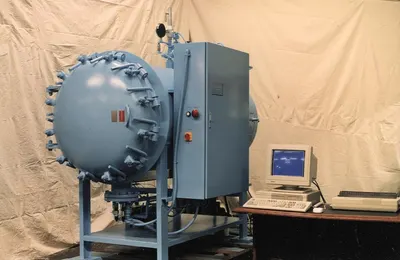
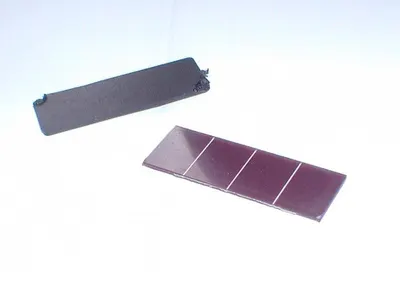
South Korea (Republic Of Korea) hosts Sntek Co., Ltd., a supplier that currently lists 18 active products in its catalogue. The portfolio is concentrated in light and medium machinery for thin‑film deposition and semiconductor processing. Products include multiple plasma enhanced chemical vapor deposition (PE‑CVD) systems such as the 2Gen PE‑CVD and Standard PE‑CVD models, thermal CVD and MOCVD reactors, and various rapid thermal processing (RTP) units. Additional offerings cover magnetron sputtering equipment, large‑scale in‑line sputtering lines, and specialized tools like ICP‑RIE, ARS 5000 series RIE, and an OLED system. The list also contains solar‑cell specific hardware, including CIGS and silicon thin‑film solar cell production lines.
All items are classified under the broader category of light and medium machinery, reflecting equipment that typically operates at laboratory to pilot‑scale throughput. The catalogue does not provide HS codes, but the products align with equipment families commonly coded under HS chapter 84 for industrial machines and HS chapter 85 for specialized electronic apparatus. Sntek’s inventory spans deposition technologies, etching tools, and evaporation systems, providing a cross‑section of equipment used in semiconductor, photovoltaic and display manufacturing.
Product Range and Specialties of Sntek Co., Ltd.
The catalogue features a variety of deposition systems: PE‑CVD, thermal CVD, MOCVD and evaporation units, each designed for wafer sizes from 100 mm up to 300 mm and deposition rates ranging from 5 nm/min to over 200 nm/min depending on process gas chemistry. Sputtering offerings include magnetron and large‑area in‑line lines, typically delivering target powers of 1‑5 kW and uniformity better than ±5 % across 200 mm wafers. Etching tools such as ICP‑RIE and ARS 5000 series provide RF powers up to 2 kW, chamber pressures between 1‑10 mTorr, and endpoint detection capabilities commonly required for precise pattern transfer. OLED and solar‑cell production systems integrate temperature control from ambient to 800 °C and in‑situ monitoring that meets industry standards for film thickness and composition uniformity.
Industry standards for these equipment families include compliance with ISO 14644 clean‑room classifications, IEC 61326 for electromagnetic compatibility, and typical material specifications such as quartz or alumina reaction chambers for CVD, and high‑purity argon or nitrogen process gases meeting ISO 8573‑1. Buyers often request performance data sheets that list deposition uniformity, repeatability (±2 % across runs), and achievable film properties such as resistivity or band‑gap for semiconductor layers.
Trade and Export Information - Sntek Co., Ltd.
South Korea is a major exporter of semiconductor and photovoltaic manufacturing equipment, with the United States, Europe (Germany, Netherlands), Japan and Taiwan representing the largest import markets for these categories. Export shipments of light and medium machinery are usually packed in 20‑ft or 40‑ft containers, with units secured on vibration‑damped pallets and protected by anti‑static wrapping to meet IEC 60950 handling requirements. Typical certifications sought by importers include CE marking for EU markets, UL listing for North America, and RoHS compliance for hazardous substance restrictions; these are not listed as held by the supplier and should be verified before contract. Korean export regulations require an export license for dual‑use equipment under the Wassenaar Arrangement, and customs documentation often references HS chapter 84 (machinery) and chapter 85 (electrical apparatus).
Sourcing from Sntek Co., Ltd. - Buyer Guidance
When sourcing from Sntek, buyers should request the latest equipment datasheets, installation manuals and third‑party test reports that confirm parameters such as deposition uniformity, chamber leak rates (≤1 × 10⁻⁸ mbar·L/s) and RF power stability. Verification of compliance certificates - CE, UL, RoHS, ISO 9001 - should be part of the pre‑order diligence, as the supplier’s public profile does not list specific certifications. It is advisable to arrange a factory visit or video inspection to confirm build quality, and to obtain a sample of a finished thin‑film product to validate process capability before committing to full‑scale purchase.
Frequently Asked Questions About Sntek Co., Ltd.
What types of deposition equipment does Sntek list in its catalogue?
The catalogue includes PE‑CVD, thermal CVD, MOCVD, thermal evaporators, magnetron sputtering systems, large‑area in‑line sputtering lines, ICP‑RIE and ARS 5000 series RIE tools, as well as OLED and solar‑cell production systems.
Are there standard specifications buyers should request for CVD systems?
Buyers typically ask for wafer size capacity (100‑300 mm), deposition rate range (5‑200 nm/min), chamber pressure limits (≤10 mTorr), and uniformity tolerance (±5 %). Test reports confirming these figures are standard.
Which certifications are commonly required for semiconductor equipment imported from South Korea?
Importers usually require CE marking for EU, UL listing for North America, RoHS compliance for hazardous substances, and ISO 9001 quality management certification. These should be confirmed with the supplier before purchase.
What is the usual packaging and shipping method for these machines?
Equipment is typically crated on reinforced wooden pallets, wrapped in anti‑static film, and loaded into 20‑ft or 40‑ft containers. Shock‑absorbing material and moisture barriers are added to meet IEC transport standards.
What are typical lead times for the listed systems?
Lead times vary by system size but generally range from 8 weeks for standard PE‑CVD units to 16‑20 weeks for large‑scale in‑line sputtering lines, depending on customization and component availability.
How can a buyer obtain a sample or trial run before placing a full order?
Buyers can request a pilot‑run service or a small‑scale sample unit, often accompanied by a non‑disclosure agreement, to evaluate film quality, uniformity and process stability on a limited number of wafers.
Is there a minimum order quantity (MOQ) for these machines?
MOQs are equipment‑specific; most standalone systems have an MOQ of one unit, while modular lines may require a minimum configuration of two to three modules to meet performance specifications.
What documentation should be reviewed before finalizing a purchase?
Review the equipment specification sheet, installation guide, third‑party performance test report, compliance certificates (CE, UL, RoHS), warranty terms and the export license documentation required by Korean authorities.




 , South Korea (Republic Of Korea)