Shenzhen KSD Cable Co., Ltd. — Verified Supplier
About Shenzhen KSD Cable Co., Ltd. - Optical Fiber Cable Supplier in China
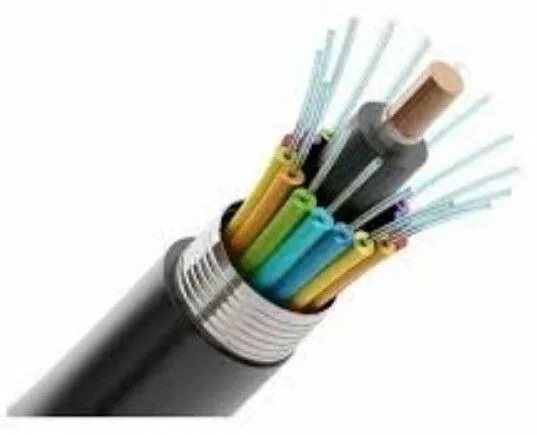
Shenzhen KSD Cable Co., Ltd. operates out of China and currently lists 58 distinct product entries in its catalogue. The company groups its offerings under three top categories - Agriculture, Optical Fiber Cables, and Electric Power Supply Components - with the majority of the entries belonging to the optical fiber cable segment. The catalogue includes a variety of cable constructions such as All‑Dielectric ADSS fiber cable, Loose Tube Optical Ground Wire (OPGW), Tight‑Buffer FTTH Figure‑8 cable, armored and non‑armored steel‑tape or aluminum‑tape designs, and a range of indoor and outdoor unitube solutions.
The supplier’s product list also contains related accessories, for example a 4‑port joint box and several types of fiber optic patch cords and pigtails. All entries are described using the specific product names supplied, without reference to any proprietary standards or certifications beyond those that may be typical for the sector. The trust tier assigned to the supplier is “harbor,” indicating a platform‑based risk classification but does not affect the factual product description.
Product Range and Specialties of Shenzhen KSD Cable Co., Ltd.
The catalogue covers a broad spectrum of fiber optic cable technologies. Products such as the All‑Dielectric ADSS cable, Loose‑Tube OPGW, and Tight‑Buffer FTTH Figure‑8 cable are typical of the single‑mode and multimode families that follow IEC 60793‑2 specifications, with core diameters of 9/125 µm for single‑mode and 50/125 µm for multimode variants. The listed armored options - steel‑tape, aluminum‑tape, and FRP‑reinforced designs - are commonly used for aerial and underground deployments where mechanical protection and tensile strength (often 200‑300 N) are required. Non‑armored loose‑tube and unitube cables are typically supplied with LS‑Z‑H (low smoke zero halogen) or PVC jackets, meeting IEC 60825 fire‑safety standards. Drop‑cable and FTTH solutions in the list frequently feature water‑blocking gels and outer diameters ranging from 4 mm to 8 mm, suitable for both indoor conduit and outdoor aerial routes.
Trade and Export Information - Shenzhen KSD Cable Co., Ltd.
China is a global exporter of fiber optic infrastructure, with shipments generally classified under HS chapter 85, heading 8544 for optical fiber cables. Export volumes are directed toward Asia‑Pacific markets (India, Vietnam, South Korea), European Union members, the Middle East, and Africa, where telecom operators and power utilities upgrade broadband and smart‑grid networks. Buyers typically require compliance with IEC 60793 (optical fiber), IEC 60825 (flammability), RoHS, and ISO 9001 quality‑management certification. Standard export logistics involve packing cables on drums or reels, loading them into 20‑ft or 40‑ft containers, and using FOB or CIF incoterms. Chinese manufacturers often provide pre‑shipment inspection reports and certificates of conformity to facilitate customs clearance in the destination country.
Sourcing from Shenzhen KSD Cable Co., Ltd. - Buyer Guidance
When sourcing from Shenzhen KSD Cable, buyers should request the latest product datasheet, including fiber type (OS1/OS2 or OM1‑OM5), attenuation values (typically ≤0.35 dB/km for single‑mode), tensile strength, and jacket material specifications. Independent test reports such as OTDR trace results, fire‑rating certificates, and RoHS compliance statements are standard documents to verify before placing an order. Samples of the required cable type - for example a 10 m reel of LSZH‑jacketed FTTH cable - help confirm dimensional tolerances and handling characteristics. Minimum order quantities usually start at one full reel (≈500 m) but can be adjusted based on project size, and lead times of 4‑6 weeks are common for production and quality‑control cycles.
Frequently Asked Questions About Shenzhen KSD Cable Co., Ltd.
What types of optical fiber cables does Shenzhen KSD Cable list in its catalogue?
The catalogue includes All‑Dielectric ADSS cable, Loose‑Tube OPGW, Tight‑Buffer FTTH Figure‑8 cable, armored steel‑tape and aluminum‑tape cables, FRP‑reinforced drop cables, unitube indoor/outdoor cables, and LSZH/PVC‑jacketed single‑mode and multimode variants.
Are armored and non‑armored cable options available?
Yes, the supplier lists both armored solutions (steel‑tape, aluminum‑tape, FRP‑reinforced) and non‑armored loose‑tube or unitube cables for aerial and underground installations.
What standard specifications should I verify for these fiber optic products?
Typical specifications include fiber core size (9/125 µm or 50/125 µm), attenuation (≤0.35 dB/km for single‑mode), tensile strength (200‑300 N), jacket fire rating (LSZH or PVC per IEC 60825), and compliance with IEC 60793‑2.
Which certifications are commonly required for fiber optic cables from China?
Buyers usually request ISO 9001 quality‑management certification, RoHS compliance, and test reports confirming IEC 60793 and IEC 60825 standards. These documents are not listed as held by the supplier but are typical for the product class.
What is the typical packaging and shipping format for these cables?
Cables are normally wound on drums or reels, placed in 20‑ft or 40‑ft containers, and shipped under FOB or CIF incoterms. Packaging includes moisture‑barrier covers to protect the fiber during transit.
What minimum order quantity and lead time should I expect?
The usual minimum is one full reel (approximately 500 m), though larger quantities can be arranged. Production and quality‑control lead times are generally 4‑6 weeks after order confirmation.
How can I obtain a technical sample before a full purchase?
Buyers can request a short sample length (e.g., 10 m) of the specific cable type. The supplier typically provides the sample along with the relevant datasheet and test report for evaluation.
Are there any accessories included in the supplier’s offering?
Yes, the catalogue also lists a 4‑port joint box, various fiber optic patch cords, and pigtails, which are standard accessories for network termination and splicing projects.




 , China