Shantilal C. Mehta — Verified Supplier
About Shantilal C. Mehta - Construction Equipment & Machinery Supplier in India
Based in India, Shantilal C. Mehta lists seven active product lines covering construction equipment and machinery components. The catalogue includes items classified under HS chapter 84, such as rock breaker chisels (HS 8431.49) made from alloy tool steels 42CrMo, 4140 and H13, and centrifugal precleaners (HS 8421.23) with steel housing and aluminum or steel impellers sealed by silicone. The remaining five products are unassigned to HS codes in the provided data but fall within the same equipment‑parts segment. The supplier’s portfolio spans hardware for earth‑moving machines, material handling attachments, and auxiliary cleaning machinery.
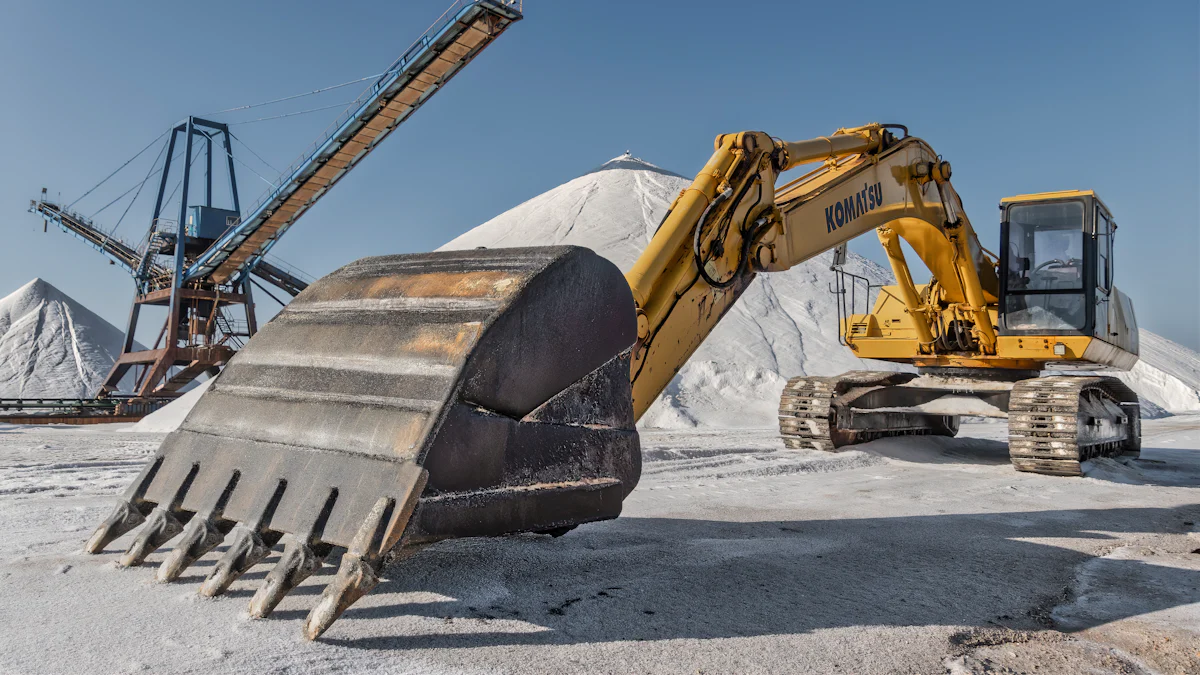
Specific items comprise large buckets and forks, tyre‑protection chains, undercarriage and track components, ground‑engaging tools such as teeth and blades, and swing bearings for excavators. These parts are typical replacements for excavators, loaders, and crawler tractors used in construction, mining and agricultural projects. The product mix reflects demand for wear‑resistant steel components and precision‑engineered bearings that sustain high cyclic loads. All listed items are sourced for export from India to regions that import construction machinery parts.
Product Range and Specialties of Shantilal C. Mehta
The catalogue offers rock breaker chisels fabricated from alloy tool steels 42CrMo, 4140 and H13, which are heat‑treated to achieve hardness levels of 48‑55 HRC, a common specification for impact‑resistant tooling. Large buckets and forks are typically forged from structural steel grades such as S355 or A36, with welding and surface treatment to meet load‑bearing requirements up to 10 t. Tyre‑protection chains are usually produced from high‑strength alloy steel (e.g., 55SiMn) and heat‑treated to a tensile strength of 900‑1100 MPa, providing abrasion resistance for tracked vehicles. Undercarriage and track parts often use wear‑resistant steel grades like 20MnCr5, heat‑treated to a surface hardness of 48‑52 HRC.
Ground‑engaging tools, including teeth and blades, are commonly made from alloy steels such as 20CrMnTi and are heat‑treated to achieve a wear‑resistant surface. Swing bearings for excavators are normally machined from high‑grade bearing steel (e.g., 52100) and supplied with precision bore tolerances of ±0.01 mm and load capacities up to several hundred kilonewtons. Centrifugal precleaners are built with steel housings, aluminum or steel impellers, and silicone seals, delivering flow rates from 0.5 m³/h to 5 m³/h depending on model size. These industry standards align with the specifications indicated in the supplier’s product list.
Trade and Export Information - Shantilal C. Mehta
India is a major exporter of construction equipment components, with most shipments destined for Asia‑Pacific, the Middle East and Africa where infrastructure development drives demand for excavator and loader parts. Products classified under HS 8431.49 belong to the “parts of machinery for construction or mining” chapter, which typically require compliance with ISO 9001 quality management and, for certain markets, CE marking or equivalent safety certifications. HS 8421.23 covers “machinery for cleaning, sorting or separating” and is often subject to environmental regulations such as the EU REACH framework for metal alloys and sealants.
Export logistics for these steel‑based components usually involve 20‑ft or 40‑ft containers packed in wooden crates with dunnage to prevent impact damage, and the common Incoterms are FOB or CIF to ports such as Mumbai, Mundra or Nhava Sheva. Buyers frequently request a pre‑shipment inspection (PSI) under International Trade Centre guidelines to verify material certificates, dimensional tolerances and surface finish. Indian manufacturers benefit from competitive freight rates and a well‑developed rail‑to‑port network, facilitating timely delivery to global buyers.
Sourcing from Shantilal C. Mehta - Buyer Guidance
When sourcing rock breaker chisels or swing bearings from this supplier, request a mill test report (MTR) specifying chemical composition, hardness (HRC) and heat‑treatment parameters, as well as a dimensional inspection report confirming tolerance limits. For large buckets, forks and undercarriage parts, ask for a load‑test certificate that demonstrates compliance with the relevant ASTM A572 or EN 10025 standards.
Centrifugal precleaners should be accompanied by performance data such as flow rate, pressure drop and seal material compatibility, together with a CE Declaration of Conformity if the buyer’s market requires it. Verify that the supplier can provide ISO 9001 certification upon request, and confirm packaging details - typically double‑layered wooden pallets with shrink‑wrap - to ensure safe transit. Clarify minimum order quantities (often one container load) and typical lead times of 30‑45 days after order confirmation.
Frequently Asked Questions About Shantilal C. Mehta
What product categories does Shantilal C. Mehta offer?
The supplier lists rock breaker chisels, large buckets and forks, tyre‑protection chains, undercarriage/track parts, ground‑engaging tools (teeth and blades), swing bearings for excavators, and centrifugal precleaners.
Which HS codes apply to the listed items?
Rock breaker chisels are classified under HS 8431.49 and centrifugal precleaners under HS 8421.23; the remaining items fall within the broader HS 84‑30 to 84‑30‑99 range for construction equipment parts.
What material specifications should a buyer verify?
Buyers should check that alloy tool steels such as 42CrMo, 4140 or H13 meet the specified hardness of 48‑55 HRC for chisels, that structural steels for buckets meet S355 grade, and that bearing steels comply with 52100 standards and dimensional tolerances of ±0.01 mm.
What certifications are typically required for these components?
Typical requirements include ISO 9001 quality management, CE marking for EU markets, and material test certificates (MTR). Buyers should request these documents before finalizing a purchase.
What are common packaging and shipping methods?
Items are usually packed in wooden crates with dunnage, placed on double‑layered pallets, and shipped in 20‑ft or 40‑ft containers under FOB or CIF terms from Indian ports such as Mumbai or Mundra.
What is the usual minimum order quantity and lead time?
Suppliers often set the MOQ at one container load, and lead times range from 30 to 45 days after order confirmation, depending on product complexity and required testing.
How can a buyer request samples or test reports?
Buyers can request a sample kit accompanied by the mill test report and, where applicable, a load‑test certificate; the supplier typically provides these after a signed non‑disclosure agreement.




 , India