Shandong Qiaozhou Import & Export Co., Ltd. — Supplier
About Shandong Qiaozhou Import & Export Co., Ltd. - Waterproofing Material Supplier in China
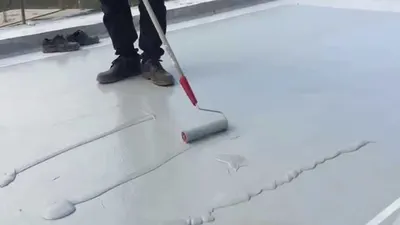
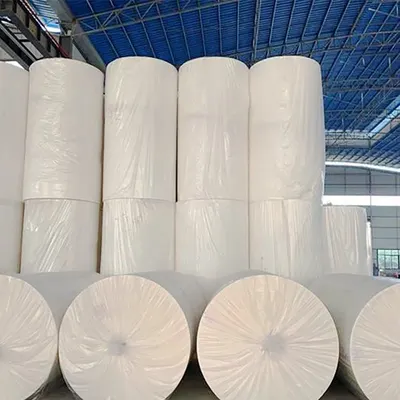
Based in Shandong province, China, Shandong Qiaozhou Import & Export Co., Ltd. currently lists five distinct waterproofing products. The catalogue includes a Polythene Polymer Compound Waterproof Membrane, a Spun Bonded PP Non‑Woven Cloth and Polyester Mat, a 3 mm Polyester Waterproof Membrane, an EPDM Waterproof Membrane, and a Self‑Adhesive Waterproof Membrane. All items fall under the broader waterproofing material category used in construction and infrastructure projects. The supplier’s product identifiers align with typical plastic and elastomer classifications found in HS chapter 39. The active product count reflects the company’s focused offering within this niche.
The Polythene Polymer Compound and the Self‑Adhesive membranes are generally supplied as rolls with thicknesses ranging from 0.5 mm to 2 mm, while the 3 mm Polyester membrane specifies a fixed thickness. EPDM membranes are commonly produced in sheet form with tensile strength around 10 - 15 MPa and elongation above 400 %. The spun‑bonded PP non‑woven cloth and polyester mat serve as reinforcement layers, often graded by GSM between 150 and 300 g/m². These materials are typically compatible with bitumen, cementitious, or liquid‑applied waterproofing systems. Buyers frequently reference standards such as ASTM D4435 for waterproofing sheets and ISO 9001 quality management in supplier selection.
Product Range and Specialties of Shandong Qiaozhou Import & Export Co., Ltd.
Shandong Qiaozhou’s catalogue covers five waterproofing solutions: a Polythene Polymer Compound membrane, a Spun‑Bonded polypropylene non‑woven cloth combined with a polyester reinforcement mat, a 3 mm thick polyester membrane, an EPDM elastomer sheet, and a Self‑Adhesive membrane. In the industry, polymer‑based membranes are usually classified by polymer type (PE, PP, polyester, EPDM) and by performance metrics such as tensile strength, tear resistance, and water uptake. Typical PE waterproof membranes meet ASTM D4435 or EN 13830 specifications, with water absorption below 1 % and elongation above 300 %. PP non‑woven reinforcement is often graded by basis weight (150 - 300 g/m²) and melt flow index, providing dimensional stability for composite systems. Polyester membranes of 3 mm thickness are common in flat‑roof applications, offering UV resistance and fire classification of B‑s2, d0 per EN 13501‑1. EPDM sheets are valued for their ozone and weather resistance, with industry grades like EPDM‑S (standard) and EPDM‑R (reinforced) that meet ISO 8158. Self‑Adhesive membranes typically incorporate a pressure‑sensitive adhesive layer and are evaluated for peel strength (≥1 N/25 mm) and bond durability under temperature cycling.
Trade and Export Information - Shandong Qiaozhou Import & Export Co., Ltd.
China is a major exporter of polymer‑based waterproofing membranes, with shipments frequently directed to construction markets in Southeast Asia, the Middle East, Africa, and Eastern Europe. Products such as PE and PP membranes fall under HS chapter 39 (plastics), while EPDM sheets are often classified under HS 4001 (natural rubber) or 4002 (synthetic rubber). Export consignments are typically loaded on 20‑ft or 40‑ft containers, with membranes rolled onto cardboard cores or packed in wooden crates to prevent deformation. Buyers usually request certification to ISO 9001 and compliance with regional standards such as the EU’s CE marking or GCC technical regulations for building materials.
Customs inspections often reference the relevant HS codes and may require material safety data sheets (MSDS) and test reports confirming tensile strength, water absorption, and fire classification. For large orders, a declaration of conformity to ASTM or EN standards is common. Logistics terms such as CIF (Cost, Insurance, Freight) to the buyer’s port are standard in the waterproofing membrane trade, with lead times ranging from 30 to 60 days depending on production scheduling and container availability.
Sourcing from Shandong Qiaozhou Import & Export Co., Ltd. - Buyer Guidance
Prospective buyers should request product data sheets that list thickness, tensile strength, elongation at break, water absorption, and fire classification for each membrane type. Sample rolls of 1 m × 10 m are typical for performance verification, and laboratory test reports adhering to ASTM D4435 (water resistance) and ISO 8158 (elasticity) help confirm compliance. Verification of ISO 9001 certification, CE conformity declarations, or GCC technical standard approvals should be obtained before finalizing contracts. Buyers are advised to confirm packaging dimensions, palletization patterns, and whether the membranes are supplied with protective release liners to avoid damage during handling.
Frequently Asked Questions About Shandong Qiaozhou Import & Export Co., Ltd.
What waterproofing membrane types are listed by Shandong Qiaozhou?
The supplier lists a Polythene Polymer Compound Waterproof Membrane, a Spun‑Bonded PP Non‑Woven Cloth with Polyester Mat, a 3 mm Polyester Waterproof Membrane, an EPDM Waterproof Membrane, and a Self‑Adhesive Waterproof Membrane. These five products cover polymer‑based sheet and membrane solutions commonly used in roofing and foundation waterproofing.
Which material standards are typically applied to these membranes?
Industry standards such as ASTM D4435 for waterproof sheets, EN 13830 for polymer membranes, ISO 8158 for EPDM elasticity, and fire classification EN 13501‑1 are commonly referenced for the listed products. Suppliers usually provide test reports that demonstrate compliance with these specifications.
What are the usual thickness ranges for the supplier’s membranes?
The Polythene and Self‑Adhesive membranes are offered in thicknesses from 0.5 mm to 2 mm, while the polyester membrane is specified at 3 mm. EPDM sheets are generally supplied in 1 mm to 2 mm thicknesses depending on the grade.
How are the non‑woven cloth and polyester mat typically used?
They serve as reinforcement layers in composite waterproofing systems, providing dimensional stability and tensile strength. Grading is often based on basis weight between 150 and 300 g/m² and on melt flow index for the polypropylene component.
Which HS code chapters cover these products for customs purposes?
Waterproofing membranes made from polyethylene, polypropylene, and polyester are usually classified under HS chapter 39 (plastics). EPDM sheets fall under HS chapter 40 (rubber products), which includes both natural and synthetic rubber categories.
What documentation should a buyer request before ordering?
Buyers should obtain product data sheets, laboratory test reports (tensile strength, water absorption, fire rating), ISO 9001 certification, and any regional conformity declarations such as CE or GCC approvals. These documents verify that the membranes meet the technical and regulatory requirements of the target market.
What packaging and shipping formats are common for these membranes?
Products are commonly rolled on cardboard cores or packed in wooden crates, then palletized for loading into 20‑ft or 40‑ft containers. Shipping is frequently arranged under Incoterms such as CIF to the buyer’s destination port, with standard handling procedures to protect the membrane surfaces.




 , China






.jpg.png)