Sata Technology Co., Ltd. — Supplier
About Sata Technology Co., Ltd. - Scientific Instruments Supplier in China
Sata Technology Co., Ltd. is based in China and currently lists five active products in its catalogue. The supplier’s portfolio falls under the broader categories of Scientific Instruments, Light & Medium Machinery, and Agriculture, with each item classified in HS‑code families for testing and measuring equipment (e.g., chapter 90, sub‑heading 9025‑9026). The catalogue includes an Air bomb & oxygen bomb ageing tester, a UL cable single‑h/v flaming tester, a UL cable vertical‑tray flaming test room, a material tensile test machine, and a conductor elongation tester. These products are described using the specific terminology of cable and material testing, indicating a focus on laboratory‑grade performance assessment.
In the absence of disclosed certifications, the listed equipment aligns with industry standards such as IEC 60216 for ageing tests, UL 1581 for cable flame testing, and ISO 7500‑1 for tensile testing machines. Buyers can expect the devices to be compatible with standard test protocols used in polymer, cable and material engineering sectors. The supplier’s active product count of five reflects a narrowly focused catalogue rather than a broad‑spectrum machinery line.
Product Range and Specialties of Sata Technology Co., Ltd.
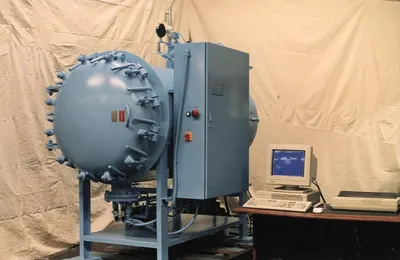
The Air bomb & oxygen bomb ageing tester is used for accelerated weathering of polymer samples, typically operating at temperatures up to 80 °C and UV intensities measured in W/m². UL cable single‑h/v flaming testers and the vertical‑tray flaming test room serve to evaluate flame propagation on insulated conductors according to UL 1581 or IEC 60332, with test chambers sized for cable diameters from 2 mm to 30 mm. The material tensile test machine provides static load testing up to 100 kN and records stress‑strain curves in compliance with ISO 7500‑1, while the conductor elongation tester measures stretch percentages of cable cores under controlled tension. In the global market, such testing equipment is commonly offered in grades ranging from basic laboratory models to high‑throughput industrial units, with specifications such as temperature control ±0.5 °C, load cell accuracy within 0.1 % of full scale, and data acquisition rates of 10 Hz or higher.
Industry practice for these categories includes optional accessories like environmental chambers, flame‑resistant test fixtures, and digital reporting software. Buyers often select equipment based on the required test standards (e.g., IEC, UL, ASTM) and the material size envelope they need to cover.
Trade and Export Information - Sata Technology Co., Ltd.
China is a major exporter of laboratory and industrial testing equipment, and products similar to those listed by Sata Technology typically ship to Europe, North America, and the Asia‑Pacific region. HS‑code 9025 covers instruments for measuring or checking electrical quantities, while HS‑code 9026 applies to testing machines, both of which are relevant to the supplier’s catalogue. Export shipments are usually packed in wooden crates with internal cushioning, loaded into 20‑ft or 40‑ft containers, and handled under Incoterms such as FOB Shanghai or CIF destination port. Buyers commonly request CE marking, ISO 9001 quality‑management certification, and compliance with IEC or UL standards as part of the import documentation. Chinese exporters of testing equipment often provide a Declaration of Conformity and test reports to satisfy customs and regulatory checks in the destination market.
Typical import regulations for these devices include electromagnetic compatibility (EMC) testing for electronic components and safety assessments for pressure‑rated chambers. Freight forwarding firms handling such cargo frequently arrange for temperature‑controlled containers when the equipment includes sensitive calibration devices.
Sourcing from Sata Technology Co., Ltd. - Buyer Guidance
When sourcing from Sata Technology, buyers should request a CE Declaration of Conformity and any available ISO 9001 certificates to verify the supplier’s quality system. It is advisable to obtain the latest calibration certificates for the tensile and elongation testers, as well as test reports that demonstrate compliance with IEC 60216 for ageing and UL 1581 for flame testing. Verify the dimensions of the test chambers to ensure they accommodate the cable sizes required for your projects, and confirm the load‑cell capacity and measurement accuracy of the tensile machine before placing an order.
Typical minimum order quantities for testing equipment are one unit per model, with lead times ranging from four to eight weeks depending on configuration and optional accessories. Buyers should also confirm packaging details - such as crate dimensions, palletization, and moisture‑resistant wrapping - to prevent damage during sea freight. Requesting a pre‑shipment inspection by a third‑party agency can further assure compliance with the specified standards.
Frequently Asked Questions About Sata Technology Co., Ltd.
What standards do the flame testing devices comply with?
The UL cable single‑h/v flaming tester and the vertical‑tray flaming test room are designed to meet UL 1581 and IEC 60332 test methods, which are the common references for cable flame propagation assessments.
Can the material tensile test machine handle high‑strength metals?
The machine is rated up to 100 kN load capacity and offers load‑cell accuracy of 0.1 % of full scale, making it suitable for testing high‑strength metals as well as polymer specimens.
Is a calibration certificate provided with the equipment?
Buyers should request the latest calibration certificate for each device; manufacturers of this class of equipment typically issue certificates traceable to national metrology institutes.
Which certifications should I ask the supplier to provide?
Ask for CE marking documentation, ISO 9001 quality‑management certification, and any test reports that confirm compliance with IEC 60216 (ageing) or UL 1581 (flame testing).
What are the typical packaging and shipping arrangements?
Units are usually crated in wooden boxes with internal foam padding, palletized, and shipped in 20‑ft or 40‑ft containers under FOB or CIF terms.
What is the usual lead time for delivery?
Lead times commonly range from four to eight weeks after order confirmation, depending on the specific model and any optional accessories requested.
Are sample units or demo units available?
Suppliers of testing equipment often provide a limited number of demonstration units or arrange on‑site trials; buyers should inquire directly about availability and any associated shipping costs.
What documentation is needed for customs clearance?
Customs typically require the commercial invoice, packing list, CE Declaration of Conformity, and any applicable test reports or certificates of compliance.




 , China