Prestige Stones — Verified Supplier
About Prestige Stones - Mineral and Nut Supplier in Kenya
Prestige Stones is based in Kenya and currently lists 13 active products across mineral, nut and specialty commodity categories. The catalogue includes mica, quartz crystals, graphite‑flakes, lead ore, manganese ore, fluorite, tantalum/coltan and related concentrates, each identified with its respective HS‑code family such as 2525.10 for mica and 2506.10 for quartz. In addition to mineral products, the supplier offers agricultural commodities including African art items, macadamia nuts, cashew nuts, coffee beans and gum Arabic. All listed items are sourced within Kenya’s mining regions and agricultural zones, providing a geographically concentrated supply base.
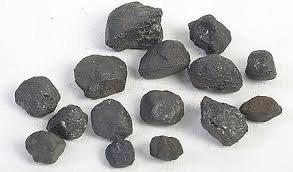
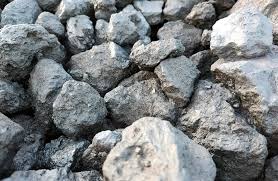
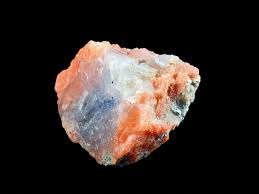
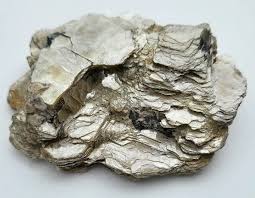
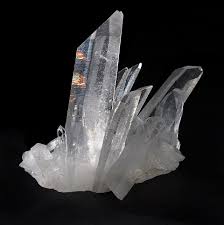
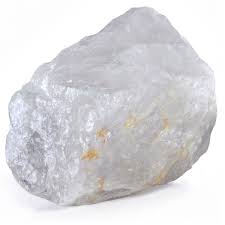
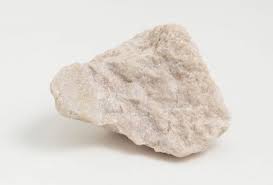
The mica entry refers to natural muscovite or phlogopite with the chemical formula KAl2(AlSi3O10)(OH)2 and falls under HS chapter 25 for mineral products. Quartz crystals are described as natural SiO2 specimens classified under HS 2506.10, typically supplied in sizes ranging from 5 mm to 30 mm. Graphite‑flakes are natural carbon with 80‑95 % purity and are listed under HS 2504.10, while lead ore (galena) contains 50‑70 % lead and uses HS 2607.00. Manganese ore (30‑48 % Mn) and fluorite (CaF2) are recorded under HS 2602.00 and 2529.21 respectively, and the tantalum/coltan concentrate (Ta2O5) appears under HS 2615.90. The nut and agricultural products are not assigned HS codes in the supplied data, but they typically fall under HS 0801‑0805 for nuts and HS 0901 for coffee.
Product Range and Specialties of Prestige Stones
The mineral portfolio comprises natural mica (often graded 99 % purity with flake sizes 10‑100 µm), quartz crystals (commonly 99.5 % SiO2 with clear or milky inclusions), flake graphite (80‑95 % carbon, bulk density 1.2‑1.5 t/m³), lead ore (galena concentrate 50‑70 % Pb, moisture <5 %), manganese ore (30‑48 % Mn, silica 10‑15 %), fluorite (CaF2 purity 95‑99 %, calcium carbonate equivalent 90‑95 %) and tantalum ore (Ta2O5 concentrate typically >30 %). These commodities are usually shipped in bulk bags (1 t) or wooden crates for mineral concentrates, and are subject to standard HS‑code customs documentation.
The agricultural side includes macadamia nuts (kernel grade AA, moisture ≤2 %), cashew nuts (grade W180, shell‑to‑kernel ratio ~2.5:1), coffee beans (Arabica, 12‑14 % moisture, screened 16‑18 mm), and gum Arabic (soluble solids 80‑85 %). Such products are commonly packed in jute or polypropylene bags of 20‑25 kg, sealed for moisture protection, and may carry phytosanitary certificates under the International Plant Protection Convention.
Trade and Export Information - Prestige Stones
Kenyan exporters of the listed minerals typically target industrial users in China, India, the United Arab Emirates and European Union countries, where the HS‑code families 2500‑2600 are regularly imported for metallurgical, ceramic and electronic applications. Standard export documentation includes a commercial invoice, packing list, certificate of origin, and a third‑party inspection report (e.g., SGS or Bureau Veritas) that verifies grade, moisture and heavy‑metal limits in accordance with REACH and ISO 9001 quality systems. Agricultural commodities such as macadamia, cashew, coffee and gum Arabic are largely shipped to North America, the EU and Southeast Asia; buyers often require phytosanitary certificates, fumigation statements and, for coffee, a cupping score report. Typical logistics involve 20‑ft containers for bulk mineral bags (approximately 18 t per container) and 40‑ft containers for nuts and coffee (around 22 t). Incoterms most frequently used are FOB Mombasa or CIF Dubai, depending on the buyer’s preferred destination.
Kenya’s mining sector is regulated by the Ministry of Mining and has a growing export infrastructure, with Mombasa port handling the majority of mineral shipments. Exporters are encouraged to obtain the Kenya Export Promotion and Branding Board (KEPROB) certification for traceability, although it is not mandatory for all product types. Buyers should verify that any required certifications, such as ISO 14001 for environmental management or specific alloy content certificates, are included in the supplier’s documentation before finalizing the order.
Sourcing from Prestige Stones - Buyer Guidance
When sourcing from Prestige Stones, buyers should request a recent laboratory analysis report for each mineral, confirming purity percentages, moisture content and any prohibited heavy‑metal levels. For nuts and coffee, a sample batch should be evaluated for aflatoxin levels, moisture and size grading, and the supplier should provide a phytosanitary certificate issued by the Kenyan Plant Health Authority. It is advisable to confirm the exact HS code that will be used on the commercial invoice, as the catalogue lists codes for most minerals but not for the agricultural items. Buyers should also ask for packaging details - bulk mineral bags are typically 1 t polypropylene with inner liners, while nuts are packed in 20 kg woven bags - to ensure compatibility with their logistics chain.
Typical minimum order quantities (MOQ) are 500 kg per grade for mineral concentrates and 10 t per shipment for bulk nut products; lead times range from 15 days for ready‑stock graphite to 45 days for processed tantalum concentrate, depending on production scheduling and export clearances. Prior to shipment, a pre‑shipment inspection by an independent laboratory or inspection agency can be arranged to verify compliance with the buyer’s specifications and any destination‑specific regulations.
Frequently Asked Questions About Prestige Stones
What HS codes apply to the minerals listed by Prestige Stones?
The catalogue assigns HS 2525.10 to natural mica, 2506.10 to quartz crystals, 2504.10 to graphite‑flakes, 2607.00 to lead ore, 2602.00 to manganese ore, 2529.21 to fluorite and 2615.90 to tantalum/coltan concentrate. The remaining products are not listed with HS codes in the data.
Which certifications should I request for the mineral products?
Buyers commonly require a third‑party inspection report (e.g., SGS) and a certificate of analysis that details purity, moisture and heavy‑metal limits. ISO 9001 or ISO 14001 compliance statements are also typical for mineral exporters.
How are the nut and coffee products packaged for export?
Macadamia, cashew, coffee and gum Arabic are usually packed in 20‑kg woven or polypropylene bags, sealed to protect against moisture. Bulk shipments are consolidated in 40‑ft containers, allowing roughly 22 t of product per container.
What documentation is needed for importing the agricultural commodities?
A phytosanitary certificate issued by the Kenyan Plant Health Authority, a certificate of origin and, for coffee, a cupping score or quality report are standard requirements for most destination countries.
What are the typical minimum order quantities and lead times?
Mineral concentrates generally have an MOQ of 500 kg per grade, with lead times of 15‑45 days depending on the product. Nut and coffee shipments usually start at 10 t per order, with lead times of 20‑30 days after sample approval.
Can I arrange a pre‑shipment inspection?
Yes, buyers can engage an independent inspection agency to conduct a pre‑shipment audit that verifies grade, packaging and compliance with any destination‑specific regulations before the cargo is loaded.
Which regions import the minerals supplied by Prestige Stones?
China, India, the United Arab Emirates and European Union markets are the primary importers of Kenyan mica, quartz, graphite, lead, manganese, fluorite and tantalum concentrates.
What incoterms are most commonly used for these exports?
FOB Mombasa and CIF Dubai are the most frequently applied incoterms for both mineral and agricultural shipments, allowing buyers to select the preferred responsibility and cost structure.




 , Kenya