Global Mining Egypt — Supplier
About Global Mining Egypt - Other Ores & Minerals Supplier in Egypt
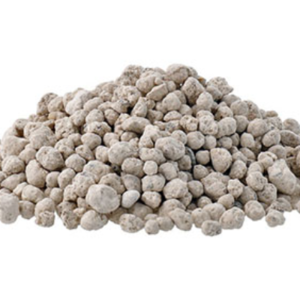
Egypt‑based Global Mining Egypt lists twenty distinct mineral products across the categories of other ores, chemicals, agriculture, limestone, talc, gypsum, salt and mica. The catalogue includes bulk minerals such as Limestone, Quick Lime, Dolomite and Fluorite, as well as specialty silicates like Kaolinitic Glass Sand and High‑Purity Silica Quartz (HS 2505.10). Several feldspar varieties appear, including Sodium (Albite) and Potassium (KAlSi3O8) Feldspar under HS 2529.10, while the company also offers Barite (HS 2511.10) and a combined Mica and Vermiculite product (HS 2525.10). Each entry specifies the material composition, for example the Glass Sand is described as 98.5‑99.5 % SiO₂ and the Hydrated Lime as calcium hydroxide with a minimum 80 % purity (HS 2522.20). The full list spans raw construction minerals, glass‑making feedstocks and agricultural additives, providing a broad base for downstream processing industries.
The product set reflects standard Egyptian mineral outputs that are routinely exported under the listed HS‑code families. Limestone, Gypsum and Salt are typical bulk commodities for cement, plaster and food‑grade markets, while the silica‑based sand and quartz serve glass and electronics manufacturers. Feldspar and Kaolin are core inputs for ceramics and paint formulations, and the Barite and Fluorite grades meet requirements for oil‑field drilling fluids and fluorochemical production. The presence of both Quick Lime and Hydrated Lime indicates coverage of the calcium oxide/lime market, which often requires compliance with ASTM C618 or EN 459 standards. Overall, the catalogue presents a complete suite of Egyptian mineral resources suitable for a range of industrial applications.
Product Range and Specialties of Global Mining Egypt
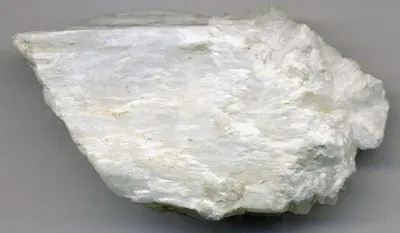
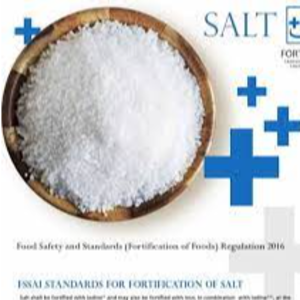
The catalogue groups minerals by chemical composition and end‑use. Limestone is offered as a bulk carbonate rock, typically meeting CaCO₃ % 95‑99 and particle sizes up to 4 mm for cement clinker production. Quick Lime (CaO) and Hydrated Lime (Ca(OH)₂) are supplied with minimum 80 % purity, matching the specifications of ASTM C618 for hydraulic lime. Talc is described without a grade but industry practice expects a MgO % 99 and moisture < 1 % for cosmetics and ceramics. Gypsum (CaSO₄·2H₂O) is usually graded at 95‑98 % purity for plaster and wallboard, while Salt (NaCl) is exported in bulk for food and chemical sectors. Feldspar products (Na‑feldspar and K‑feldspar) are commonly supplied with SiO₂ % 60‑65 and Al₂O₃ % 15‑20, meeting ISO 9001‑based quality systems for ceramics. The silica products - Glass Sand (HS 2505.10) and Quartz - are high‑purity (≥ 98.5 % SiO₂) and are graded for glass‑making or semiconductor substrates, where particle size distribution (e.g., 100 µm - 500 µm) and low iron content are critical. Barite and Fluorite are typically exported as acid‑grade (Barite ≥ 90 % BaSO₄, Fluorite ≥ 97 % CaF₂) for drilling muds and fluorochemical feedstock. Mica and Vermiculite are supplied as natural sheets or expanded granules, often meeting ASTM D393 for electrical insulation. Kaolin and Kaolinitic Glass Sand are high‑purity clays (Al₂O₃ % 35‑45, SiO₂ % 45‑55) used in paper coating and refractory applications.
Trade and Export Information - Global Mining Egypt
Egypt is a long‑standing exporter of bulk minerals, and the products listed fall under several HS‑code chapters that are routinely inspected by customs authorities. The silica‑based sand and quartz (HS 2505.10) are typically shipped in 20‑ft or 40‑ft containers with moisture‑proof liners, and buyers in the EU, GCC and East Asia often require a Certificate of Origin and compliance with REACH for trace heavy metals. Feldspar (HS 2529.10) and Kaolin (HS 2507.00) are subject to quality verification against ISO 9001 or EN 1744 standards, and importers frequently request a lab‑issued assay report confirming SiO₂, Al₂O₃ and impurity levels. Calcium carbonate products such as Limestone and Quick Lime (HS 2522.20, HS 2505.10) are regulated under ASTM C618 for pozzolanic activity; bulk shipments are usually packed in woven polypropylene bags (25 kg) or bulk silos with standard Incoterms CIF or FOB. Barite (HS 2511.10) and Fluorite (HS 2529.21) are exported to oil‑field service companies in North America and Europe, which often demand a third‑party inspection report (e.g., SGS) and a Material Safety Data Sheet (MSDS). Overall, the HS‑code families indicate that customs duties, phytosanitary checks (for agricultural minerals) and environmental compliance documentation are standard parts of the export process from Egypt.
Sourcing from Global Mining Egypt - Buyer Guidance
When sourcing from Global Mining Egypt, buyers should request a full suite of product specifications: assay certificates for purity (e.g., SiO₂ % for silica sand), particle‑size distribution curves, moisture content, and bulk density. For calcium‑based products, an ASTM C618 compliance report and a pH stability test are typical prerequisites. An independent third‑party inspection report (SGS, Bureau Veritas) and a Certificate of Origin are advisable to satisfy customs and buyer‑specific quality systems. Buyers should also obtain an MSDS for any chemical‑treated mineral (e.g., Fluorite) and verify that the supplier can provide ISO‑based quality management documentation if required by the end‑user. It is prudent to arrange a small trial shipment or sample batch before committing to full container volumes, allowing verification of packaging integrity (e.g., 25 kg woven bags, moisture‑proof liners) and conformity with the buyer’s logistical constraints.
Frequently Asked Questions About Global Mining Egypt
What HS codes are associated with the silica products offered by Global Mining Egypt?
The high‑purity Glass Sand and ground Quartz are listed under HS 2505.10, while the premelted glass frit falls under HS 3207.20.
Which certifications should a buyer request for the limestone and lime products?
Buyers typically ask for an ASTM C618 compliance certificate, a purity assay (CaCO₃ % ≥ 95 for limestone, CaO % ≥ 90 for quick lime), and an independent inspection report such as SGS.
How are bulk mineral shipments from Egypt usually packaged for export?
Bulk minerals are commonly packed in 20 kg or 25 kg woven polypropylene bags, placed on pallets for container loading, or shipped in bulk silos for large volumes. Moisture‑proof liners are standard for silica sand to prevent clumping.
What documentation is required for importing barite and fluorite from Egypt?
Importers generally require a Certificate of Origin, a material assay confirming BaSO₄ ≥ 90 % for barite or CaF₂ ≥ 97 % for fluorite, an MSDS, and a third‑party inspection certificate.
Which markets typically import the feldspar and kaolin products listed?
Feldspar and kaolin are most frequently shipped to the European ceramics sector, the Middle‑East paint industry, and Asian paper‑coating manufacturers, all of which often request ISO 9001‑based quality certificates and detailed chemical analyses.
What quality tests are standard for talc and mica supplied by this company?
Standard tests include moisture content (< 1 %), loss on ignition, particle‑size distribution, and for mica, electrical insulation resistance (ASTM D393). A lab‑issued purity report confirming MgO % for talc and KAl₂Si₃O₁₀ % for mica is customary.




 , Egypt