Poiltava Diamand Tools — Manufacturer & Wholesale Supplier
About Poiltava Diamand Tools - Grinding Wheel Supplier in Ukraine
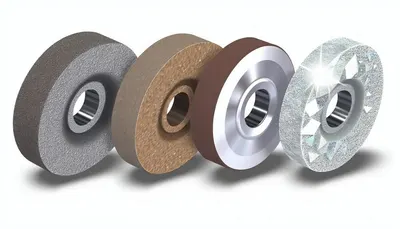
Ukraine, Poltava region hosts Poiltava Diamand Tools, a manufacturer that currently lists ten active products in its catalogue. The catalogue consists exclusively of diamond‑bond grinding wheels, each identified with a specific product code and an associated HS‑code family such as "3-3048" or "FM2‑18". The product titles include detailed dimensions, bond type (e.g., B9‑00, B7‑01, HPD01) and diamond material specification. The supplier’s top categories include Scientific Instruments, Grinding Wheel, Tool Box, Light & Medium Machinery, and Tools & Instruments, reflecting the technical focus of the range. All entries are described as "PREMIUM" indicating a higher grade within the supplier’s internal classification system.
The ten listed items cover wheel diameters from 75 mm to 150 mm, arbor sizes ranging from 2 mm to 5 mm, and thicknesses between 10 mm and 20 mm. Each entry specifies a bond grade (e.g., B9‑00, B7‑01, HPD01) and a diamond grade code (e.g., D64, D126/D46, D64 S, D64 Y). The HS‑code strings provided correspond to the customs classification used for diamond tools, though they are presented in the supplier’s internal format. No additional product families beyond diamond grinding wheels are mentioned in the supplied data.
Product Range and Specialties of Poiltava Diamand Tools
The catalogue presents diamond grinding wheels designed for precision machining of metals, composites, glass, ceramics and stone. Typical industry grades for such wheels include bond grades B9, B7 and HPD01, with diamond concentrations expressed by codes such as D64 or D126/D46, which align with standard hardness and wear resistance levels. Buyers usually evaluate grit size, bond hardness, wheel diameter, arbor size and peripheral speed limits; the listed products provide these dimensions explicitly, for example a 125 mm wheel with a 2.5 mm arbor and a 20 mm thickness. In the broader market, diamond wheels are often manufactured to ISO 9001 quality‑management standards and may comply with ASTM C1153 for diamond tool performance.
Trade and Export Information - Poiltava Diamand Tools
Ukraine is a recognized exporter of industrial diamond tools, with major destinations in the European Union, the Middle East and East Asia. HS chapter 68 (tools, implements and cutlery) governs customs treatment of grinding wheels, and the supplier’s HS‑code strings map to that chapter. Importers typically require CE marking, ISO 9001 or ISO 14001 certification, and an independent SGS or Intertek test report confirming diamond concentration and bond hardness. Shipping is commonly arranged in 20‑ft or 40‑ft containers, using wooden crates or reinforced cardboard pallets to protect the wheels from impact; Incoterms such as FOB Poltava or CIF to the buyer’s port are standard practice. The Ukrainian export environment emphasizes compliance with EU REACH regulations for hazardous substances, which buyers should verify before finalizing orders.
Sourcing from Poiltava Diamand Tools - Buyer Guidance
When sourcing from Poiltava Diamand Tools, buyers should request the full technical data sheet for each wheel, including diamond grade, bond grade, recommended peripheral speed and maximum operating temperature. A pre‑shipment sample or third‑party test report (e.g., SGS) helps confirm that the wheel meets the specified ISO or ASTM standards. Verify that the supplier can provide CE documentation and, where required, an ISO 9001 quality‑management certificate before placing a bulk order. Confirm packaging details - such as individual wooden boxes or bulk palletization - and ensure that the chosen Incoterm aligns with the buyer’s logistics strategy.
Frequently Asked Questions About Poiltava Diamand Tools
What types of grinding wheels are listed in Poiltava Diamand Tools' catalogue?
The catalogue lists ten diamond‑bond grinding wheels, each defined by diameter, arbor size, thickness, bond grade (B9‑00, B7‑01, HPD01) and a diamond grade code such as D64 or D126/D46. All wheels are described as "PREMIUM" and are intended for precision grinding applications.
Which HS‑code families are associated with these wheels?
The products are paired with HS‑code strings like "3-3048", "3Z0088", "FM1‑02", "FM1‑14", "5‑1041", "5‑1051", "FM2‑08", "FM2‑18", "FR1‑00" and "FR1‑03". These codes correspond to the customs classification for diamond tools within chapter 68.
What certifications are typically required for diamond grinding wheels from Ukraine?
Buyers usually request CE marking, ISO 9001 quality‑management certification, and an independent test report (e.g., SGS or Intertek) confirming diamond concentration and bond hardness. Re‑verification of REACH compliance is also common for European imports.
What are the common industrial applications for the listed wheels?
The wheels are used for grinding engine components, turbine blades, glass panels, ceramic tiles, stone and reinforced‑concrete surfaces, as well as for sharpening saws and milling cutters in woodworking and metalworking.
How are the wheels packaged for export?
Typical packaging includes individual wooden crates or reinforced cardboard boxes, stacked on pallets suitable for 20‑ft or 40‑ft containers. The packaging is designed to prevent wheel deformation and protect the diamond bond during transit.
What is the usual minimum order quantity and lead time?
While the supplier’s specific MOQ is not disclosed, diamond wheel manufacturers often set a minimum order of one full pallet (approximately 20‑30 wheels) and a lead time of 2‑4 weeks after order confirmation, depending on the required sizes.
How can a buyer request a sample or technical data sheet?
Buyers should submit a formal inquiry specifying the wheel model (e.g., "Grinding Wheel 12R4 125 3 2 12 32 PREMIUM B9‑00 D64 П") and request the corresponding technical data sheet and, if needed, a pre‑shipment sample for laboratory testing.
Are the wheels compatible with standard spindle sizes?
The catalogue provides the arbor size for each wheel (e.g., 2 mm, 2.5 mm, 3 mm, 5 mm), which aligns with common spindle standards in CNC grinding machines. Buyers should verify that the selected arbor matches their equipment specifications before ordering.




 , Ukraine