Marso Chemicals — Verified Supplier
About Marso Chemicals - Rubber Items Supplier in Egypt
Egyptian supplier Marso Chemicals lists 26 active products that fall under rubber items, rubber flooring, raw rubber, traffic safety devices, bearing and curtain categories. The catalogue spans elastomeric bridge bearings, various floorings for livestock, pets, children and sports facilities, reclaimed and crumb rubber, specialized EPDM and neoprene membranes, dam‑gate seals and ESD mats. One product, the Marso Elastomeric Bridge Bearing, is recorded with HS code 8483.40 and combines neoprene rubber with steel reinforcement plates. The remaining items are presented without specific HS codes but belong to the broader HS 4000‑series for rubber and plastic articles.
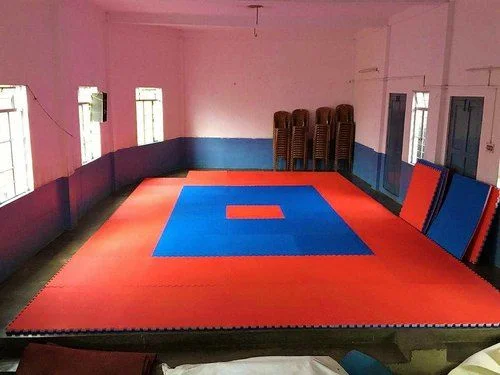
The product list includes horse and cattle flooring, reclaimed rubber, car mats, EPDM curtain wall membrane, crumb rubber, pet rubber flooring, rubber bumpers, kids area flooring, gym and sports flooring, rubber expansion joints for bridges and concrete, anti‑abrasion and anti‑slipping linings, anti‑vibration mountings, shock‑absorbing sheets, colored SBR, EPDM roofing membrane, CLM COL Gard, dam‑gate rubber seals for flap, radial and stop‑log gates, disinfection mats, two‑layer ESD mats and I‑Shape interlock flooring tiles. Each entry reflects a distinct rubber formulation or application, providing a diversified portfolio of 26 items for industrial and construction markets.
Product Range and Specialties of Marso Chemicals
Marso Chemicals’ catalogue covers a spectrum of synthetic rubber compounds such as neoprene (polychloroprene), EPDM, SBR and reclaimed rubber, delivered as sheets, tiles, mats or molded seals. In the industry, neoprene bearings are typically formulated to Shore A 55‑65 hardness and designed for compression set under 25 % after high‑temperature ageing. EPDM membranes used in roofing and curtain walls are graded by tensile strength (≥ 10 MPa) and ozone resistance, while SBR compounds for flooring are often classified by particle size (0‑5 mm) and density (≈ 1.10 g/cm³). Rubber flooring products usually meet ASTM D2859 impact resistance, EN 1469 slip‑resistance and ISO 20344 safety specifications, with fire‑retardant grades (e.g., UL‑94 V‑0) available on request. Reclaimed and crumb rubber are commonly sized by mesh sieve (e.g., 0‑5 mm, 5‑10 mm) and tested for ash content (< 2 %).
Trade and Export Information - Marso Chemicals
Egypt is a regional hub for rubber manufacturing, exporting to the EU, GCC, North Africa and parts of Asia. Products such as bridge bearings fall under HS 8483.40, while most flooring, mats and seals are classified within HS 4001‑4009 for natural and synthetic rubber articles. Buyers typically require ISO 9001 quality‑management certification, ISO 14001 environmental compliance and CE marking for EU shipments; REACH registration is standard for chemical safety across most markets. Export logistics often use FOB Alexandria or Port Said, with containers loaded on 20‑ft or 40‑ft vessels; bulk rubber sheets are crated, while loose mats are palletised and wrapped in moisture‑barrier film. Import regulations may demand material safety data sheets (MSDS), test reports for hardness, tensile strength and aging resistance, and, for flooring destined for public spaces, fire‑performance certificates.
Typical importers include construction firms, infrastructure contractors, sports‑facility developers and manufacturers of heavy‑duty equipment. These sectors look for compliance with standards such as EN 1337 for bridge bearings, ASTM F1564 for playground surfacing, and ISO 9001 for consistent product quality.
Sourcing from Marso Chemicals - Buyer Guidance
When sourcing from Marso Chemicals, request the latest MSDS, ISO 9001 audit report and any CE or REACH documentation that applies to the specific rubber product. For bridge bearings, ask for test data on Shore A hardness, compression set after 70 °C ageing and load‑capacity calculations. Flooring buyers should obtain sample tiles (minimum 1 m²) together with test reports covering slip resistance (EN 1469), fire rating (UL‑94) and tensile strength (≥ 8 MPa). Reclaimed rubber grades should be verified by particle‑size distribution and ash‑content analysis. Confirm packaging details - e.g., sealed polypropylene bags for crumb rubber or wooden crates for sheet‑type products - and clarify container‑load quantities, which commonly range from 20 t to 30 t per 20‑ft container.
Prior to order confirmation, verify that the supplier can provide third‑party laboratory certificates for each material batch, and ensure that lead times accommodate any required pre‑shipment testing or certification updates.
Frequently Asked Questions About Marso Chemicals
What types of rubber products does Marso Chemicals offer?
Marso Chemicals lists 26 items including elastomeric bridge bearings, various rubber floorings (horse & cattle, pet, kids area, gym, anti‑slipping, anti‑abrasion), reclaimed rubber, crumb rubber, SBR compounds, EPDM membranes, dam‑gate seals, ESD mats and shock‑absorbing sheets.
Which HS code applies to the bridge bearing product?
The elastomeric bridge bearing is classified under HS code 8483.40, which covers parts of machines and mechanical appliances.
What material specifications are typical for the bridge bearing?
The bearing uses neoprene rubber (polychloroprene) combined with steel reinforcement plates, typically formulated to achieve Shore A hardness of 55‑65 and a compression set below 25 % after ageing at 70 °C.
What standards should buyers check for rubber flooring?
Rubber flooring for commercial use is commonly tested against ASTM D2859 (impact resistance), EN 1469 (slip resistance) and ISO 20344 (safety requirements for playground equipment). Buyers often request test reports for Shore A hardness, tensile strength and fire‑retardancy.
Are certifications required for importing these rubber products?
Importers usually request ISO 9001 quality‑management certification, ISO 14001 environmental compliance, CE marking for EU markets and REACH registration for chemical safety. Specific product certifications such as Oeko‑Tex or UL94 may be needed for indoor flooring.
What packaging and shipment sizes are typical?
Bulk rubber items are typically packed in 20‑ft or 40‑ft containers, on wooden pallets or in sealed polypropylene bags (e.g., 25 kg per bag for crumb rubber). Expansion joints and bridge bearings are often crated to prevent deformation during transit.




 , Egypt