Jilin Tianhua Opto Electrical Technology Development Co., Ltd. — Verified Supplier

About Jilin Tianhua Opto Electrical Technology Development Co., Ltd. - Optical Lenses Supplier in China

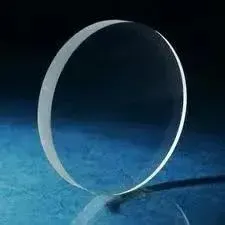
Based in China, Jilin Tianhua Opto Electrical Technology Development Co., Ltd. lists ten active optical components in its catalogue. The product portfolio is confined to optical lenses and prisms, covering plano‑concave, plano‑convex, bi‑convex, bi‑concave, as well as cylindrical variants of the plano‑convex and plano‑concave designs. Additional items include LED prisms, equilateral prisms, dove prisms and penta prisms. Each entry is presented under the single top category of Optical Lenses. The catalogue reflects a focused range of precision glass and polymer optics.

The listed lenses are typical in applications such as imaging systems, laser collimation, fiber‑optic coupling and industrial inspection. Standard specifications for these types include focal lengths ranging from a few millimetres to several centimetres, surface accuracy of λ/4 or better, and scratch‑dig grades of 40‑20 for glass optics. Prisms are commonly supplied with angular tolerances within ±0.1°, transmission above 90% in the visible range, and are compatible with LED illumination. While the supplier does not disclose material composition, optical components of this class are usually fabricated from BK7, high‑index glass or optical‑grade polymers. The catalogue does not provide HS‑code information, so buyers should verify the appropriate HS‑code (e.g., 9001) during customs clearance.

Product Range and Specialties of Jilin Tianhua Opto Electrical Technology Development Co., Ltd.

Jilin Tianhua’s catalogue comprises ten distinct optical parts: plano‑concave, plano‑convex, bi‑convex, bi‑concave lenses, cylindrical versions of plano‑convex and plano‑concave lenses, and four prism types (LED, equilateral, dove and penta). In the optical market, such lenses are commonly produced from BK7 crown glass, high‑index flint glass, or acrylic polymer, with diameters from 10 mm up to 100 mm and focal lengths from - 50 mm to +200 mm. Typical surface quality for precision lenses is specified as λ/4 (633 nm) wavefront error and a scratch‑dig of 40‑20 for glass, while polymer lenses may meet 60‑40. Prisms are usually manufactured from the same material families, with angular accuracy of ±0.05° for equilateral and dove prisms and ±0.1° for penta prisms, and are often coated with anti‑reflective layers to achieve transmission above 95 % across 400 - 700 nm.

Trade and Export Information - Jilin Tianhua Opto Electrical Technology Development Co., Ltd.

China is a major exporter of optical components, with the United States, European Union members and Southeast Asian manufacturers representing the largest demand. Optical lenses and prisms fall under HS chapter 90, typically HS 9001 for lenses and HS 9002 for prisms, and are subject to import inspections for compliance with IEC 60825 (laser safety) and ISO 10110 (optical component specifications). Buyers frequently require CE marking for EU shipments and may request ISO 9001 quality management certification from the supplier. Standard packaging includes anti‑static foam inserts within double‑wall cartons, sized for 20‑ft or 40‑ft containers depending on order volume. Common Incoterms are FOB Shanghai or CIF Los Angeles, with freight handled by air for small batches or sea for bulk shipments.

Sourcing from Jilin Tianhua Opto Electrical Technology Development Co., Ltd. - Buyer Guidance

Importers should request a detailed data sheet that lists material type, diameter, focal length, surface accuracy, transmission and coating specifications for each lens model. A certificate of conformity to ISO 10110 or a test report showing wavefront error and scratch‑dig grade is standard practice before order confirmation. For prisms, buyers typically ask for angular tolerance certificates and transmission test results at key wavelengths. Sample lenses or prisms can be ordered to verify dimensional tolerances and coating performance; lead times for custom‑cut optics in China range from 2 weeks for standard sizes to 6 weeks for specialty orders. Verify the supplier’s ability to provide required certifications such as CE or ISO 9001, and confirm packaging details to prevent damage during transit.

Frequently Asked Questions About Jilin Tianhua Opto Electrical Technology Development Co., Ltd.

What types of lenses does the supplier offer?

The catalogue lists plano‑concave, plano‑convex, bi‑convex, bi‑concave, and cylindrical versions of plano‑convex and plano‑concave lenses.

Are the lenses made from glass or plastic?

The supplier does not specify material, but lenses in this category are normally produced from BK7 or high‑index glass, or from optical‑grade polymers such as acrylic or polycarbonate.

Which prisms are available and what are their typical tolerances?

Available prisms include LED prisms, equilateral prisms, dove prisms and penta prisms; industry practice expects angular tolerances of ±0.05° to ±0.1° and surface transmission above 90 % in the visible range.

What documentation should a buyer request before purchasing?

Buyers should ask for a product data sheet, material certification (e.g., ISO 10110 compliance), wavefront error or scratch‑dig test reports, and, if required, CE or ISO 9001 certificates.

What are the common packaging methods for these optical components?

Optical components are typically packed in anti‑static foam inserts inside double‑wall cartons, with pallets for sea freight; packaging is designed to protect against mechanical shock and moisture.

Which HS codes are normally used for customs clearance of these items?

Lenses are generally classified under HS 9001 and prisms under HS 9002, though the exact code depends on material and end‑use.

What are typical lead times and minimum order quantities?

Standard stock lenses can be shipped within 10‑14 days, while custom‑cut lenses or specialty prisms usually require 4‑6 weeks; minimum order quantities are often set at 100 pieces per item, but may vary with size and material.

Featured Products from this Supplier

Other Suppliers in Primary Category

Related Products

Trending in Parent Category

More Suppliers in Category

Related Products

Other Suppliers

EximNext
58.7K+ live requirements
Register Free🎁 Reach verified global buyers
Post Requirement
🌍 Trusted by 224.9K+ businesses in 200+ countries|
58.7K+ active requirements right now
✉️ [email protected]
|
Sell on EximNextPost Requirement
EximNext
AgricultureApparelConstructionElectronicFoodHomeIndustrialMineralsMiscellaneous
🔥 Deals|✨ AI Match|🏭 Suppliers|📋 Buy Leads|💰 Trade Finance
58.7K+ live RFQs·194.8K+ suppliers
🎁 Reach global buyers →
EximNext
EximNext
Register Free
🎁 Reach verified global buyers
Sign In
📋Post Requirement💬Get Quotes✨AI Match📋RFQ Marketplace
All Categories
Services & Tools
🏭Supplier Directory🔥Today's Deals💰Trade Finance
Sell on EximNext →
AboutContactBlogHelp
Electronics  ·  China
10
products listed

Jilin Tianhua Opto Electrical Technology Development Co., Ltd.

⚓ Harbor
Country flag , China
🛡️
55/100
Trust Score

Jilin Tianhua Opto Electrical Technology Development Co., Ltd. Product Catalog

Showing 10 of 10 products
View all products →
Penta prisms
⚓ Harbor
Penta prisms
Contact
MOQ: 1 Unit
Dove prism
⚓ Harbor
Dove prism
Contact
MOQ: 1 Unit
Equilateral prisms
⚓ Harbor
Equilateral prisms
Contact
MOQ: 1 Unit
Led prisms
⚓ Harbor
Led prisms
Contact
MOQ: 1 Unit
Plano-concave cylindrical lenses
⚓ Harbor
Plano-concave cylindrical lenses
Contact
MOQ: 1 Unit
Plano-convex cylindrical lenses
⚓ Harbor
Plano-convex cylindrical lenses
Contact
MOQ: 1 Unit
Bi-concave lenses
⚓ Harbor
Bi-concave lenses
Contact
MOQ: 1 Unit
Bi-convex lenses
⚓ Harbor
Bi-convex lenses
Contact
MOQ: 1 Unit
Plano-convex lenses
⚓ Harbor
Plano-convex lenses
Contact
MOQ: 1 Unit
Plano-concave lenses
⚓ Harbor
Plano-concave lenses
Contact
MOQ: 1 Unit

About Jilin Tianhua Opto Electrical Technology Development Co., Ltd. - Optical Lenses Supplier in China

Based in China, Jilin Tianhua Opto Electrical Technology Development Co., Ltd. lists ten active optical components in its catalogue. The product portfolio is confined to optical lenses and prisms, covering plano‑concave, plano‑convex, bi‑convex, bi‑concave, as well as cylindrical variants of the plano‑convex and plano‑concave designs. Additional items include LED prisms, equilateral prisms, dove prisms and penta prisms. Each entry is presented under the single top category of Optical Lenses. The catalogue reflects a focused range of precision glass and polymer optics.

The listed lenses are typical in applications such as imaging systems, laser collimation, fiber‑optic coupling and industrial inspection. Standard specifications for these types include focal lengths ranging from a few millimetres to several centimetres, surface accuracy of λ/4 or better, and scratch‑dig grades of 40‑20 for glass optics. Prisms are commonly supplied with angular tolerances within ±0.1°, transmission above 90% in the visible range, and are compatible with LED illumination. While the supplier does not disclose material composition, optical components of this class are usually fabricated from BK7, high‑index glass or optical‑grade polymers. The catalogue does not provide HS‑code information, so buyers should verify the appropriate HS‑code (e.g., 9001) during customs clearance.

Product Range and Specialties of Jilin Tianhua Opto Electrical Technology Development Co., Ltd.

Jilin Tianhua’s catalogue comprises ten distinct optical parts: plano‑concave, plano‑convex, bi‑convex, bi‑concave lenses, cylindrical versions of plano‑convex and plano‑concave lenses, and four prism types (LED, equilateral, dove and penta). In the optical market, such lenses are commonly produced from BK7 crown glass, high‑index flint glass, or acrylic polymer, with diameters from 10 mm up to 100 mm and focal lengths from - 50 mm to +200 mm. Typical surface quality for precision lenses is specified as λ/4 (633 nm) wavefront error and a scratch‑dig of 40‑20 for glass, while polymer lenses may meet 60‑40. Prisms are usually manufactured from the same material families, with angular accuracy of ±0.05° for equilateral and dove prisms and ±0.1° for penta prisms, and are often coated with anti‑reflective layers to achieve transmission above 95 % across 400 - 700 nm.

Trade and Export Information - Jilin Tianhua Opto Electrical Technology Development Co., Ltd.

China is a major exporter of optical components, with the United States, European Union members and Southeast Asian manufacturers representing the largest demand. Optical lenses and prisms fall under HS chapter 90, typically HS 9001 for lenses and HS 9002 for prisms, and are subject to import inspections for compliance with IEC 60825 (laser safety) and ISO 10110 (optical component specifications). Buyers frequently require CE marking for EU shipments and may request ISO 9001 quality management certification from the supplier. Standard packaging includes anti‑static foam inserts within double‑wall cartons, sized for 20‑ft or 40‑ft containers depending on order volume. Common Incoterms are FOB Shanghai or CIF Los Angeles, with freight handled by air for small batches or sea for bulk shipments.

Sourcing from Jilin Tianhua Opto Electrical Technology Development Co., Ltd. - Buyer Guidance

Importers should request a detailed data sheet that lists material type, diameter, focal length, surface accuracy, transmission and coating specifications for each lens model. A certificate of conformity to ISO 10110 or a test report showing wavefront error and scratch‑dig grade is standard practice before order confirmation. For prisms, buyers typically ask for angular tolerance certificates and transmission test results at key wavelengths. Sample lenses or prisms can be ordered to verify dimensional tolerances and coating performance; lead times for custom‑cut optics in China range from 2 weeks for standard sizes to 6 weeks for specialty orders. Verify the supplier’s ability to provide required certifications such as CE or ISO 9001, and confirm packaging details to prevent damage during transit.

Frequently Asked Questions About Jilin Tianhua Opto Electrical Technology Development Co., Ltd.

What types of lenses does the supplier offer?

The catalogue lists plano‑concave, plano‑convex, bi‑convex, bi‑concave, and cylindrical versions of plano‑convex and plano‑concave lenses.

Are the lenses made from glass or plastic?

The supplier does not specify material, but lenses in this category are normally produced from BK7 or high‑index glass, or from optical‑grade polymers such as acrylic or polycarbonate.

Which prisms are available and what are their typical tolerances?

Available prisms include LED prisms, equilateral prisms, dove prisms and penta prisms; industry practice expects angular tolerances of ±0.05° to ±0.1° and surface transmission above 90 % in the visible range.

What documentation should a buyer request before purchasing?

Buyers should ask for a product data sheet, material certification (e.g., ISO 10110 compliance), wavefront error or scratch‑dig test reports, and, if required, CE or ISO 9001 certificates.

What are the common packaging methods for these optical components?

Optical components are typically packed in anti‑static foam inserts inside double‑wall cartons, with pallets for sea freight; packaging is designed to protect against mechanical shock and moisture.

Which HS codes are normally used for customs clearance of these items?

Lenses are generally classified under HS 9001 and prisms under HS 9002, though the exact code depends on material and end‑use.

What are typical lead times and minimum order quantities?

Standard stock lenses can be shipped within 10‑14 days, while custom‑cut lenses or specialty prisms usually require 4‑6 weeks; minimum order quantities are often set at 100 pieces per item, but may vary with size and material.

About Jilin Tianhua Opto Electrical Technology Development Co., Ltd. - Optical Lenses Supplier in China

Based in China, Jilin Tianhua Opto Electrical Technology Development Co., Ltd. lists ten active optical components in its catalogue. The product portfolio is confined to optical lenses and prisms, covering plano‑concave, plano‑convex, bi‑convex, bi‑concave, as well as cylindrical variants of the plano‑convex and plano‑concave designs. Additional items include LED prisms, equilateral prisms, dove prisms and penta prisms. Each entry is presented under the single top category of Optical Lenses. The catalogue reflects a focused range of precision glass and polymer optics.

The listed lenses are typical in applications such as imaging systems, laser collimation, fiber‑optic coupling and industrial inspection. Standard specifications for these types include focal lengths ranging from a few millimetres to several centimetres, surface accuracy of λ/4 or better, and scratch‑dig grades of 40‑20 for glass optics. Prisms are commonly supplied with angular tolerances within ±0.1°, transmission above 90% in the visible range, and are compatible with LED illumination. While the supplier does not disclose material composition, optical components of this class are usually fabricated from BK7, high‑index glass or optical‑grade polymers. The catalogue does not provide HS‑code information, so buyers should verify the appropriate HS‑code (e.g., 9001) during customs clearance.

Product Range and Specialties of Jilin Tianhua Opto Electrical Technology Development Co., Ltd.

Jilin Tianhua’s catalogue comprises ten distinct optical parts: plano‑concave, plano‑convex, bi‑convex, bi‑concave lenses, cylindrical versions of plano‑convex and plano‑concave lenses, and four prism types (LED, equilateral, dove and penta). In the optical market, such lenses are commonly produced from BK7 crown glass, high‑index flint glass, or acrylic polymer, with diameters from 10 mm up to 100 mm and focal lengths from - 50 mm to +200 mm. Typical surface quality for precision lenses is specified as λ/4 (633 nm) wavefront error and a scratch‑dig of 40‑20 for glass, while polymer lenses may meet 60‑40. Prisms are usually manufactured from the same material families, with angular accuracy of ±0.05° for equilateral and dove prisms and ±0.1° for penta prisms, and are often coated with anti‑reflective layers to achieve transmission above 95 % across 400 - 700 nm.

Trade and Export Information - Jilin Tianhua Opto Electrical Technology Development Co., Ltd.

China is a major exporter of optical components, with the United States, European Union members and Southeast Asian manufacturers representing the largest demand. Optical lenses and prisms fall under HS chapter 90, typically HS 9001 for lenses and HS 9002 for prisms, and are subject to import inspections for compliance with IEC 60825 (laser safety) and ISO 10110 (optical component specifications). Buyers frequently require CE marking for EU shipments and may request ISO 9001 quality management certification from the supplier. Standard packaging includes anti‑static foam inserts within double‑wall cartons, sized for 20‑ft or 40‑ft containers depending on order volume. Common Incoterms are FOB Shanghai or CIF Los Angeles, with freight handled by air for small batches or sea for bulk shipments.

Sourcing from Jilin Tianhua Opto Electrical Technology Development Co., Ltd. - Buyer Guidance

Importers should request a detailed data sheet that lists material type, diameter, focal length, surface accuracy, transmission and coating specifications for each lens model. A certificate of conformity to ISO 10110 or a test report showing wavefront error and scratch‑dig grade is standard practice before order confirmation. For prisms, buyers typically ask for angular tolerance certificates and transmission test results at key wavelengths. Sample lenses or prisms can be ordered to verify dimensional tolerances and coating performance; lead times for custom‑cut optics in China range from 2 weeks for standard sizes to 6 weeks for specialty orders. Verify the supplier’s ability to provide required certifications such as CE or ISO 9001, and confirm packaging details to prevent damage during transit.

Frequently Asked Questions About Jilin Tianhua Opto Electrical Technology Development Co., Ltd.
What types of lenses does the supplier offer?
The catalogue lists plano‑concave, plano‑convex, bi‑convex, bi‑concave, and cylindrical versions of plano‑convex and plano‑concave lenses.
Are the lenses made from glass or plastic?
The supplier does not specify material, but lenses in this category are normally produced from BK7 or high‑index glass, or from optical‑grade polymers such as acrylic or polycarbonate.
Which prisms are available and what are their typical tolerances?
Available prisms include LED prisms, equilateral prisms, dove prisms and penta prisms; industry practice expects angular tolerances of ±0.05° to ±0.1° and surface transmission above 90 % in the visible range.
What documentation should a buyer request before purchasing?
Buyers should ask for a product data sheet, material certification (e.g., ISO 10110 compliance), wavefront error or scratch‑dig test reports, and, if required, CE or ISO 9001 certificates.
What are the common packaging methods for these optical components?
Optical components are typically packed in anti‑static foam inserts inside double‑wall cartons, with pallets for sea freight; packaging is designed to protect against mechanical shock and moisture.
Which HS codes are normally used for customs clearance of these items?
Lenses are generally classified under HS 9001 and prisms under HS 9002, though the exact code depends on material and end‑use.
What are typical lead times and minimum order quantities?
Standard stock lenses can be shipped within 10‑14 days, while custom‑cut lenses or specialty prisms usually require 4‑6 weeks; minimum order quantities are often set at 100 pieces per item, but may vary with size and material.

Jilin Tianhua Opto Electrical Technology Development Co., Ltd.
Country flag China
⚓ HarborElectronics
55/100
Trust Score
10
Products
✓ Free to contact — no commission
✓ Escrow payment available
✓ Verified business identity
Compare more suppliers
Post a requirement — get 10 quotes free
Let verified suppliers compete for your business. Free, fast, no commitment.
EximNext Verified Supplier
Business identity verified
Physical address confirmed
Financial history checked
Certifications authenticated
Trade references validated
Due Diligence
Verify this supplier's real shipping history.
Every shipment, every buyer, every port. Trade data that can't be faked.
Run due diligence →
Discover More

Related Suppliers & Products

Explore similar suppliers, related products and trending categories

Featured Products from this Supplier

Other Suppliers in Primary Category

Related Products

Trending in Parent Category

More Suppliers in Category

Stay ahead in global trade
Weekly market insights & new supplier alerts.
EximNext
Exim Next is a leading global B2B marketplace, connecting over 205,000 verified suppliers and buyers across 200+ countries. As a trusted import export marketplace, it serves as the essential B2B portal for businesses worldwide, empowering them to expand their international reach. With Exim Next, businesses can trade smarter and grow faster.
SECURE PAYMENTS
VISAMastercardPayPalSWIFTL/CEscrow
Follow us
© 2026 EximNext