West Coast Tech Ltd. — Supplier

About West Coast Tech Ltd. - Scientific Instruments Supplier in China

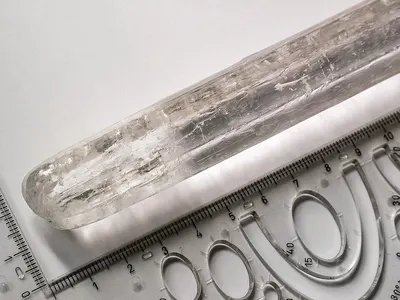
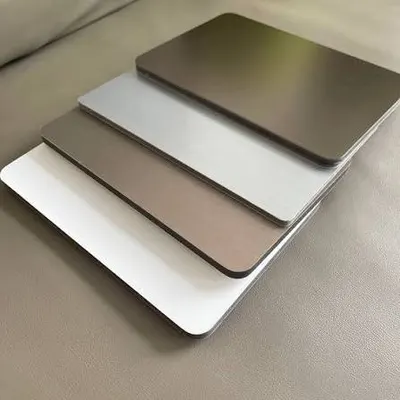
China is the origin of West Coast Tech Ltd., which currently lists eleven distinct products in its catalogue. The company’s portfolio spans scientific instruments, window films and screens, cupboards and related metalwork, household mirrors, optical lenses, and assorted plastic items. Among the listed items are a front surface mirror, metalized sapphire window, various optical waveplates, prisms, lenses, and a quartz rod. The catalogue also includes a generic window product classified under HS code 7610.10, manufactured from materials such as Aluminum Alloy 6063‑T5, uPVC, or galvanized steel depending on the line. The product set reflects a focus on precision optics and architectural glazing components.

The scientific‑instrument segment comprises cube beamsplitters, right‑angle prisms, cemented zero‑order waveplates, low‑order waveplates, and true zero‑order waveplates, all of which are typical components in laser and spectroscopy systems. Optical lens offerings include an aspherical condenser lens, a plano‑convex cylindrical lens, and a quartz rod used for UV transmission. The window films and screens category lists a metalized sapphire window, a material known for high hardness and optical transmission in harsh environments. Household mirrors and related metalwork are represented by a front surface mirror and a window product with aluminum alloy or steel construction. No additional HS codes are provided for the remaining items.

Product Range and Specialties of West Coast Tech Ltd.

West Coast Tech Ltd.’s catalogue lists a front surface mirror designed for high‑reflectivity applications, a metalized sapphire window noted for its scratch resistance, and a window product (HS 7610.10) available in aluminum alloy 6063‑T5, uPVC, or galvanized steel. Optical components include a cube beamsplitter, right‑angle prism, several cemented waveplates (zero‑order, low‑order, and true zero‑order), an aspherical condenser lens, a plano‑convex cylindrical lens, and a quartz rod for UV optics. These items are typical of the scientific‑instrument and precision‑optics market, where material purity, surface flatness, and angular tolerance are critical.

In the optics industry, waveplates are specified by retardance (e.g., λ/2 or λ/4) and wavelength range, with tolerance often within ±0.1 % and surface quality of 10‑20 nm RMS. Cube beamsplitters are commonly produced with a 50 % transmission/reflectance ratio and anti‑reflection coating for wavelengths between 400 nm and 1100 nm. Prisms used in laser alignment are specified by apex angle tolerance of ±0.05° and surface flatness of λ/10. Lenses such as aspherical condensers and plano‑convex cylindrical lenses are graded by focal length (e.g., 25 mm to 200 mm), diameter, and coating (e.g., MgF₂ for UV). Metalized sapphire windows typically meet hardness of 9 on the Mohs scale and transmission above 85 % in the visible range. Aluminum alloy windows under HS 7610.10 are often supplied in sheets or frames sized to standard panel dimensions (e.g., 1000 mm × 2000 mm) and packaged in wooden crates.

Trade and Export Information - West Coast Tech Ltd.

China is a leading exporter of optical components, glazing products, and metal‑based building hardware. Export shipments of items classified under HS chapter 76, such as the window product (7610.10), are commonly destined for construction and automotive sectors in Southeast Asia, the European Union, and North America. Optical components like waveplates, prisms, and precision lenses are frequently imported by research laboratories, semiconductor manufacturers, and medical device firms in the United States, Germany, Japan, and South Korea. Standard export documentation includes a commercial invoice, packing list, Certificate of Origin, and where required, a test report conforming to IEC 60825 for laser safety or ISO 10110 for optical tolerances.

Buyers typically request ISO 9001 quality‑management certification, CE marking for EU market entry, and RoHS compliance for electronic‑related optics. For glass and sapphire windows, compliance with EN 166 (personal eye‑protection) or ASTM C1036 (aluminum window standards) may be stipulated. Products are usually packed in anti‑static bags, foam inserts, and wooden pallets to fit a 20‑foot container, with Incoterms such as FOB Shanghai or CIF destination port. Chinese exporters often provide pre‑shipment inspection reports from agencies like SGS or Bureau Veritas to satisfy importer due‑diligence.

Sourcing from West Coast Tech Ltd. - Buyer Guidance

Prospective buyers should obtain material data sheets confirming substrate composition (e.g., sapphire grade, aluminum alloy 6063‑T5) and verify optical specifications such as wavelength range, retardance tolerance, and surface flatness for waveplates and lenses. Requesting a certified test report that includes interferometric surface measurements, transmission spectra, and coating durability is standard practice for precision optics. For the window product (HS 7610.10), buyers should confirm panel dimensions, thickness, and corrosion‑resistance treatment, and ask for a mill test report complying with relevant EN or ASTM standards.

Before placing a bulk order, samples should be evaluated for optical performance and mechanical robustness; many suppliers provide a limited‑quantity sample under a non‑binding agreement. Verify that the supplier can furnish ISO 9001 certification and, if required by the destination market, CE or RoHS declarations. Clarify packaging details, such as crate dimensions and moisture‑control measures, to ensure safe transport in a 20‑foot or 40‑foot container.

Frequently Asked Questions About West Coast Tech Ltd.

What types of optical components does West Coast Tech Ltd. offer?

The catalogue includes a cube beamsplitter, a right‑angle prism, cemented zero‑order, low‑order and true zero‑order waveplates, an aspherical condenser lens, a plano‑convex cylindrical lens, and a quartz rod. These components are used in laser systems, spectroscopy, and UV optical applications.

Which HS code applies to the window product and what material options are available?

The window product is listed under HS code 7610.10, which covers aluminum alloy structures. It is offered in Aluminum Alloy 6063‑T5, uPVC, or galvanized steel depending on the specific product line.

What typical specifications should I request for waveplates?

Ask for the retardance value (e.g., λ/2 or λ/4), the operating wavelength range, and tolerance of ±0.1 % or better. Surface flatness should be specified as 10‑20 nm RMS, and a coating durability test report is advisable.

How are the lenses packaged for international shipment?

Lenses are typically placed in anti‑static bags, surrounded by foam padding, and loaded onto wooden pallets. The pallets are then secured inside a 20‑foot container, complying with standard Incoterms such as FOB Shanghai.

Which certifications are commonly required for these products?

Buyers usually require ISO 9001 quality‑management certification, CE marking for EU markets, and RoHS compliance for electronic‑related optics. Additional product‑specific standards such as IEC 60825 for laser safety or ASTM C1036 for aluminum windows may also be requested.

What are the usual lead times and minimum order quantities for precision optics?

Standard lead times range from four to eight weeks after order confirmation, depending on the component complexity. Minimum order quantities are often one piece for custom‑cut optics and 10‑20 pieces for standard catalog items, but they can vary by product.

How can I verify the material composition of the metalized sapphire window?

Request a material certificate or mill test report that confirms sapphire grade, hardness (typically 9 on the Mohs scale), and any metalization thickness. The report should also include transmission data across the visible spectrum.


Other Suppliers in Scientific Instruments

Top Trusted Suppliers

Related Products in Scientific Instruments

Trending in Parent Category

More Suppliers in Parent Category

Related Products

Other Suppliers

EximNext
7.1K+ live requirements
Register Free🎁 Reach global buyers
Post Requirement
🌍 Trusted by 225K+ businesses in 200+ countries|
7.1K+ active requirements right now
✉️ [email protected]
|
Sell on EximNextPost Requirement
EximNext
AgricultureApparelConstructionElectronicFoodHomeIndustrialMineralsMiscellaneous
🔥 Deals|✨ AI Match|🏭 Suppliers|📋 Buy Leads|💰 Trade Finance
7.1K+ live RFQs·194.8K+ suppliers
🎁 Reach global buyers →
EximNext
EximNext
Register Free
🎁 Reach global buyers
Sign In
📋Post Requirement💬Get Quotes✨AI Match📋RFQ Marketplace
All Categories
Services & Tools
🏭Supplier Directory🔥Today's Deals💰Trade Finance
Sell on EximNext →
AboutContactBlogHelp
Chemicals & Materials  ·  China
11
products listed

West Coast Tech Ltd.

⚓ Harbor
Country flag , ChinaNew supplier / no reviews yet
🛡️
55/100
Trust Score

West Coast Tech Ltd. Product Catalog

Showing 11 of 11 products
View all products →
Quartz rod
⚓ Harbor
Quartz rod
Contact
MOQ: 1 Unit
Low Order Waveplates
⚓ Harbor
Low Order Waveplates
Contact
MOQ: 1 Unit
Cemented True Zero-Order Waveplates
⚓ Harbor
Cemented True Zero-Order Waveplates
Contact
MOQ: 1 Unit
Aspherical Condenser Lens
⚓ Harbor
Aspherical Condenser Lens
Contact
MOQ: 1 Unit
Plano Convex Cylindrical Lens
⚓ Harbor
Plano Convex Cylindrical Lens
Contact
MOQ: 1 Unit
Right Angle Prism
⚓ Harbor
Right Angle Prism
Contact
MOQ: 1 Unit
Cemented Zero-Order Waveplate
⚓ Harbor
Cemented Zero-Order Waveplate
Contact
MOQ: 1 Unit
Window
⚓ Harbor
Window
Contact
MOQ: 1 Unit
Cube Beamsplitter
⚓ Harbor
Cube Beamsplitter
Contact
MOQ: 1 Unit
Metalized Sapphire Window
⚓ Harbor
Metalized Sapphire Window
Contact
MOQ: 1 Unit
Front surface mirror
⚓ Harbor
Front surface mirror
Contact
MOQ: 1 Unit

About West Coast Tech Ltd. - Scientific Instruments Supplier in China

China is the origin of West Coast Tech Ltd., which currently lists eleven distinct products in its catalogue. The company’s portfolio spans scientific instruments, window films and screens, cupboards and related metalwork, household mirrors, optical lenses, and assorted plastic items. Among the listed items are a front surface mirror, metalized sapphire window, various optical waveplates, prisms, lenses, and a quartz rod. The catalogue also includes a generic window product classified under HS code 7610.10, manufactured from materials such as Aluminum Alloy 6063‑T5, uPVC, or galvanized steel depending on the line. The product set reflects a focus on precision optics and architectural glazing components.

The scientific‑instrument segment comprises cube beamsplitters, right‑angle prisms, cemented zero‑order waveplates, low‑order waveplates, and true zero‑order waveplates, all of which are typical components in laser and spectroscopy systems. Optical lens offerings include an aspherical condenser lens, a plano‑convex cylindrical lens, and a quartz rod used for UV transmission. The window films and screens category lists a metalized sapphire window, a material known for high hardness and optical transmission in harsh environments. Household mirrors and related metalwork are represented by a front surface mirror and a window product with aluminum alloy or steel construction. No additional HS codes are provided for the remaining items.

Product Range and Specialties of West Coast Tech Ltd.

West Coast Tech Ltd.’s catalogue lists a front surface mirror designed for high‑reflectivity applications, a metalized sapphire window noted for its scratch resistance, and a window product (HS 7610.10) available in aluminum alloy 6063‑T5, uPVC, or galvanized steel. Optical components include a cube beamsplitter, right‑angle prism, several cemented waveplates (zero‑order, low‑order, and true zero‑order), an aspherical condenser lens, a plano‑convex cylindrical lens, and a quartz rod for UV optics. These items are typical of the scientific‑instrument and precision‑optics market, where material purity, surface flatness, and angular tolerance are critical.

In the optics industry, waveplates are specified by retardance (e.g., λ/2 or λ/4) and wavelength range, with tolerance often within ±0.1 % and surface quality of 10‑20 nm RMS. Cube beamsplitters are commonly produced with a 50 % transmission/reflectance ratio and anti‑reflection coating for wavelengths between 400 nm and 1100 nm. Prisms used in laser alignment are specified by apex angle tolerance of ±0.05° and surface flatness of λ/10. Lenses such as aspherical condensers and plano‑convex cylindrical lenses are graded by focal length (e.g., 25 mm to 200 mm), diameter, and coating (e.g., MgF₂ for UV). Metalized sapphire windows typically meet hardness of 9 on the Mohs scale and transmission above 85 % in the visible range. Aluminum alloy windows under HS 7610.10 are often supplied in sheets or frames sized to standard panel dimensions (e.g., 1000 mm × 2000 mm) and packaged in wooden crates.

Trade and Export Information - West Coast Tech Ltd.

China is a leading exporter of optical components, glazing products, and metal‑based building hardware. Export shipments of items classified under HS chapter 76, such as the window product (7610.10), are commonly destined for construction and automotive sectors in Southeast Asia, the European Union, and North America. Optical components like waveplates, prisms, and precision lenses are frequently imported by research laboratories, semiconductor manufacturers, and medical device firms in the United States, Germany, Japan, and South Korea. Standard export documentation includes a commercial invoice, packing list, Certificate of Origin, and where required, a test report conforming to IEC 60825 for laser safety or ISO 10110 for optical tolerances.

Buyers typically request ISO 9001 quality‑management certification, CE marking for EU market entry, and RoHS compliance for electronic‑related optics. For glass and sapphire windows, compliance with EN 166 (personal eye‑protection) or ASTM C1036 (aluminum window standards) may be stipulated. Products are usually packed in anti‑static bags, foam inserts, and wooden pallets to fit a 20‑foot container, with Incoterms such as FOB Shanghai or CIF destination port. Chinese exporters often provide pre‑shipment inspection reports from agencies like SGS or Bureau Veritas to satisfy importer due‑diligence.

Sourcing from West Coast Tech Ltd. - Buyer Guidance

Prospective buyers should obtain material data sheets confirming substrate composition (e.g., sapphire grade, aluminum alloy 6063‑T5) and verify optical specifications such as wavelength range, retardance tolerance, and surface flatness for waveplates and lenses. Requesting a certified test report that includes interferometric surface measurements, transmission spectra, and coating durability is standard practice for precision optics. For the window product (HS 7610.10), buyers should confirm panel dimensions, thickness, and corrosion‑resistance treatment, and ask for a mill test report complying with relevant EN or ASTM standards.

Before placing a bulk order, samples should be evaluated for optical performance and mechanical robustness; many suppliers provide a limited‑quantity sample under a non‑binding agreement. Verify that the supplier can furnish ISO 9001 certification and, if required by the destination market, CE or RoHS declarations. Clarify packaging details, such as crate dimensions and moisture‑control measures, to ensure safe transport in a 20‑foot or 40‑foot container.

Frequently Asked Questions About West Coast Tech Ltd.

What types of optical components does West Coast Tech Ltd. offer?

The catalogue includes a cube beamsplitter, a right‑angle prism, cemented zero‑order, low‑order and true zero‑order waveplates, an aspherical condenser lens, a plano‑convex cylindrical lens, and a quartz rod. These components are used in laser systems, spectroscopy, and UV optical applications.

Which HS code applies to the window product and what material options are available?

The window product is listed under HS code 7610.10, which covers aluminum alloy structures. It is offered in Aluminum Alloy 6063‑T5, uPVC, or galvanized steel depending on the specific product line.

What typical specifications should I request for waveplates?

Ask for the retardance value (e.g., λ/2 or λ/4), the operating wavelength range, and tolerance of ±0.1 % or better. Surface flatness should be specified as 10‑20 nm RMS, and a coating durability test report is advisable.

How are the lenses packaged for international shipment?

Lenses are typically placed in anti‑static bags, surrounded by foam padding, and loaded onto wooden pallets. The pallets are then secured inside a 20‑foot container, complying with standard Incoterms such as FOB Shanghai.

Which certifications are commonly required for these products?

Buyers usually require ISO 9001 quality‑management certification, CE marking for EU markets, and RoHS compliance for electronic‑related optics. Additional product‑specific standards such as IEC 60825 for laser safety or ASTM C1036 for aluminum windows may also be requested.

What are the usual lead times and minimum order quantities for precision optics?

Standard lead times range from four to eight weeks after order confirmation, depending on the component complexity. Minimum order quantities are often one piece for custom‑cut optics and 10‑20 pieces for standard catalog items, but they can vary by product.

How can I verify the material composition of the metalized sapphire window?

Request a material certificate or mill test report that confirms sapphire grade, hardness (typically 9 on the Mohs scale), and any metalization thickness. The report should also include transmission data across the visible spectrum.

About West Coast Tech Ltd. - Scientific Instruments Supplier in China

China is the origin of West Coast Tech Ltd., which currently lists eleven distinct products in its catalogue. The company’s portfolio spans scientific instruments, window films and screens, cupboards and related metalwork, household mirrors, optical lenses, and assorted plastic items. Among the listed items are a front surface mirror, metalized sapphire window, various optical waveplates, prisms, lenses, and a quartz rod. The catalogue also includes a generic window product classified under HS code 7610.10, manufactured from materials such as Aluminum Alloy 6063‑T5, uPVC, or galvanized steel depending on the line. The product set reflects a focus on precision optics and architectural glazing components.

The scientific‑instrument segment comprises cube beamsplitters, right‑angle prisms, cemented zero‑order waveplates, low‑order waveplates, and true zero‑order waveplates, all of which are typical components in laser and spectroscopy systems. Optical lens offerings include an aspherical condenser lens, a plano‑convex cylindrical lens, and a quartz rod used for UV transmission. The window films and screens category lists a metalized sapphire window, a material known for high hardness and optical transmission in harsh environments. Household mirrors and related metalwork are represented by a front surface mirror and a window product with aluminum alloy or steel construction. No additional HS codes are provided for the remaining items.

Product Range and Specialties of West Coast Tech Ltd.

West Coast Tech Ltd.’s catalogue lists a front surface mirror designed for high‑reflectivity applications, a metalized sapphire window noted for its scratch resistance, and a window product (HS 7610.10) available in aluminum alloy 6063‑T5, uPVC, or galvanized steel. Optical components include a cube beamsplitter, right‑angle prism, several cemented waveplates (zero‑order, low‑order, and true zero‑order), an aspherical condenser lens, a plano‑convex cylindrical lens, and a quartz rod for UV optics. These items are typical of the scientific‑instrument and precision‑optics market, where material purity, surface flatness, and angular tolerance are critical.

In the optics industry, waveplates are specified by retardance (e.g., λ/2 or λ/4) and wavelength range, with tolerance often within ±0.1 % and surface quality of 10‑20 nm RMS. Cube beamsplitters are commonly produced with a 50 % transmission/reflectance ratio and anti‑reflection coating for wavelengths between 400 nm and 1100 nm. Prisms used in laser alignment are specified by apex angle tolerance of ±0.05° and surface flatness of λ/10. Lenses such as aspherical condensers and plano‑convex cylindrical lenses are graded by focal length (e.g., 25 mm to 200 mm), diameter, and coating (e.g., MgF₂ for UV). Metalized sapphire windows typically meet hardness of 9 on the Mohs scale and transmission above 85 % in the visible range. Aluminum alloy windows under HS 7610.10 are often supplied in sheets or frames sized to standard panel dimensions (e.g., 1000 mm × 2000 mm) and packaged in wooden crates.

Trade and Export Information - West Coast Tech Ltd.

China is a leading exporter of optical components, glazing products, and metal‑based building hardware. Export shipments of items classified under HS chapter 76, such as the window product (7610.10), are commonly destined for construction and automotive sectors in Southeast Asia, the European Union, and North America. Optical components like waveplates, prisms, and precision lenses are frequently imported by research laboratories, semiconductor manufacturers, and medical device firms in the United States, Germany, Japan, and South Korea. Standard export documentation includes a commercial invoice, packing list, Certificate of Origin, and where required, a test report conforming to IEC 60825 for laser safety or ISO 10110 for optical tolerances.

Buyers typically request ISO 9001 quality‑management certification, CE marking for EU market entry, and RoHS compliance for electronic‑related optics. For glass and sapphire windows, compliance with EN 166 (personal eye‑protection) or ASTM C1036 (aluminum window standards) may be stipulated. Products are usually packed in anti‑static bags, foam inserts, and wooden pallets to fit a 20‑foot container, with Incoterms such as FOB Shanghai or CIF destination port. Chinese exporters often provide pre‑shipment inspection reports from agencies like SGS or Bureau Veritas to satisfy importer due‑diligence.

Sourcing from West Coast Tech Ltd. - Buyer Guidance

Prospective buyers should obtain material data sheets confirming substrate composition (e.g., sapphire grade, aluminum alloy 6063‑T5) and verify optical specifications such as wavelength range, retardance tolerance, and surface flatness for waveplates and lenses. Requesting a certified test report that includes interferometric surface measurements, transmission spectra, and coating durability is standard practice for precision optics. For the window product (HS 7610.10), buyers should confirm panel dimensions, thickness, and corrosion‑resistance treatment, and ask for a mill test report complying with relevant EN or ASTM standards.

Before placing a bulk order, samples should be evaluated for optical performance and mechanical robustness; many suppliers provide a limited‑quantity sample under a non‑binding agreement. Verify that the supplier can furnish ISO 9001 certification and, if required by the destination market, CE or RoHS declarations. Clarify packaging details, such as crate dimensions and moisture‑control measures, to ensure safe transport in a 20‑foot or 40‑foot container.

Frequently Asked Questions About West Coast Tech Ltd.
What types of optical components does West Coast Tech Ltd. offer?
The catalogue includes a cube beamsplitter, a right‑angle prism, cemented zero‑order, low‑order and true zero‑order waveplates, an aspherical condenser lens, a plano‑convex cylindrical lens, and a quartz rod. These components are used in laser systems, spectroscopy, and UV optical applications.
Which HS code applies to the window product and what material options are available?
The window product is listed under HS code 7610.10, which covers aluminum alloy structures. It is offered in Aluminum Alloy 6063‑T5, uPVC, or galvanized steel depending on the specific product line.
What typical specifications should I request for waveplates?
Ask for the retardance value (e.g., λ/2 or λ/4), the operating wavelength range, and tolerance of ±0.1 % or better. Surface flatness should be specified as 10‑20 nm RMS, and a coating durability test report is advisable.
How are the lenses packaged for international shipment?
Lenses are typically placed in anti‑static bags, surrounded by foam padding, and loaded onto wooden pallets. The pallets are then secured inside a 20‑foot container, complying with standard Incoterms such as FOB Shanghai.
Which certifications are commonly required for these products?
Buyers usually require ISO 9001 quality‑management certification, CE marking for EU markets, and RoHS compliance for electronic‑related optics. Additional product‑specific standards such as IEC 60825 for laser safety or ASTM C1036 for aluminum windows may also be requested.
What are the usual lead times and minimum order quantities for precision optics?
Standard lead times range from four to eight weeks after order confirmation, depending on the component complexity. Minimum order quantities are often one piece for custom‑cut optics and 10‑20 pieces for standard catalog items, but they can vary by product.
How can I verify the material composition of the metalized sapphire window?
Request a material certificate or mill test report that confirms sapphire grade, hardness (typically 9 on the Mohs scale), and any metalization thickness. The report should also include transmission data across the visible spectrum.

West Coast Tech Ltd.
Country flag China
⚓ HarborChemicals & Materials
55/100
Trust Score
11
Products
✓ Free to contact — no commission
✓ Escrow payment available
✓ Verified business identity
Compare more suppliers
Post a requirement — get 10 quotes free
Let verified suppliers compete for your business. Free, fast, no commitment.
Due Diligence
Verify this supplier's real shipping history.
Every shipment, every buyer, every port. Trade data that can't be faked.
Run due diligence →
Discover More

Related Suppliers & Products

Explore similar suppliers, related products and trending categories

Other Suppliers in Scientific Instruments

Top Trusted Suppliers

Related Products in Scientific Instruments

Trending in Parent Category

More Suppliers in Parent Category

Stay ahead in global trade
Weekly market insights & new supplier alerts.
EximNext
Exim Next is a leading global B2B marketplace, connecting over 220,000 registered suppliers and buyers across 200+ countries. As a trusted import export marketplace, it serves as the essential B2B portal for businesses worldwide, empowering them to expand their international reach. With Exim Next, businesses can trade smarter and grow faster.
SECURE PAYMENTS
VISAMastercardPayPalSWIFTL/CEscrow
Follow us
© 2026 EximNext