Hangzhou Hecai Pigment Chemical Co., Ltd. — Supplier
About Hangzhou Hecai Pigment Chemical Co., Ltd. - Industrial Chemicals Supplier in China
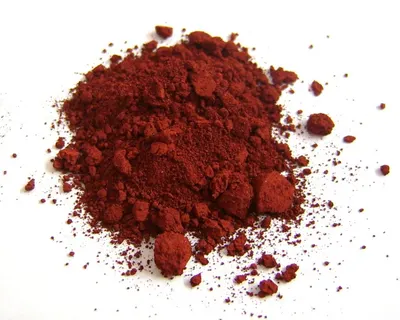
Hangzhou Hecai Pigment Chemical Co., Ltd. is based in Hangzhou, China and currently lists five active pigment products. The catalogue includes Permanent orange 5, Permanent orange 34, Permanent orange 36, Pigment bright red and Permanent red 170, all classified under the industrial chemicals category. Each product is an organic colourant used in applications such as inks, coatings, plastics and textiles, and they fall within the HS‑6 heading 3206 for organic pigments. The supplier’s catalogue does not provide HS codes per item, but the products are recognised by their colour index (CI) designations in the pigment industry.
The five pigments cover a range of orange and red hues commonly required for colour matching in manufacturing. Permanent orange series are identified by their CI numbers (e.g., CI 15850 for Orange 5) and are formulated for lightfastness and chemical stability. The bright red and permanent red 170 pigments are typical high‑purity azo or quinacridone types with particle sizes below 10 µm for smooth dispersion. Hangzhou Hecai’s listing shows a focused portfolio rather than a broad chemical line, concentrating on these specific colour standards.
Product Range and Specialties of Hangzhou Hecai Pigment Chemical Co., Ltd.
The supplier’s catalogue presents five distinct organic pigments, each targeting a specific shade in the orange‑red spectrum. In the wider pigment market, orange pigments such as Permanent orange 5, 34 and 36 are usually supplied in grades meeting CI 15850, CI 15870 and CI 15880 specifications, with purity levels above 95 % and moisture content below 0.5 %. Red pigments like Pigment bright red and Permanent red 170 are typically offered as quinacridone or azo pigments, often graded to meet ISO 16528 colour fastness and particle size distribution of 5‑15 µm for uniform colour development in coatings and plastics. Buyers commonly request data on pigment dispersion, tinting strength (K/S values) and compatibility with solvent‑based or water‑based systems.
Trade and Export Information - Hangzhou Hecai Pigment Chemical Co., Ltd.
China is one of the world’s largest exporters of organic pigments, and shipments from Hangzhou generally follow the HS‑6 code 3206.10 for azo and quinacridone pigments. Major import regions include the European Union, North America and Southeast Asia, where the pigments are used in printing inks, automotive coatings and polymer colourants. Export logistics often involve 20‑ft or 40‑ft containers packed in sealed, moisture‑proof drums or bulk bags, with Incoterms such as FOB Hangzhou or CIF destination ports. Typical buyer requirements include REACH registration for the EU market, compliance with ISO 9001 quality management and safety data sheets that meet GHS classification. While the supplier’s own certifications are not listed, buyers should verify that the pigments comply with the relevant environmental and safety standards of the target market.
For Chinese pigment manufacturers, the export process may involve customs inspection under the China Compulsory Certification (CCC) scheme for certain industrial chemicals, though many organic pigments are exempt. Buyers should also be aware of anti‑dumping duties that some regions impose on pigment imports from China, and plan for possible additional documentation such as certificate of origin or third‑party laboratory test reports.
Sourcing from Hangzhou Hecai Pigment Chemical Co., Ltd. - Buyer Guidance
When sourcing these pigments from Hangzhou Hecai, buyers should request a full colour index (CI) reference, a recent Certificate of Analysis (CoA) showing purity, moisture and particle size, and a Safety Data Sheet (SDS) that confirms compliance with GHS hazard classifications. It is prudent to ask for a REACH registration dossier if the destination market is the EU, as well as any ISO‑9001 audit reports if available. Verification of batch‑to‑batch consistency can be supported by requesting a sample for in‑house testing of tinting strength (K/S), lightfastness (ISO 105-B02) and dispersion behaviour in the intended binder system.
Before placing a large order, confirm the minimum order quantity (MOQ), typical lead time (often 4‑6 weeks for pigment production in China), and packaging format - most suppliers ship in 25 kg drums or 1 ton bulk bags with moisture barriers. Clarify the preferred Incoterm and any required pre‑shipment inspections, such as third‑party lab testing under the International Trade Centre (ITC) guidelines, to ensure compliance with the buyer’s import regulations.
Frequently Asked Questions About Hangzhou Hecai Pigment Chemical Co., Ltd.
What colour index (CI) numbers correspond to the pigments listed by Hangzhou Hecai?
Permanent orange 5, 34 and 36 correspond to CI 15850, CI 15870 and CI 15880 respectively, while Pigment bright red aligns with CI 15850‑bright red and Permanent red 170 with CI 15850‑red 170; the exact CI can be confirmed on the supplier’s CoA.
Which certifications should I request from the supplier before purchasing?
Buyers should request a current Certificate of Analysis, an SDS, REACH registration documentation for EU shipments, and any ISO‑9001 quality management certificates the supplier can provide.
What are the typical packaging options for these pigments?
Organic pigments are usually packed in sealed 25 kg metal drums or 1 ton bulk bags with moisture‑proof liners; the supplier may also offer 5 kg tins for sample orders.
What is the usual lead time for an order of these pigments?
Lead times for China‑based pigment manufacturers typically range from 4 to 6 weeks from order confirmation, depending on production schedule and batch size.
Which HS code is applicable to these pigment products?
The pigments fall under HS heading 3206, specifically the sub‑heading 3206.10 for organic pigments such as azo and quinacridone types.
What testing should I perform on received pigment samples?
Standard tests include purity analysis (>95 % typical), moisture content (<0.5 %), particle size distribution (5‑15 µm), tinting strength (K/S), and lightfastness according to ISO 105‑B02.




 , China