Guangzhou Xunbao Electronics Technology. Co., Ltd. — Verified Supplier
About Guangzhou Xunbao Electronics Technology. Co., Ltd. - Agriculture Supplier in China
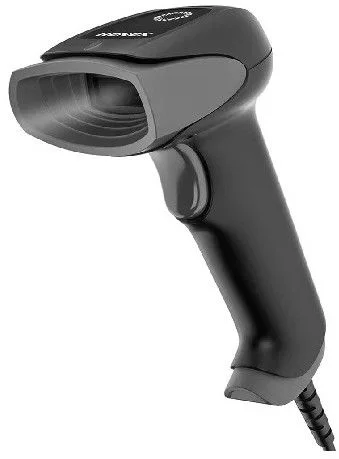
China hosts Guangzhou Xunbao Electronics Technology. Co., Ltd., which currently lists nine active product entries in its catalogue. The listings are concentrated on handheld barcode capture devices, including both wired and wireless models that connect via USB, Bluetooth, or cradle interfaces. Each entry specifies a 1D laser scanning technology, with variations such as omnidirectional optics, Bluetooth connectivity, and cordless operation. Although the catalogue does not provide HS codes, barcode scanners are commonly classified under HS chapter 84, sub‑heading 8471.60 for automatic data processing input devices.
The supplier’s nine products cover a spectrum from wired USB handheld scanners to cordless Bluetooth units and cradle‑based wireless readers. Product titles reference key features such as “laser,” “1D,” “USB,” “Bluetooth,” and “wireless,” indicating focus on linear barcode formats (e.g., Code 128, EAN‑13, UPC). The range includes both point‑of‑sale (POS) oriented scanners and general‑purpose data‑capture devices, reflecting typical segmentation in the electronic data capture market.
Product Range and Specialties of Guangzhou Xunbao Electronics Technology. Co., Ltd.
The catalogue presents handheld 1D laser scanners in several configurations: wired USB models, Bluetooth‑enabled cordless units, and wireless scanners supplied with a USB cradle. In the broader industry, 1D laser scanners usually deliver scan rates of 20‑30 scans per second, read distances from 100 mm to 300 mm, and support standard symbologies such as Code 39, Code 128, EAN‑13, and UPC‑A. Typical specifications include an IP54 ingress protection rating, a battery life of 8‑12 hours for cordless models, and Bluetooth 5.0 or 4.2 for wireless connectivity. Materials commonly used are ABS plastic housings with anti‑static internal components, and most devices are designed to operate at 5 V USB power or internal lithium‑ion cells.
Industry standards that buyers often reference include IEC 60825‑1 for laser safety, CE marking for EU market entry, FCC Part 15 for the United States, and RoHS compliance for hazardous substance restrictions. Barcode scanners are generally shipped in anti‑static foam trays or sealed poly‑bag packs, with 20‑foot containers able to hold 1,200‑1,500 units depending on packaging density.
Trade and Export Information - Guangzhou Xunbao Electronics Technology. Co., Ltd.
China is a leading exporter of electronic data‑capture equipment, and barcode scanners from the region are routinely shipped to North America, the European Union, and Southeast Asian markets. The HS‑code family 8471.60 is the most common classification for handheld barcode readers, and customs authorities in importing countries often request CE, FCC or equivalent conformity certificates, a test report confirming laser safety, and a declaration of RoHS compliance. Export logistics typically involve FOB or CIF terms, with products packed in corrugated cartons (usually 50‑100 units per carton) and loaded into 20‑ft or 40‑ft containers. Freight forwarders commonly use temperature‑controlled containers for sensitive electronics, although most barcode scanners tolerate standard ambient conditions.
Sourcing from Guangzhou Xunbao Electronics Technology. Co., Ltd. - Buyer Guidance
When sourcing these handheld scanners, buyers should request the supplier’s CE and FCC test reports, as well as a RoHS compliance declaration, before confirming an order. It is advisable to obtain a functional sample to verify scan speed, read distance, and supported symbologies, and to confirm that the firmware supports the intended operating system (Windows, Android, iOS). Verify packaging details such as anti‑static inner bags and carton dimensions to ensure efficient container loading, and clarify the warranty period and after‑sales support terms prior to finalising the contract.
Frequently Asked Questions About Guangzhou Xunbao Electronics Technology. Co., Ltd.
What barcode symbologies are supported by the 1D laser scanners listed?
The listed 1D scanners typically support standard linear codes such as Code 39, Code 128, EAN‑13, UPC‑A and UPC‑E, which cover most retail and logistics applications.
Are the wireless models Bluetooth‑enabled, and which version is common?
Wireless models in the catalogue are advertised as Bluetooth devices; industry practice is to use Bluetooth 4.2 or 5.0, providing up to 10 m range and low‑energy power consumption.
What certifications should a buyer request for these devices?
Buyers should request CE marking for EU markets, FCC Part 15 compliance for the United States, and a RoHS declaration confirming restriction of hazardous substances.
What is the typical packaging for handheld barcode scanners from China?
Standard packaging uses anti‑static foam inserts inside sealed poly‑bag cartons, with 50‑100 units per outer carton, suitable for stacking in 20‑ft containers.
Which HS code is generally used for customs clearance of these scanners?
Customs authorities usually classify handheld barcode readers under HS code 8471.60, within the broader chapter for automatic data‑processing machines.
What lead time and minimum order quantity are common for these products?
Suppliers often require a lead time of 15‑30 days after order confirmation, with minimum order quantities ranging from 500 to 1,000 units depending on model and packaging.
Can the wired USB scanners be used with both Windows and Android devices?
Wired USB scanners generally follow the USB HID standard, allowing plug‑and‑play operation with Windows, Linux and Android systems that support HID input.
How should a buyer verify battery performance for cordless models?
Request the supplier’s battery test report showing capacity (mAh) and runtime under continuous scanning; typical cordless scanners provide 8‑12 hours of operation on a single charge.




 , China