Filtersun Filter (Dongguan) Co., Ltd. — Supplier
About Filtersun Filter (Dongguan) Co., Ltd. - Automobile Filters Supplier in China
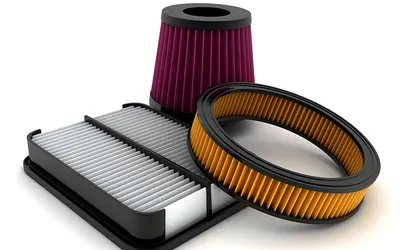
Dongguan, China hosts Filtersun Filter (Dongguan) Co., Ltd., which currently lists five distinct filter products across its catalogue. The company classifies its offerings under the broader categories of Automobile Filters and Air Filters, reflecting a focus on vehicular air filtration solutions. Two of the five items are recorded with specific HS codes - 8421.23 for an automotive polypropylene non‑woven air filter and 8421.31 for a polyurethane foam air filter - indicating alignment with the global customs classification for air‑intake filters. The remaining items are identified as a generic air filter, a carbon cabin air filter, and a cabin filter model Cuk4136, all of which fall under the same HS chapter 8421 for air‑conditioning and ventilation equipment. This product set demonstrates a concentration on interior vehicle air quality components, with materials ranging from polypropylene to polyurethane foam and activated carbon.
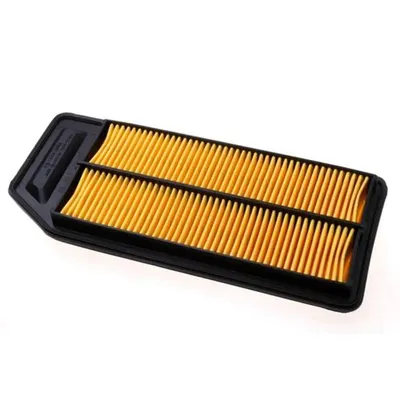
The catalogue entry for the “Auto filter‑ Air filter” specifies a polypropylene (PP) non‑woven filtration media and is assigned HS code 8421.23, a code commonly used for air‑intake filters of motor vehicles. The “PU Air Filter” entry lists polyurethane (PU) foam as the filtration medium and carries HS code 8421.31, which is typical for foam‑type filters used in engine air‑intake systems. The carbon cabin air filter and the Cabin Filter Cuk4136 are described without HS codes but are understood to belong to the same HS chapter, serving cabin air purification functions. The generic “Air filter” entry likewise aligns with the broader 8421 category, completing the five‑product portfolio that the supplier currently advertises.
Product Range and Specialties of Filtersun Filter (Dongguan) Co., Ltd.
Filtersun’s catalogue includes polypropylene non‑woven and polyurethane foam media, which are standard materials for automotive air‑intake and cabin filters. In the industry, polypropylene non‑woven filters are often produced to ISO 5011 specifications, offering efficiency levels of 99 % ± 0.5 % at a particle size of 0.2 µm, and are available in pleated constructions with a typical surface area of 0.05 - 0.15 m². Polyurethane foam filters are typically rated by thickness (5 - 15 mm) and density (30 - 80 kg/m³) and are used where high airflow and low pressure drop are required. Carbon cabin air filters incorporate activated carbon layers to adsorb volatile organic compounds, and they are frequently tested for VOC removal efficiency (≥ 80 %). Cabin filters such as model Cuk4136 usually combine a pre‑filter media with a carbon layer, meeting SAE J726 standards for cabin air filtration. Buyers can expect these products to be supplied in standard dimensions (e.g., 250 mm × 180 mm × 30 mm for many cabin filters) and packaged in cardboard boxes suitable for 20‑ft or 40‑ft container loading.
Trade and Export Information - Filtersun Filter (Dongguan) Co., Ltd.
China is a major exporter of automotive air‑intake and cabin filters, with Europe, North America and Southeast Asia representing the largest import markets. The HS 8421 chapter encompasses air‑conditioning and ventilation equipment, and the sub‑headings 8421.23 and 8421.31 are routinely inspected for compliance with customs valuation and safety regulations. Importers typically request ISO 9001 and IATF 16949 certification to verify quality management systems, and CE marking is often required for filters destined for the European Union. Packaging for these filters usually involves sealed cardboard cartons, with each carton containing 10 - 20 units, and the cartons are loaded on pallets for container shipment. Common Incoterms include FOB Dongguan or CIF destination port, allowing buyers to arrange inland transport after the goods clear Chinese customs. Export documentation generally comprises a commercial invoice, packing list, certificate of origin, and, where applicable, a test report confirming compliance with ISO 5011 or SAE J726 performance criteria.
Sourcing from Filtersun Filter (Dongguan) Co., Ltd. - Buyer Guidance
When sourcing from Filtersun, buyers should request a material data sheet that confirms the specific polypropylene non‑woven or polyurethane foam composition, along with filtration efficiency test results at the 0.2 µm particle size. It is advisable to obtain copies of ISO 9001 or IATF 16949 certificates, as well as any CE conformity declarations, to ensure the supplier’s quality system aligns with typical automotive OEM requirements. Samples should be evaluated for pressure drop (typically 150 - 250 Pa at 1 m³/min) and for durability under temperature cycles ranging from - 30 °C to +80 °C, which are standard test conditions for automotive filters. Verify that the HS codes on the commercial invoice match the product description (8421.23 for PP non‑woven filters, 8421.31 for PU foam filters) to avoid customs discrepancies. Finally, confirm packaging dimensions and pallet configuration to plan container loading and freight costs accurately.
Frequently Asked Questions About Filtersun Filter (Dongguan) Co., Ltd.
What types of filters does Filtersun list in its catalogue?
Filtersun lists five products: a generic air filter, a carbon cabin air filter, Cabin Filter Cuk4136, an automotive polypropylene non‑woven air filter (HS 8421.23) and a polyurethane foam air filter (HS 8421.31).
Which HS codes are associated with Filtersun’s products?
Two products have explicit HS codes: the polypropylene non‑woven automotive air filter uses HS 8421.23, and the polyurethane foam air filter uses HS 8421.31. The other three items fall under the broader HS 8421 chapter for air‑conditioning and ventilation equipment.
What filtration media are used in Filtersun’s automotive filters?
The catalogue specifies polypropylene (PP) non‑woven material for the auto air filter and polyurethane (PU) foam for the PU air filter. The carbon cabin filter incorporates an activated carbon layer, while the generic air and cabin filters are also based on standard non‑woven media.
Which certifications should a buyer request from Filtersun?
Buyers should ask for ISO 9001 or IATF 16949 certification to confirm a quality management system, and for CE conformity documents if the filters are intended for the European market. Test reports referencing ISO 5011 or SAE J726 are also typical for automotive air‑filter verification.
What are typical lead times for automotive filters from Chinese suppliers?
Chinese manufacturers of automotive filters usually quote lead times of 15 - 30 days after order confirmation, depending on order volume and whether a sample is required first.
What is the usual minimum order quantity for these filters?
Minimum order quantities commonly range from 500 to 2,000 units per SKU, with larger quantities preferred for container‑load efficiency.
How are Filtersun’s filters packaged for export?
Filters are packed in sealed cardboard boxes, typically 10 - 20 units per box, placed on standard Euro pallets. Boxes are then loaded into 20‑ft or 40‑ft containers according to the order size.
Which markets does Filtersun primarily serve?
While the facts do not list specific destinations, Chinese automotive filter exporters generally ship to Europe, North America and Southeast Asian countries, which are the main import regions for vehicle air‑filter components.




 , China