Efor Nuts Roasting Machines — Supplier
About Efor Nuts Roasting Machines - Food Processing Machinery Supplier in Turkey
Turkey hosts nine distinct product listings from Efor Nuts Roasting Machines, covering food processing machinery, light and medium machinery, elevators & escalators, and dairy & poultry equipment. The catalogue includes both roasting and seasoning equipment, a coffee roasting unit, material‑handling elevators, and sieving devices, all identified by model numbers such as FR‑1000, FR‑500 and FR‑1202. Each entry reflects a specific machine type rather than a generic service, allowing buyers to locate exact equipment for nut processing, salting, coating or bulk transport. The supplier’s active product count of nine demonstrates a focused portfolio within the broader food‑processing machinery sector.
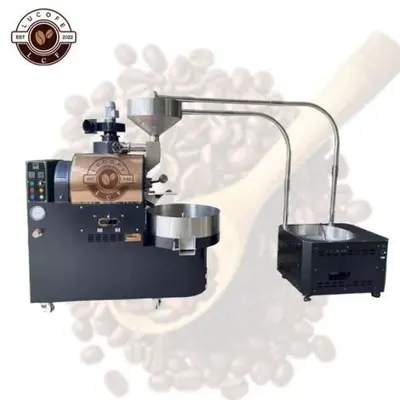
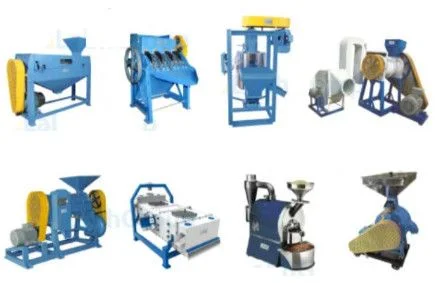
The listed products comprise the FR‑1000 and FR‑500 nuts roasting ovens, the FR‑1202 automatic salting and seasoning machine, the FR‑901 Z‑elevator, the FR‑1200 manual salting machine, the FR‑150 guided roasting machine, the FR‑700 salt sieve, the FR‑120K coffee roasting machine, and a combined line described as nuts roasting, salting, coating machines and sieves. Model designations indicate variations in automation level, capacity and intended material (nuts versus coffee). The inclusion of both elevators and sieves shows that the supplier also addresses material‑handling steps that follow roasting and seasoning. All products are grouped under HS chapter 84 (machinery) for customs classification.
Product Range and Specialties of Efor Nuts Roasting Machines
The catalogue offers two batch‑type nuts roasting ovens (FR‑1000, FR‑500) that typically operate at 150‑250 °C with batch capacities ranging from 100 kg to 500 kg, a common industry size for commercial nut processors. The FR‑150 guided roasting machine adds programmable temperature curves, while the FR‑120K coffee roaster follows similar thermal profiles but with tighter temperature ramp control for coffee beans. Salting and seasoning machines (FR‑1202 automatic, FR‑1200 manual) usually provide dosing accuracy of ±1 % and are fabricated from food‑grade stainless steel 304 to meet hygiene standards. The FR‑700 salt sieve is a vibrating screen with mesh sizes between 0.5 mm and 2 mm, suited for uniform salt distribution. The FR‑901 Z‑elevator is a bulk‑handling unit capable of moving up to 10 tonnes per hour, typical for transferring roasted nuts between processing stages. Industry buyers often look for CE marking, ISO 9001 quality systems, and compliance with FDA or EU food‑contact regulations for such equipment.
Trade and Export Information - Efor Nuts Roasting Machines
Turkey ranks among the top exporters of food‑processing machinery in the HS 84.30 sub‑heading, with primary markets in the European Union, the Middle East, North Africa and the CIS region. Buyers in these regions usually request CE certification and may also require ISO 22000 or HACCP documentation to confirm food‑safety compliance. Export shipments are commonly packed in wooden crates on palletized pallets, loaded into 20‑foot or 40‑foot containers, and shipped under FOB Istanbul or CIF Mediterranean terms. Turkish manufacturers often provide installation manuals in English and Turkish, and logistical arrangements typically include on‑site assembly support for larger units such as ovens and elevators.
Regulatory inspection for machinery of this type frequently involves conformity assessment by notified bodies, especially when the equipment is intended for EU markets. Importers should verify that the supplier can supply the relevant test reports (e.g., electromagnetic compatibility, low‑voltage safety) and that the machines meet the material safety standards of the destination country.
Sourcing from Efor Nuts Roasting Machines - Buyer Guidance
When sourcing from Efor Nuts Roasting Machines, request the CE Declaration of Conformity, ISO 9001 certificate and any food‑contact compliance documents (FDA, EU). Ask for detailed technical data sheets that list oven capacity, power consumption (typically 3 kW‑15 kW for batch ovens), temperature range, and control system type (PLC or analog). Verify the construction material (stainless‑steel grade) and request a sample of the salt sieve mesh to confirm particle size suitability. For the elevator, obtain load‑capacity charts and motor specifications to ensure compatibility with existing plant infrastructure. Confirm packaging dimensions, crate reinforcement details, and the Incoterm used for shipment before finalising the order.
Typical buyer verification includes reviewing the supplier’s warranty terms (often 12‑24 months for major components), checking for on‑site installation assistance, and ensuring that after‑sales spare‑parts availability is documented. Providing a pilot‑run or factory‑acceptance test report can further reduce risk before large‑scale procurement.
Frequently Asked Questions About Efor Nuts Roasting Machines
What roasting equipment does Efor Nuts Roasting Machines list?
The catalogue includes two nuts roasting ovens (model FR‑1000 and FR‑500) and a guided roasting machine (FR‑150). Each unit is designed for batch processing with temperature control between 150 °C and 250 °C.
What is the typical batch capacity for the FR‑1000 oven?
Industry practice for ovens of the FR‑1000 size is a batch capacity of approximately 300 kg to 500 kg of nuts per run, depending on the specific configuration chosen by the buyer.
Which certifications are commonly required for Turkish food‑processing machinery?
Buyers usually request CE marking, ISO 9001 quality‑management certification, and food‑contact compliance such as FDA or EU regulations. HACCP or ISO 22000 may also be required for processors with strict safety systems.
What power specifications should be expected for the roasting ovens?
Batch roasting ovens in this segment typically draw between 3 kW and 15 kW, with three‑phase voltage (380‑400 V) and standard frequency (50 Hz) for Turkish industrial supply.
How are the automatic and manual salting machines calibrated?
Calibration is performed by adjusting the dosing screw or electronic controller to achieve a salt feed accuracy of ±1 %. Manufacturers normally provide a calibration log sheet and a test run report on request.
What packaging and shipping format is used for these machines?
Machines are crated in reinforced wooden boxes, palletised, and loaded into 20‑foot or 40‑foot containers. Shipping terms frequently follow FOB Istanbul or CIF Mediterranean, with inland transport arranged by the buyer or a freight forwarder.




 , Turkey