Changzhou Bell Data Communication Equipment Co., Ltd. — Supplier
About Changzhou Bell Data Communication Equipment Co., Ltd. - Telecommunication Infrastructure/Equipments Supplier in China
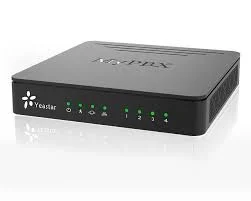
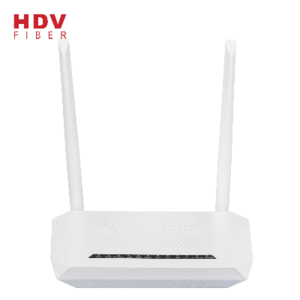
Changzhou Bell Data Communication Equipment Co., Ltd. is based in Changzhou, Jiangsu Province, China and currently lists five active products. The catalogue focuses on telecommunication infrastructure and equipment, specifically a set of converters that bridge legacy circuit‑switched interfaces with Ethernet networks. Products include a Fast Ethernet LAN over E3/T3 converter, a MetroEdge‑Express SDH/MSPP line, RS232/V.35 to Ethernet adapters, an STM‑1 electrical‑optical interface, and an E1 to V.35/V.24 Ethernet converter. Each item falls within the HS‑code families commonly used for telecom hardware, such as 8517.62 (telephone sets) and 8517.69 (other telecom equipment).
The listed converters target network operators that need to integrate older PDH/E1 or SDH/STM‑1 transport links with modern IP‑based Ethernet backbones. Typical technical specifications include support for 10/100 Mbps Ethernet, compliance with ITU‑T G.707 for SDH, and support for V.35 and V.24 signalling standards. No additional product lines are mentioned beyond these five items, and the supplier’s public profile does not cite any certifications or capacity figures.
Product Range and Specialties of Changzhou Bell Data Communication Equipment Co., Ltd.
The supplier’s catalogue comprises Ethernet‑to‑E1, Ethernet‑to‑V.35, and STM‑1 conversion units. In the wider industry, such converters are expected to meet IEC 60870‑5 for serial communication and ITU‑T G.960 for E1 framing, with optical interfaces adhering to IEC 61754 standards for wavelength and power. Typical grades for Ethernet converters include Class‑A performance with latency under 5 ms and packet loss below 0.1 %. SDH/MSPP products are generally offered in OC‑3 (155 Mbps) or OC‑12 (622 Mbps) configurations, with optical modules rated for 0 dBm output power and a receiver sensitivity of - 30 dBm. Buyers often request CE, FCC or RoHS compliance documentation for these devices, as well as factory‑issued test reports confirming adherence to the stated electrical and optical specifications.
Trade and Export Information - Changzhou Bell Data Communication Equipment Co., Ltd.
China is a leading exporter of telecommunications hardware, and products such as Ethernet‑to‑PDH converters are routinely shipped to network operators across Asia‑Pacific, the Middle East, Africa and Europe. Export shipments are usually packed in anti‑static trays or wooden crates, loaded in 20‑ft or 40‑ft containers, and traded under Incoterms CIF or FOB. Importing countries commonly require CE marking for the European Union, FCC certification for the United States, and RoHS compliance for environmentally sensitive markets. Regulatory inspections often reference the ITU‑T recommendation series for SDH and E1 standards, and customs may request an HS‑code declaration in the 8517.xx range along with a test‑report summary. While the supplier’s target markets are not listed, typical buyers include telecom service providers, system integrators and infrastructure contractors who source similar equipment from Chinese manufacturers.
Sourcing from Changzhou Bell Data Communication Equipment Co., Ltd. - Buyer Guidance
When sourcing from this supplier, buyers should request the latest CE/FCC/RoHS certificates and a detailed test report that covers Ethernet latency, V.35 signal integrity and STM‑1 optical power budget. Verifying the firmware version and confirming that the device supports the required ITU‑T framing (e.g., G.704 for E1) helps avoid compatibility issues. Minimum order quantities for individual converter models are often set at one unit, with lead times of four to six weeks after order confirmation, depending on stock availability and export documentation preparation.
Frequently Asked Questions About Changzhou Bell Data Communication Equipment Co., Ltd.
What types of conversion does the supplier offer?
The catalogue lists five converter models: Ethernet over E3/T3, MetroEdge‑Express SDH/MSPP, RS232/V.35 to Ethernet, STM‑1 electrical‑optical interface, and E1 to V.35/V.24 Ethernet conversion.
Which HS‑code categories apply to these products?
Telecommunication converters of this type are normally classified under HS 8517.62 for telephone sets or HS 8517.69 for other telecom equipment, depending on the exact function.
What certifications should a buyer request?
Buyers should ask for CE, FCC and RoHS certificates, as well as a factory‑issued test report confirming compliance with IEC and ITU‑T standards relevant to the converter.
Are sample units available for testing?
Suppliers of telecom converters typically provide a single unit sample for functional verification before a larger purchase; the buyer should confirm availability and any associated shipping terms.
What is the typical packaging for these converters?
Converters are usually packed in anti‑static foam trays or sealed wooden crates, suitable for container loading and protection against electrostatic discharge during transit.
What lead time and MOQ can be expected?
Lead times of four to six weeks are common after order confirmation, and the minimum order quantity is often one unit per model, unless the buyer specifies a bulk purchase.
Which regions import these conversion devices most frequently?
Import demand is strongest in Asia‑Pacific, the Middle East, Africa and Europe, where telecom operators upgrade legacy PDH/SDH networks to Ethernet.
What documentation is required for customs clearance?
Customs authorities generally require a commercial invoice, packing list, HS‑code declaration and the relevant compliance certificates (CE/FCC/RoHS) for electronic telecom equipment.




 , China