Azad Handicraft Goods — Verified Supplier
About Azad Handicraft Goods - Wooden Handicrafts Supplier in India
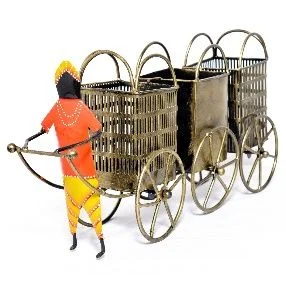
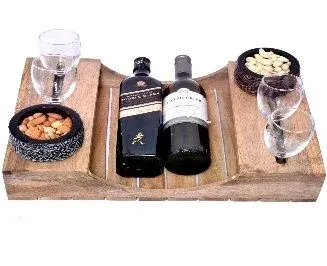
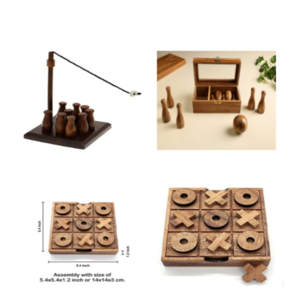
India, Saharanpur in Uttar Pradesh hosts Azad Handicraft Goods with an active product count of 10. The catalogue records items classified under HS Chapter 44 for wood products, such as wooden trays (HS 4419.00), spice boxes (HS 4415.10), cutlery stands (HS 4419.00) and spoon sets (HS 4419.00). Additional entries include wooden money banks (HS 4420.90), children tables (HS 9403.60), planters (HS 4420.90) and mini corner stands (HS 9403.60). The supplier also lists a composite rickshaw combining wrought iron and wood under HS 8306.29. Each product description specifies the wood species or composite material used, ranging from solid oak, walnut and beech to FSC‑certified cedar and food‑grade hardwood.
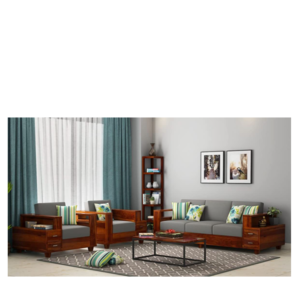
The listed top categories span wooden furniture, boxes, storage solutions, decorative pieces and office tables, as well as disposable cutleries. Materials are described as solid natural wood, hardwood, pine, teak, sheesham and FSC‑certified cedar, indicating a focus on both durability and aesthetic finish. The product set includes both functional kitchenware (tray, spice box, cutlery stand, spoon set) and interior items (children table, planter, corner stand). The inclusion of a wrought‑iron and wood composite rickshaw expands the range into outdoor or transport‑related décor. All items are handcrafted, reflecting the supplier’s emphasis on artisanal production.
Product Range and Specialties of Azad Handicraft Goods
The catalogue covers ten distinct wooden products, each falling under standard HS codes for furniture and wood articles. In the wooden kitchenware segment, trays, spice boxes and cutlery stands are typically produced from hardwoods such as oak, walnut or teak, with moisture content generally below 12 % to meet food‑contact standards. Spoon sets labelled as food‑grade hardwood must comply with FDA or EU food‑contact regulations, often requiring a smooth, non‑porous finish and absence of toxic finishes. Children’s tables and mini corner stands are commonly made from pine or beech, with load‑bearing specifications measured in kilonewtons per square metre (kN/m²). Planters made from FSC‑certified cedar meet sustainability criteria and are often treated for outdoor durability. The rickshaw combines wrought iron with wood, a hybrid product that falls under HS 8306.29 for other articles of iron or steel, and typically requires corrosion‑resistant coatings on the metal component and weather‑proof finishes on the wood.
Trade and Export Information - Azad Handicraft Goods
India is a major exporter of handcrafted wooden articles, with the European Union, United States and Middle‑East markets accounting for the bulk of demand. Export shipments of HS 44‑series wood products frequently use 20‑ft or 40‑ft containers, packed in molded pulp or reinforced cardboard to protect against impact. Buyers usually request FOB or CIF terms, and the goods must pass phytosanitary inspection under ISPM 15 when wood packaging is present. Common certifications sought by importers include FSC for sustainable sourcing, ISO 9001 for quality management, and, for food‑contact items, compliance certificates such as EU Regulation 1935/2004 or US FDA GRAS status. The composite rickshaw under HS 8306.29 may be subject to metal‑related customs duties and requires declaration of both metal and wood components. Typical importers are retailers of home décor, specialty kitchenware distributors and boutique furniture outlets.
Sourcing from Azad Handicraft Goods - Buyer Guidance
When sourcing from this supplier, request a material safety data sheet (MSDS) for any finishes and a FSC declaration for the cedar planter. Verify moisture content and dimensional stability by asking for a lab report that includes humidity percentage and any heat‑treatment certificates. For food‑grade items such as spoon sets and spice boxes, ask for a compliance test report covering migration limits and any relevant EU or US food‑contact standards. Confirm the HS codes listed match the invoice and packing list to avoid customs misclassification. Sampling is advisable; a single unit of each product type can demonstrate finish quality, joinery accuracy and weight specifications, which are typically expressed in kilograms per piece for larger items and grams for smaller kitchenware.
Frequently Asked Questions About Azad Handicraft Goods
What is the typical minimum order quantity for wooden trays or spice boxes?
The supplier usually works with a minimum order of 100 units per SKU, which allows efficient batch processing and consistent finish quality. Smaller quantities can be arranged for prototype or sample orders, but lead times may be longer.
Which certifications should a buyer request for the wooden planters?
Buyers should request an FSC certificate confirming sustainable sourcing and a phytosanitary treatment certificate if the wood will be shipped in wooden crates. Compliance with ISO 9001 is also common for overall quality management.
How long does it take to produce a custom wooden children’s table?
Custom orders typically require 4‑6 weeks from design approval to shipment, depending on the complexity of dimensions and finish. The supplier needs finalized drawings and material selection before production starts.
What packaging is used for the wooden cutlery stands during export?
Items are packed in individual corrugated boxes with internal dividers, then placed on wooden pallets wrapped in stretch film. This method protects the delicate hardware and meets standard export packaging requirements for HS 4419.00 items.
Are the HS codes provided by the supplier aligned with customs requirements?
The listed HS codes correspond to the standard classification for each product type: 4419.00 for trays and cutlery stands, 4415.10 for spice boxes, 4420.90 for money banks and planters, 9403.60 for furniture pieces, and 8306.29 for the rickshaw. Buyers should verify these codes against the destination country’s tariff schedule.
Can the wooden spoon set be shipped as a food‑contact item?
Yes, the spoon set is made from food‑grade hardwood and can be shipped under the food‑contact classification, provided the supplier supplies a compliance test report meeting FDA or EU migration limits. Proper sealing and moisture‑controlled packaging are recommended for transit.
What are the typical shipping terms offered by the supplier?
The supplier commonly offers FOB Saharanpur and CIF to major ports such as Mumbai, Delhi or Kolkata. Incoterms can be negotiated based on the buyer’s logistics preferences.
How does the supplier handle quality inspections before export?
A pre‑shipment inspection is conducted by a third‑party agency, covering dimensions, finish, material integrity and HS code verification. The inspection report is shared with the buyer upon request.




 Saharanpur, India