Aashvi Overseas — Verified Supplier
About Aashvi Overseas - Seafood and Wheat Flour Supplier in India
Aashvi Overseas is an India-based exporter operating from the South Asian subcontinent with an active catalogue of 5 product lines spanning two distinct categories: marine seafood (shrimp, ribbon fish, pomfret, and cuttlefish) and milled wheat flour. The seafood portion of the catalogue covers both fresh and frozen formats across four species, while the cereal-grain side is represented by a single wheat flour line. Together these listings place the supplier at the intersection of India's two strongest agri-export pillars, frozen seafood and grain-based processed foods, both of which fall under separate chapters of the Harmonized System used in international trade. The catalogue mixes a high-value aquaculture product (shrimp, classified under HS chapter 03, crustaceans) with pelagic and demersal finfish (ribbon fish and pomfret, also HS 03) and a cephalopod (cuttlefish, HS 03), alongside a milled cereal product (wheat flour, HS 11). This combination of perishable frozen goods and shelf-stable flour reflects a typical Indian exporter profile that serves both refrigerated reefer trade lanes and dry-cargo container shipments. The supplier is listed in the harbor tier, indicating a baseline level of catalogue presence without verified trade-history data on the platform.
Product Range and Specialties of Aashvi Overseas
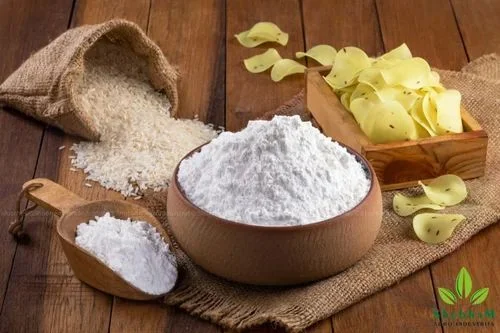
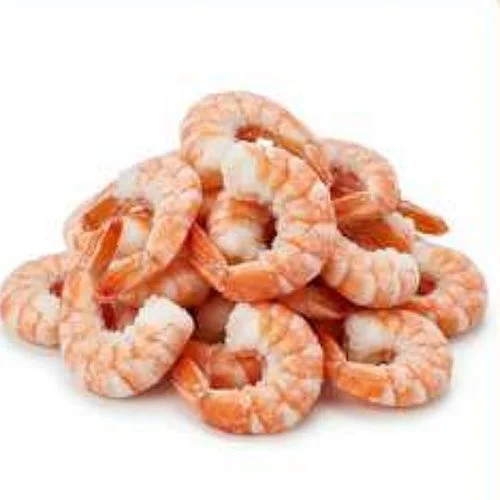
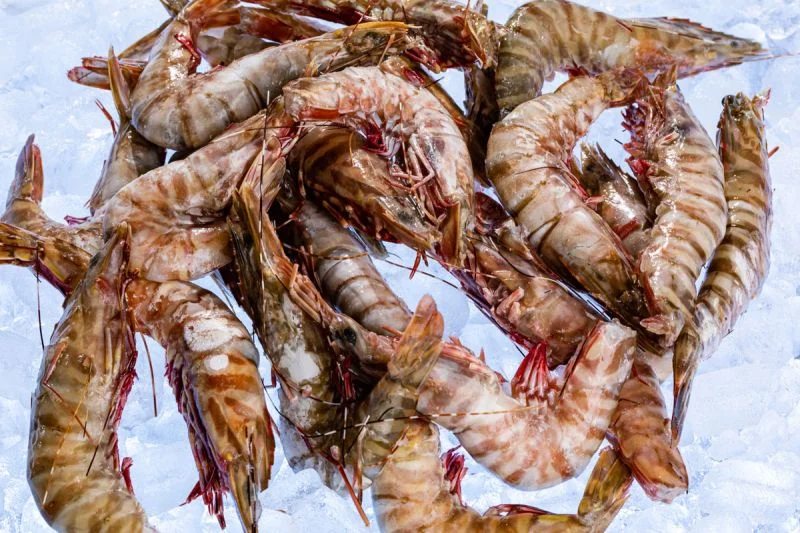
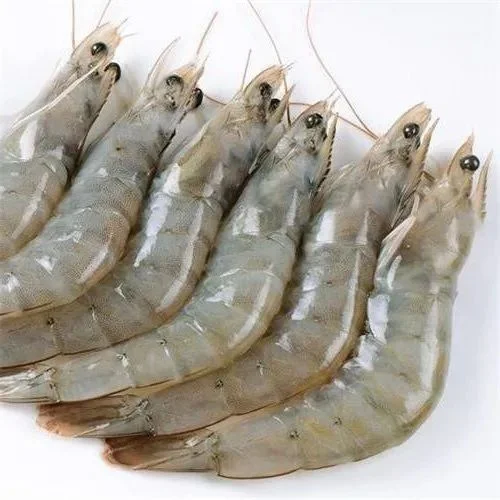
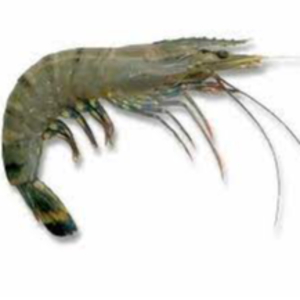
The seafood half of the catalogue covers four species commonly traded from India: shrimps (both fresh and frozen), ribbon fish (fresh and frozen), Chinese pomfret, and cuttlefish (fresh and frozen). Indian frozen shrimp exports are typically graded by count per kilogram (for example U/15, 16/20, 21/25, 26/30, 31/40, 41/50, 51/60 counts for Black Tiger and 31/40, 41/50, 51/60, 61/70 for Vannamei), with buyers also specifying species (Penaeus monodon, Litopenaeus vannamei), glazing percentage (usually 10% to 20%), and individual quick-freezing (IQF) versus block-frozen formats. Ribbon fish (hairtail, Trichiurus lepturus) is commonly traded in sizes of 500 g to 1 kg per piece, graded by length and whole/gutted form, while pomfret (Pampus argenteus for silver, Pampus chinensis for Chinese) is typically sold as whole round, gilled and gutted, in size bands of 200/300, 300/500, 500/700, and 700/1000 g per piece. Cuttlefish (Sepia officinalis) is usually exported as whole cleaned tubes, tentacles, or rings/strips, in sizes of U/5, 5/10, 10/20 pieces per kg, frozen on board or at shore plants. The wheat flour line (HS 1101.00 or 1102 depending on whether it is whole wheat or refined) is the non-perishable counterpart in the catalogue. Indian wheat flour exports are typically specified by extraction rate (whole wheat atta at ~100%, refined maida at ~70% extraction), protein content (8% to 12% on a dry basis), moisture (max 13% to 14%), ash content (0.5% to 0.9% for refined grades), granulation (mesh 60 to 100), and packaging in 25 kg, 50 kg PP/HDPE woven bags or 1 kg to 25 kg consumer packs. Buyers in this segment typically request FSSC 22000, ISO 22000, BRCGS Food Safety, or Halal certifications, along with SGS or Bureau Veritas pre-shipment analysis reports covering moisture, protein, ash, and microbiological parameters.
Trade and Export Information - Aashvi Overseas
Frozen seafood from India is primarily exported under HS chapter 03, with shrimps falling under 0306 (crustaceans, whether in shell or not, live, fresh, chilled, frozen, dried, salted or in brine), ribbon fish and pomfret under 0303 (fish, frozen) or 0304 (fish fillets and other fish meat), and cuttlefish under 0307 (molluscs, whether in shell or not, live, fresh, chilled, frozen). Wheat flour falls under HS 1101.00 (wheat or meslin flour). Indian seafood exporters typically serve the EU (HS code 0306.17 for frozen shrimps and prawns is a major EU import line), the United States, Japan, South Korea, China, the Middle East (UAE, Saudi Arabia), and Southeast Asia (Vietnam, Thailand). Wheat flour from India is typically shipped to neighbouring South Asian markets (Bangladesh, Sri Lanka, Nepal), the Gulf states, and African markets (Djibouti, Somalia, Madagascar, Mozambique, Kenya), often in 20 ft and 40 ft dry-container loads of roughly 18 to 25 metric tonnes. For seafood shipments, the standard cold-chain logistics involve reefer containers set at minus 18 degrees Celsius or below, with HACCP-compliant processing at EU- or USFDA-approved plants, and documentation including health certificates from the Export Inspection Council (EIC) or MPEDA, catch certificates, and, for the EU, IUU (Illegal, Unreported and Unregulated) compliance and possible residue monitoring plans. For wheat flour, buyers typically expect phytosanitary certificates, fumigation certificates (methyl bromide or aluminium phosphide), and non-GMO declarations, with shipments packed in woven PP bags on wooden or plastic pallets, strapped and shrink-wrapped, and transported under standard dry-container Incoterms such as FOB, CFR, or CIF. Indian exporters in both segments commonly work with payment terms of 30% advance and 70% against copy of B/L, or irrevocable L/C at sight, depending on buyer relationship and volume.
Sourcing from Aashvi Overseas - Buyer Guidance
Buyers sourcing from Aashvi Overseas should request species-level details and grade specifications for each seafood line: shrimp species and count grade (for example Vannamei 31/40 or Black Tiger 16/20), glazing percentage, freezing method (IQF or block), and whether the product is raw or cooked. For ribbon fish, pomfret, and cuttlefish, size band per piece (in grams), cut form (whole round, HG, HGT, tubes, tentacles, rings), and catch method (trawl, longline, hook-and-line) should be confirmed. For the wheat flour line, buyers should request protein content, moisture, ash, granulation mesh, extraction rate, and a Certificate of Analysis from an independent lab such as SGS, Bureau Veritas, or Intertek covering microbiological and chemical parameters. Before placing an order, it is advisable to ask for product photographs of actual lots, a recent (within 90 days) lab analysis report, and copies of any food-safety certifications held by the supplier or its processing partner, such as HACCP, ISO 22000, BRCGS, FSSC 22000, or Halal, as well as EU-approval or USFDA registration numbers for the seafood plant. For frozen seafood, a pre-shipment inspection covering weight verification, glazing check, organoleptic assessment, and histamine testing (especially relevant for scombroid and related species) is standard practice. For wheat flour, confirming the milling date, shelf life (typically 6 to 12 months), and packaging specification (25 kg or 50 kg woven bag, inner liner, palletisation) helps avoid disputes at destination. Lead times for frozen seafood from India typically run 15 to 30 days from order confirmation depending on fishing season and processing slot, while wheat flour can be dispatched within 7 to 15 days from ready stock.
Frequently Asked Questions About Aashvi Overseas
What species and grades of shrimp does Aashvi Overseas list?
The catalogue lists fresh and frozen shrimps without specifying species or count grade. Indian shrimp exports are typically traded as Vannamei (Litopenaeus vannamei) or Black Tiger (Penaeus monodon) in count grades such as 16/20, 21/25, 26/30, 31/40, 41/50, or 51/60 per kg, and buyers should confirm species, count, glazing percentage, and IQF versus block-frozen format before ordering.
What size bands are common for frozen ribbon fish and pomfret from India?
Ribbon fish (Trichiurus lepturus) is typically traded whole round or gutted in size bands of 500 g to 1 kg or 1 kg to 2 kg per piece. Pomfret, including Chinese pomfret (Pampus chinensis), is usually sold as whole round, gilled and gutted, in grades of 200/300, 300/500, 500/700, or 700/1000 g per piece, and the exact size band should be confirmed with the supplier.
How is frozen cuttlefish typically packed and graded?
Indian frozen cuttlefish is commonly exported as whole cleaned tubes, tentacles, or rings/strims, in size grades such as U/5, 5/10, 10/20, or 20/40 pieces per kg, packed in 1 kg or 2 kg retail polybags inside 10 kg or 20 kg master cartons, and stored at minus 18 degrees Celsius or lower.
What wheat flour specifications should a buyer request?
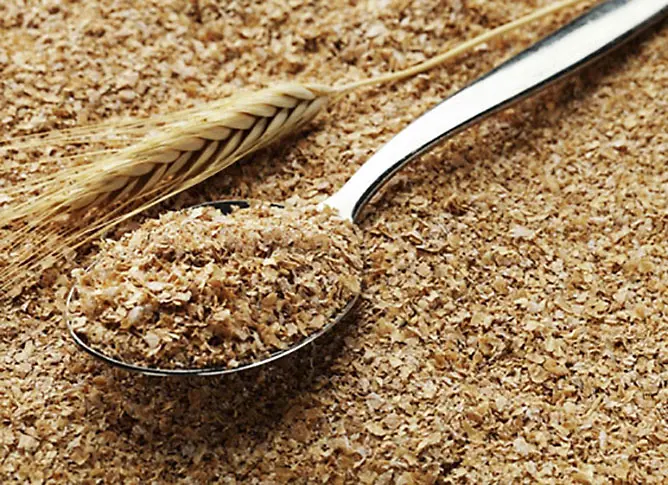
Buyers should ask for protein content (typically 8% to 12%), moisture (max 13% to 14%), ash (0.5% to 0.9% for refined grades), granulation mesh (60 to 100), extraction rate, and a recent Certificate of Analysis from an independent lab such as SGS or Bureau Veritas covering microbiological and pesticide-residue parameters.
Which certifications are typically required for Indian seafood exports?
Frozen seafood shipments from India to the EU, US, and Japan typically require HACCP-compliant processing, EU-approval or USFDA registration of the processing plant, health certificates from MPEDA or the Export Inspection Council, and catch or IUU compliance documentation. Buyers should request copies of these documents before confirming any order.
What packaging and container options are standard for Indian wheat flour exports?
Wheat flour is typically packed in 25 kg or 50 kg woven PP or HDPE bags with an inner food-grade liner, palletised and shrink-wrapped, and loaded into 20 ft (roughly 18 to 22 metric tonnes) or 40 ft (roughly 25 to 28 metric tonnes) dry containers. Buyers should confirm bag weight, palletisation, and fumigation status with the supplier.
What is the typical lead time for an order from Aashvi Overseas?
Lead times vary by product line. Frozen seafood shipments from India typically require 15 to 30 days from order confirmation depending on fishing season, processing slot, and container availability, while wheat flour from ready stock can usually be dispatched within 7 to 15 days. Exact timelines should be confirmed at the quotation stage.
Which documents should a buyer request before finalising a shipment?
Buyers should request a proforma invoice, packing list, health certificate (for seafood) or phytosanitary certificate (for wheat flour), Certificate of Analysis, fumigation certificate where applicable, and copies of any food-safety certifications held by the supplier or its processing facility. For seafood, an IUU catch certificate and EU/USFDA plant approval number are also standard requirements.




 , India