Zibo Jiulong Chemical Co., Ltd. — Verified Supplier
About Zibo Jiulong Chemical Co., Ltd. - Chemicals & Allied Products Supplier in China
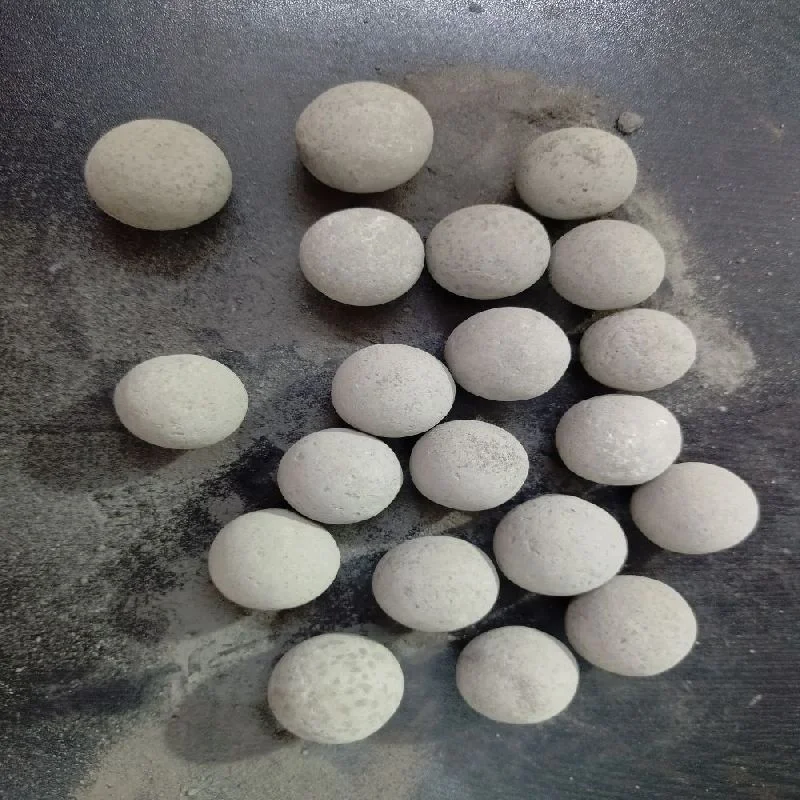
Zibo Jiulong Chemical Co., Ltd. is based in China and currently lists five active products in its catalogue. The company’s offerings fall under the Chemicals & Allied Products segment and include various catalyst‑related materials such as an activated alumina desiccant ball, a pseudo‑boehmite binder used in oil‑refining catalysts, a β‑type molecular sieve zeolite, an MTP‑grade ZSM‑5 zeolite carrier, and a columnar alumina carrier. Each item is positioned for industrial catalyst applications, and the product titles correspond to HS code chapters commonly used for catalytic preparations (e.g., Chapter 38 for organic chemicals and Chapter 25 for inorganic chemicals). The five listed items cover both the active component and the supporting carrier media that are essential in processes such as hydrocracking, fluid catalytic cracking, and adsorption drying. The activated alumina ball is supplied in granular form suitable for fixed‑bed desiccation units, and the pseudo‑boehmite binder is formulated for high thermal stability in severe cracking environments.
Product Range and Specialties of Zibo Jiulong Chemical Co., Ltd.
The catalogue presents activated alumina balls that typically meet a purity of 99 % Al₂O₃, moisture content below 0.1 % and a particle size distribution of 1‑3 mm, specifications common for desiccant media in petrochemical plants. The pseudo‑boehmite binder is described as an oil‑refining catalyst aid with AlOOH content above 85 % and a flash point exceeding 150 °C, matching industry standards for high‑temperature binder performance. Beta zeolite (β) molecular sieves generally carry a Si/Al ratio around 25, pore diameter near 0.55 nm and are supplied in granular form for shape‑selective catalysis; these parameters align with the typical grade used in hydroisomerisation. ZSM‑5 zeolite carriers listed as MTP grade usually exhibit a Si/Al ratio of 15‑30, crystal size 0.3‑0.5 µm and a surface area of 300‑400 m²/g, specifications that support fluid catalytic cracking applications. Columnar alumina carriers are produced with a bulk density of approximately 0.5 g/cc, surface area exceeding 200 m²/g and are sized to fit standard catalyst reactors. Industry practice often requires ISO 9001 quality management certification and REACH registration for chemical products exported from China, although the supplier’s specific certifications are not listed.
Trade and Export Information - Zibo Jiulong Chemical Co., Ltd.
Exporters of catalyst carriers and molecular sieves from China typically ship to refineries and chemical complexes in Southeast Asia, Europe and North America. Relevant HS codes include 3815.90 for catalytic preparations, 3815.10 for activated alumina, and 2523.20 for zeolite products, which guide customs classification and duty assessment. Buyers usually request material safety data sheets (MSDS), certificates of analysis (CoA), and compliance with REACH or equivalent regional regulations; these documents are standard for chemical imports. Packaging for the listed items often involves 25 kg polypropylene bags with moisture‑barrier liners, stacked in 20‑foot containers that can hold up to 20 tons of catalyst media. Common Incoterms are FOB Shanghai or CIF Rotterdam, reflecting the logistics patterns for bulk chemical shipments originating from Chinese ports.
Sourcing from Zibo Jiulong Chemical Co., Ltd. - Buyer Guidance
When sourcing any of the five catalyst‑related products, request a current MSDS and a detailed CoA that includes purity, moisture, particle size distribution and surface area measurements. Verify that the supplier can provide test reports for thermal stability (for the pseudo‑boehmite binder) or pore size distribution (for the zeolites) to confirm conformity with typical industry grades. Ask for a sample batch, usually a 5‑kg or 10‑kg bag, to run independent verification before committing to a full container order. Confirm the packaging integrity, especially the moisture barrier of the bags, and clarify the minimum order quantity, which for bulk catalyst media commonly starts at one 20‑ft container (≈ 18‑20 tons).
Frequently Asked Questions About Zibo Jiulong Chemical Co., Ltd.
What HS codes are applicable to the activated alumina ball and the zeolite carriers?
Activated alumina balls are generally classified under HS 3815.10, while zeolite molecular sieves such as β‑type and ZSM‑5 fall under HS 2523.20 for inorganic chemical products.
Which quality documents should a buyer request before purchasing the pseudo‑boehmite binder?
Buyers should request the latest Material Safety Data Sheet, a Certificate of Analysis showing AlOOH content and flash point, and any REACH registration evidence if the product is destined for the EU market.
What typical specifications define the β‑type molecular sieve listed in the catalogue?
Industry standards for β‑type zeolite specify a Si/Al ratio around 25, a pore diameter near 0.55 nm, bulk purity above 99 %, and a surface area of 300‑350 m²/g.
How are the catalyst carriers usually packaged for export?
The carriers are commonly packed in 25 kg polypropylene bags with an inner moisture‑barrier liner, stacked on pallets that fit a standard 20‑foot container.
What Incoterms are most frequently used for chemical catalyst shipments from China?
FOB (Free on Board) from major Chinese ports such as Shanghai or Ningbo and CIF (Cost, Insurance, Freight) to European hubs like Rotterdam are the most frequently applied terms.
What minimum order quantity is typical for the columnar alumina carrier?
Suppliers of bulk alumina carriers often set the minimum order at one 20‑foot container, which holds roughly 18‑20 tons of material, depending on bag weight and packing density.
Are there any standard certifications buyers should verify for these catalyst products?
While the supplier’s specific certifications are not listed, buyers normally verify ISO 9001 quality management, REACH registration for EU imports, and any applicable ASTM or DIN standards for catalyst media.
What testing methods are used to confirm the performance of ZSM‑5 zeolite carriers?
Performance is typically validated by X‑ray diffraction (XRD) for crystal structure, BET surface area analysis, and pore volume measurement using nitrogen adsorption at 77 K.




 , China