Vodasafe — Supplier
About Vodasafe - Safety & Security Equipment Supplier in China
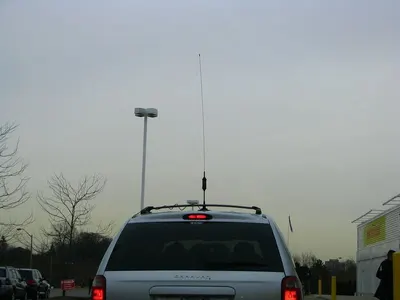
China lists nine active signal‑jamming products under the Safety & Security Equipment category. The catalogue includes models such as the 6‑band Car GPS Mobile Jammer CPJ3060adj, High Power Prison Jammer CPJ6022, 2G/3G Remote Control Audio Jammer CPJ‑X12, 14‑antenna Cell Phone Signal Jammer CPJX14, 8‑band Remote Control RF Jammer CPJP8, Desktop Radio Jamming System CPJX6105UAV, Man Pack Bomb Jammer CPJ‑MP8, High Power 4G/WiFi Signal Jammer CPJ690, and a second entry for the 6‑band Car GPS Mobile Jammer CPJ3060adj. Each entry is recorded without additional specifications, but all fall within electronic interference equipment that exporters typically classify under HS Chapter 85 for electrical apparatus.
The listed devices target various frequency bands used by mobile phones, GPS, Wi‑Fi and radio communications. Export listings for such equipment usually reference HS codes in the 8517‑62 sub‑heading for transmitting or receiving apparatus, and buyers often need to verify that the units comply with the destination country’s radio‑frequency regulations. The product count of nine indicates a focused portfolio rather than a broad line of unrelated items.
Product Range and Specialties of Vodosafe
Vodosafe’s portfolio concentrates on portable and fixed jamming solutions covering 2G, 3G, 4G/LTE, GPS and Wi‑Fi bands. In the broader market, similar jammers are offered in power ranges from 5 W to over 100 W, with coverage radii from a few meters for handheld units up to several hundred meters for high‑power prison or vehicle‑mounted systems. Typical industry specifications include frequency coverage tables, adjustable power output, battery life (often 4 - 12 hours for portable units) and remote‑control capability via RF or infrared links.
Buyers of signal‑jamming equipment normally look for documented performance metrics such as attenuation level (dB), effective radiated power (ERP), and compliance with standards like IEC 62233 for electromagnetic compatibility. Common material constructions involve metal housings for shielding, sealed polymer casings for field durability, and interchangeable antenna modules to match target frequencies.
Trade and Export Information - Vodosafe
China is a major exporter of electronic security hardware, and signal‑jamming devices are frequently shipped to regions with heightened security concerns, including parts of the Middle East, Africa, and South‑East Asia. Export shipments are usually classified under HS 8517.62 and may require export licenses in China due to dual‑use technology controls. Destination customs often request CE or FCC conformity documentation, RoHS declarations, and a test report confirming the advertised frequency bands and power output.
Logistically, these devices are packed in anti‑static bags or wooden crates to protect delicate antenna assemblies, and common Incoterms used by Chinese suppliers include FOB Shanghai or CIF Hong Kong. Buyers should anticipate container loads of 20 ft or 40 ft depending on unit size, with typical weight per unit ranging from 2 kg for handheld jammers to 15 kg for high‑power stationary systems.
Sourcing from Vodosafe - Buyer Guidance
When sourcing from Vodosafe, request the device’s FCC ID or CE Declaration of Conformity, along with a detailed test report that lists frequency coverage, output power (in watts), and attenuation performance. Verify that the supplied specifications align with the buyer’s intended jurisdiction, as many countries restrict or prohibit the import of active jamming equipment without special permits.
Ask for a functional sample to assess remote‑control response time, battery endurance and antenna mounting options before confirming larger orders. Confirm packaging details (e.g., anti‑static bag, crate dimensions) and request a packing list that matches the HS code declaration to avoid customs delays. Documentation such as a material safety data sheet (MSDS) for battery components may also be required for shipment.
Frequently Asked Questions About Vodasafe
What frequency bands do Vodosafe’s jammers cover?
The catalogue lists models targeting 2G, 3G, 4G/LTE, GPS and Wi‑Fi bands. Exact band ranges are provided in the technical data sheet for each model and should be verified against the buyer’s requirements.
Are the jammers portable or fixed installations?
Both types are present: handheld units such as the Car GPS Mobile Jammer and Man Pack Bomb Jammer, and fixed installations like the High Power Prison Jammer and Desktop Radio Jamming System. Portability is indicated by battery operation and remote‑control features.
Which HS code is used for these products?
Signal‑jamming devices are typically classified under HS 8517.62, which covers transmitting or receiving apparatus of a telecommunications nature.
What certifications should I request before purchase?
Buyers should request the CE Declaration of Conformity or FCC ID, a RoHS compliance statement, and an electromagnetic compatibility test report (IEC 62233) for each device.
What is the typical packaging for export?
Units are normally packed in anti‑static bags inside wooden crates or reinforced cardboard boxes, with dimensions and weight listed on the packing list for customs clearance.
What are common lead times and minimum order quantities?
Lead times for electronic jammers generally range from 15 to 30 days after order confirmation, and minimum order quantities are often set at one full container load (approximately 200 - 300 handheld units) unless a sample order is arranged.
Can I obtain a sample before a full order?
Yes, Vodosafe can provide a functional sample for evaluation. The sample request should specify the model and intended use to ensure the correct configuration is supplied.
Are there any export restrictions I should be aware of?
Export of jamming equipment may require a Chinese export license and compliance with the import regulations of the destination country. Buyers should verify local legal restrictions and obtain any necessary permits before import.




 , China