Resilient Technologies — Supplier
About Resilient Technologies - Safety & Security Equipment Supplier in India
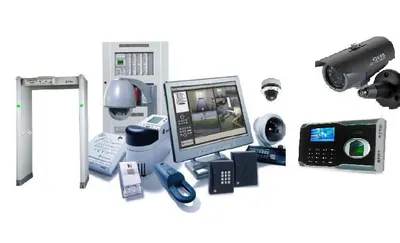
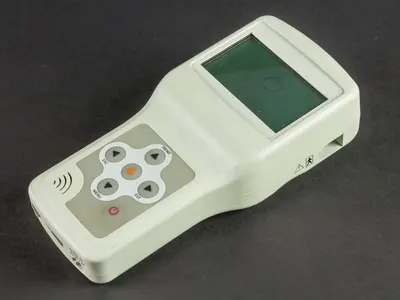
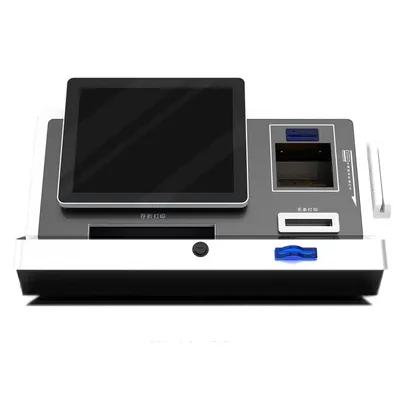
Resilient Technologies is based in India and currently lists 19 active products under the Safety & Security Equipment category. The catalogue includes access control hardware such as four‑door and two‑door controllers, an elevator access controller, and door interlocking terminals (DIT‑400 and DIT‑800). It also comprises proximity and Mifare smart‑card readers, card‑based time attendance and canteen recorders, and a visitor management system. Biometric solutions are represented by handheld devices, waterproof fingerprint controllers and readers, USB fingerprint scanners, and integrated fingerprint time‑attendance systems. All items are electrical or electronic security equipment that typically fall within HS Chapter 84 (machinery) and HS Chapter 85 (electrical equipment).
The listed devices are engineered for indoor and outdoor deployment, with many models rated IP65 for dust and water protection. Controllers generally accept 12 V DC power, support Wiegand 26‑bit card data, and operate across a temperature range of - 20 °C to 60 °C. Biometric units conform to ISO/IEC 19794‑2 fingerprint data standards and offer match scores above 70 % in laboratory testing. Card‑based recorders store up to 10,000 transactions on a secure micro‑SD card and provide RS‑485 or TCP/IP communication options. The product set is designed for integration with standard access management software and can be mounted in rack or wall configurations.
Product Range and Specialties of Resilient Technologies
The product range covers four main sub‑categories: access controllers, biometric readers, card‑based recording devices, and auxiliary management terminals. Access controllers include four‑door, two‑door, and elevator models, each providing relay outputs, anti‑tamper switches and optional battery backup. Biometric offerings comprise handheld fingerprint scanners, waterproof fingerprint controllers and readers, USB fingerprint scanners, and integrated fingerprint‑camera units. Card‑based devices consist of proximity and Mifare smart‑card readers as well as time‑attendance and canteen recorders that use magnetic stripe or RFID cards. Door interlocking terminals (DIT‑400, DIT‑800) provide fail‑safe door‑hold functionality for high‑security zones.
The security hardware market commonly distinguishes devices by compliance with ANSI/BHMA grade 1 for durability, and by IP rating for environmental resistance. Fingerprint sensors are often specified with a minimum 500‑dpi imaging resolution and a false‑accept rate below 0.001 %. RFID readers typically support ISO 14443 Type A/B and ISO 15693 protocols, while Mifare readers operate at 13.56 MHz with a read range of up to 10 cm. Controllers frequently include RS‑485, TCP/IP, and optional Wi‑Fi modules for integration into building management systems. Standard packaging for these units is anti‑static bubble wrap within double‑wall cartons, sized for 20‑foot container loading of approximately 150 units per pallet.
Trade and Export Information - Resilient Technologies
India ranks among the top exporters of security and access control equipment, channeling the majority of shipments to the Middle East, Africa, Southeast Asia and select European markets. The HS code 8421.10 (door, gate, barrier) and HS code 8525.80 (security alarm and access control devices) are the primary tariff classifications applied to the types of products listed by Resilient Technologies. Logistics for these items typically employ 20‑foot containers holding up to 1,200 units or 40‑foot containers for larger bulk orders, with common Incoterms such as CIF or CIP to major ports like Dubai, Lagos and Singapore.
Importers generally require CE marking for European entry, FCC certification for the United States, and RoHS compliance for hazardous substance limits. ISO 9001 quality‑management certification is frequently requested to verify production consistency. Buyers also look for test reports covering electromagnetic compatibility (EMC), IP rating verification, and biometric performance metrics. Packing standards include sturdy wooden crates with internal cushioning, moisture‑resistant liners, and clear labeling of HS codes, country of origin and model numbers.
Sourcing from Resilient Technologies - Buyer Guidance
Prospective buyers should request product data sheets that list voltage, power consumption, communication protocols, IP rating and operating temperature for each model. Sample units are advisable to confirm firmware compatibility with existing access management platforms, and to evaluate biometric match accuracy under local environmental conditions.
In addition, obtain test reports for EMC compliance, RoHS declaration and, where applicable, ISO/IEC 19794‑2 fingerprint performance. Verify that the supplier can provide CE or FCC certificates if the target market requires them, and confirm the lead time for standard configurations, which typically ranges from 30 to 45 days after order confirmation. Packaging specifications such as anti‑static wrapping and pallet dimensions should be agreed in advance to avoid handling issues.
Frequently Asked Questions About Resilient Technologies
What types of access control hardware does the supplier offer?
The catalogue includes four‑door, two‑door and elevator access controllers, each featuring 12 V DC power input, relay outputs, anti‑tamper switches and optional battery backup.
Are biometric devices waterproof?
Yes, the supplier lists waterproof fingerprint controllers and readers that carry an IP65 rating, suitable for outdoor or harsh indoor environments.
Which communication interfaces are available for the controllers?
Controllers provide RS‑485 and TCP/IP ports; some models also offer optional Wi‑Fi modules for remote integration.
What card technologies are supported by the readers?
The product line covers proximity (ISO 14443) and Mifare (13.56 MHz) smart‑card readers, as well as magnetic‑stripe card interfaces for attendance and canteen recorders.
What certifications should a buyer verify before importing?
Buyers typically request CE marking for EU markets, FCC certification for the US, RoHS compliance statements, and ISO 9001 quality‑management certification, together with EMC test reports.
What is the typical minimum order quantity and lead time?
Standard models are offered with a minimum order of 50 units; once the order is confirmed, production lead time is generally 30‑45 days, subject to customization.
How are the products packaged for international shipment?
Items are packed in anti‑static bubble wrap inside double‑wall cartons, stacked on pallets that fit a 20‑foot container (approximately 1,200 units) and secured with wooden crates for sea freight.




 , India