Titanium Audio Systems — Verified Manufacturer & Wholesale Supplier
About Titanium Audio Systems - Computer Hardware & Peripherals Supplier in United States
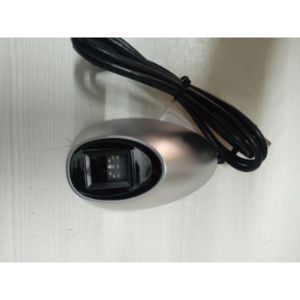
United States, California based Titanium Audio Systems lists 25 active products across its catalogue. The supplier’s inventory spans computer hardware and peripheral components, computer parts, and various electronic and electrical items. Products are identified by model codes such as TAS‑C20000.1LV (HS code TAS‑C20000.1LV), TAS‑C7000.1LV (HS code TAS‑C7000.1LV), and TAS‑0GBE (HS code TAS‑0GBE). The catalogue also includes electronic scales and card‑reader modules under codes like TAS‑5.25PE and TAS‑6x9HP. Each entry is presented with its own HS‑code‑like identifier, reflecting the supplier’s internal classification.
The listed items fall within HS Chapter 85 (electrical machinery and equipment) and Chapter 84 (machinery) families commonly used for audio and computing accessories. The product set includes amplifiers, speaker drivers, and connector assemblies that are typical for high‑fidelity audio solutions. Model designations such as “LV” or “PE” suggest low‑voltage or printed‑circuit‑board variants, while “HP” and “SHP” denote high‑power configurations. The range therefore covers both consumer‑grade and professional‑grade electronic components.
Product Range and Specialties of Titanium Audio Systems
Titanium Audio Systems’ catalogue features 25 distinct SKUs, ranging from low‑voltage modules (e.g., TAS‑C2000.1LV) to high‑power audio amplifiers (e.g., TAS‑6.5HP). The product codes indicate form‑factor variations such as printed‑circuit‑board (PE) and bulk (B) versions, as well as specialised connector types (e.g., TAS‑3.5WC). In the broader computer‑hardware market, similar components are offered in standard IEC 60950‑1 compliant housings, with typical power ratings from 0.5 W to 150 W and frequency‑response specifications of 20 Hz - 20 kHz for audio modules. Buyers often look for RoHS‑compliant solder masks, lead‑free plating, and EN 55032 electromagnetic‑compatibility performance.
Industry practice for audio and peripheral hardware includes adherence to IEC 60947 for switchgear, IEC 60335 for safety, and IEEE 802.3 for Ethernet‑related card readers. Typical material choices are aluminum‑alloy chassis for heat dissipation, copper windings for inductors, and FR‑4 laminate for PCBs. Quality grades are expressed in terms of THD (total harmonic distortion) below 0.1 % for high‑fidelity speakers and signal‑to‑noise ratios above 90 dB for amplifiers.
Trade and Export Information - Titanium Audio Systems
United States exporters of computer‑hardware components such as those listed by Titanium Audio Systems generally ship to North America, Western Europe, and the Asia‑Pacific region, where demand for high‑performance audio and peripheral equipment is strong. HS Chapter 85 items are subject to US export licensing under the EAR, and many buyers require proof of compliance with FCC Part 15 for unintentional radiators and CE marking for EU markets. Common certifications requested include UL listing, FCC ID, CE, and RoHS conformity, often documented in test reports attached to the commercial invoice.
Logistically, these electronic modules are typically packed in anti‑static bubble wrap, placed in corrugated cartons, and shipped in 20‑ft or 40‑ft containers under FOB or CIF terms. Export documentation frequently includes a commercial invoice, packing list, certificate of origin, and where applicable, a Material Safety Data Sheet (MSDS) for any chemical additives. US manufacturers also benefit from established freight routes through West Coast ports such as Los Angeles and Long Beach, facilitating timely delivery to global distributors.
Sourcing from Titanium Audio Systems - Buyer Guidance
When sourcing from Titanium Audio Systems, buyers should request the latest FCC Declaration of Conformity, UL or CE test certificates, and RoHS compliance statements for each SKU. Sample units should be evaluated for THD, SNR, and power consumption against the specifications implied by the model codes (e.g., LV versus HP variants). Verification of PCB material (FR‑4, copper weight) and connector plating (gold, nickel) helps confirm suitability for OEM integration.
It is advisable to confirm the packaging dimensions and weight per unit, as this influences container loading calculations; most items in the catalogue fit within standard 0.5 kg to 2 kg per unit ranges. Buyers should also clarify the minimum order quantity (often a full pallet or 500 units) and lead time, which for US‑based production typically ranges from 2 to 6 weeks after order confirmation.
Frequently Asked Questions About Titanium Audio Systems
What product categories does Titanium Audio Systems offer?
The supplier lists computer hardware and peripheral components, computer parts, electronic and electrical items, electronic card‑reader modules and electronic scales, covering 25 distinct SKUs such as TAS‑C20000.1LV and TAS‑6.5HP.
How are the model codes related to product specifications?
Model suffixes indicate typical characteristics: “LV” denotes low‑voltage PCB modules, “PE” signals printed‑circuit‑board versions, “B” refers to bulk or board‑mounted units, while “HP” and “SHP” identify high‑power audio amplifiers.
Which HS codes apply to these items?
Each SKU is paired with its own identifier that functions as an HS‑code‑like reference, for example TAS‑C20000.1LV (HS code TAS‑C20000.1LV) and TAS‑0GBE (HS code TAS‑0GBE), falling under HS Chapter 85 for electrical machinery.
What certifications should a buyer request?
Typical certifications for US‑origin computer‑hardware include FCC Declaration of Conformity, UL listing, CE marking for EU shipments, and RoHS compliance statements; buyers should ask the supplier to provide the relevant test reports.
What are the usual packaging and shipping terms?
Products are packed in anti‑static bubble wrap within corrugated cartons, loaded into 20‑ft or 40‑ft containers, and commonly shipped under FOB or CIF Incoterms.
What documentation is needed for customs clearance?
A commercial invoice, packing list, certificate of origin, and any required test certificates (FCC, CE, UL) are standard; an MSDS may be needed if the item contains regulated materials.
What is the typical lead time and minimum order quantity?
For US‑based production, lead times range from 2 to 6 weeks after order confirmation, and minimum orders are often set at a full pallet (approximately 500 units) depending on the SKU.




 , United States