Agriculture›
 Apparel and fashion accessories›
 Construction & real estate›💡Electronic & Electrical›🍎Food & Beverages›🛋️Home furnishing & supplies›⚗️Industrial goods & chemical›🪨Minerals & metals›📦Miscellaneous›Agriculture›Apparel and fashion accessories›Construction & real estate›💡Electronic & Electrical›🍎Food & Beverages›🛋️Home furnishing & supplies›⚗️Industrial goods & chemical›🪨Minerals & metals›📦Miscellaneous›
Summit Chemical Industrial Co., Limited
⚓ Harbor , ChinaNew supplier / no reviews yet
Summit Chemical Industrial Co., Limited Product Catalog
About Summit Chemical Industrial Co., Limited - Industrial Chemicals Supplier in China
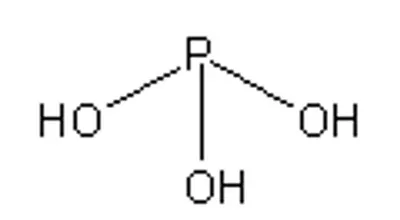
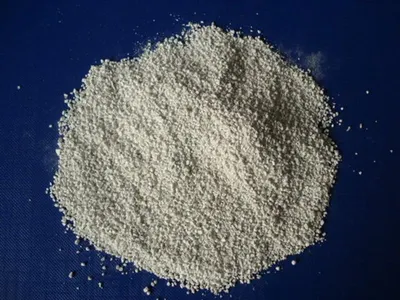
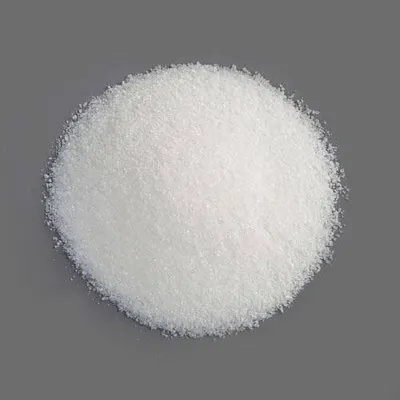
Summit Chemical Industrial Co., Limited is based in China and lists five distinct phosphate products in its catalogue. The company’s portfolio falls under the Chemicals & Allied Products and Industrial Chemicals categories. Products include Ammonium polyphosphate (phase‑i), Dipotassium Phosphate Trihydrate, Monocalcium phosphate, Tetrapotassium pyrophosphate (HS code 2835.39) and Mono‑Dicalcium phosphate (HS code 2309.90). The listed materials cover both technical and food‑grade specifications, with the latter indicated for the tetrapotassium pyrophosphate and mono‑dicalcium phosphate feed grades. Each item is identified by its chemical name and, where provided, the relevant HS‑code family.
The catalogue does not provide additional details such as purity percentages, particle size, or packaging dimensions, but the inclusion of food‑grade and feed‑grade designations suggests compliance with Chinese food safety standards. The five entries represent the full active product count reported for this supplier, highlighting a focused range within inorganic phosphate chemicals.
Product Range and Specialties of Summit Chemical Industrial Co., Limited
The product list comprises five inorganic phosphates: Ammonium polyphosphate (phase‑i) used as a flame‑retardant, Dipotassium Phosphate Trihydrate commonly supplied at ≥99 % purity for fertilizer and food applications, Monocalcium phosphate often employed as a leavening agent with typical P₂O₅ content around 98 %, Tetrapotassium pyrophosphate offered in technical and food grades with industry purities of 99.5 % or higher and moisture below 2 %, and Mono‑Dicalcium phosphate feed grade containing roughly 30 % P₂O₅ for animal nutrition. Typical industry specifications include particle size ranges of 20‑200 µm for polyphosphates, moisture limits of 5 % or less, and packaging in 25 kg bags or bulk containers.
In global trade, Chinese phosphate exporters frequently meet standards such as ISO 9001 quality management, GB food‑safety specifications for food‑grade phosphates, and HACCP requirements for additives. Buyers normally request a Certificate of Analysis confirming purity, moisture and P₂O₅ content, along with a Material Safety Data Sheet. The HS‑code 2835.39 applies to pyrophosphate powders, while 2309.90 covers miscellaneous food preparations such as the mono‑dicalcium phosphate feed grade.
Frequently Asked Questions About Summit Chemical Industrial Co., Limited
What HS codes are assigned to the phosphate products listed by Summit Chemical Industrial Co., Limited?
Tetrapotassium pyrophosphate is classified under HS 2835.39, and Mono‑Dicalcium phosphate feed grade falls under HS 2309.90. The remaining phosphates are generally covered by HS chapter 28 for organic chemicals or chapter 23 for food preparations, depending on their end‑use.
Are any of the listed phosphates suitable for food‑grade applications?
The catalogue specifies food‑grade for tetrapotassium pyrophosphate and feed‑grade for mono‑dicalcium phosphate. Buyers should request a GB‑standard or HACCP compliance certificate and a recent CoA to confirm suitability for food use.
What purity levels can be expected for these phosphate chemicals?
Industry norms are 70‑80 % P₂O₅ for ammonium polyphosphate, ≥99 % purity for dipotassium phosphate tri‑hydrate, ≥98 % for monocalcium phosphate, ≥99.5 % for tetrapotassium pyrophosphate, and about 30 % P₂O₅ for mono‑dicalcium phosphate feed grade. Exact figures must be verified on the supplier’s Certificate of Analysis.
What packaging formats are commonly used for these chemicals?
Chinese exporters typically ship phosphate powders in 25 kg polypropylene bags for smaller orders and in 1‑ton flexible intermediate bulk containers (FIBCs) for larger volumes. Palletized 20‑ft or 40‑ft containers are the standard freight units.
Which certifications should a buyer request before purchasing?
Buyers should ask for an ISO 9001 quality‑management certificate, a Material Safety Data Sheet, a Certificate of Analysis, and for food‑grade items, a GB or HACCP compliance certificate. Export documentation also includes a Certificate of Origin.
ChinaRelated Suppliers & Products
Explore similar suppliers, related products and trending categories