Agriculture›
 Apparel and fashion accessories›
 Construction & real estate›💡Electronic & Electrical›🍎Food & Beverages›🛋️Home furnishing & supplies›⚗️Industrial goods & chemical›🪨Minerals & metals›📦Miscellaneous›Agriculture›Apparel and fashion accessories›Construction & real estate›💡Electronic & Electrical›🍎Food & Beverages›🛋️Home furnishing & supplies›⚗️Industrial goods & chemical›🪨Minerals & metals›📦Miscellaneous›
Shanghai Deca Automobile Testing Equipment And Technology Co., Ltd.
⚓ Harbor , ChinaNew supplier / no reviews yet
Shanghai Deca Automobile Testing Equipment And Technology Co., Ltd. Product Catalog
About Shanghai Deca Automobile Testing Equipment And Technology Co., Ltd. - Industrial Machinery Supplier in China
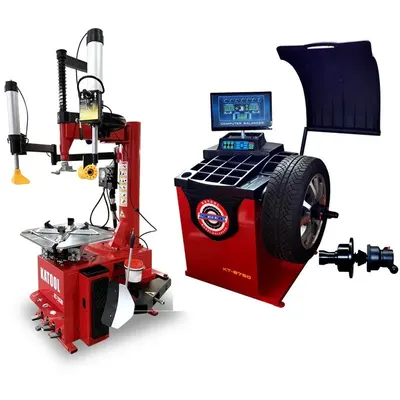
China hosts the Shanghai Deca Automobile Testing Equipment And Technology Co., Ltd., which currently lists five distinct products in its catalogue. The listed items include a tire changer machine, a wheel balancing machine (noted with a price reference), a generic balancing machine, a tie changing machine, and a low‑cost model identified as the BD‑TC920 tire changer. Each entry falls under the broader classifications of Industrial Machinery, Light & Medium Machinery, Car Cleaning & Maintenance Products, and Automobile Tyre Changers as indicated in the supplier’s top categories.
The company’s catalogue focuses on equipment used for tyre replacement and wheel balancing in automotive service environments. Although no HS codes are attached to the individual items, these machines typically belong to the HS chapter 84 (machinery and mechanical appliances), which is the standard classification for automotive testing and maintenance equipment. The product set reflects the type of machinery that automotive workshops and tyre service centers source for routine tyre mounting, demounting, and dynamic balancing operations.
Product Range and Specialties of Shanghai Deca Automobile Testing Equipment And Technology Co., Ltd.
The five products comprise a tire changer machine, a wheel balancing machine, a balancing machine, a tie changing machine, and the budget‑oriented BD‑TC920 tire changer. In the automotive service sector, tyre changers are usually rated by maximum rim diameter (commonly 22‑24 inches), hydraulic pressure (often 10‑15 MPa), and power consumption (typically 2‑4 kW). Wheel balancing machines are evaluated on balancing speed (up to 2 seconds per wheel), accuracy (±0.1 g), and the ability to handle both static and dynamic balancing. Light and medium machinery in this category often complies with IEC 60204‑1 for electrical safety and may carry CE marking for European markets.
Industry practice shows that buyers look for ISO 9001 quality management certification, CE or UL safety approvals, and test reports confirming compliance with ISO 16750 for automotive equipment durability. Standard accessories include hydraulic pumps, digital control panels, and interchangeable tire mounting heads. The “cheap” BD‑TC920 model is typically positioned for small workshops, offering reduced power output and a limited rim size range, while still meeting basic safety standards.
Frequently Asked Questions About Shanghai Deca Automobile Testing Equipment And Technology Co., Ltd.
What types of tyre changer machines does Shanghai Deca list in its catalogue?
The catalogue includes a standard tire changer machine, a wheel balancing machine (price indicated), a generic balancing machine, a tie changing machine, and a low‑cost BD‑TC920 tire changer model.
Which HS chapter typically covers tyre changer and wheel balancing equipment?
These machines are generally classified under HS chapter 84, which covers machinery and mechanical appliances.
What certifications are commonly required for automotive tyre changing equipment?
Buyers usually request CE marking for EU markets, ISO 9001 quality management certification, and compliance with IEC 60204‑1 for electrical safety.
What specifications should I verify before ordering a tire changer?
Check the maximum rim diameter (often 22‑24 in), hydraulic pressure range (10‑15 MPa), power consumption (2‑4 kW), and any safety interlocks or emergency stop features.
How are these machines typically shipped from China?
They are packed on reinforced wooden pallets, shrink‑wrapped, and loaded into 20‑ft or 40‑ft containers, often under FOB Shanghai or CIF terms.
ChinaRelated Suppliers & Products
Explore similar suppliers, related products and trending categories