Langfang Jintai Glass Beads, Co., Ltd — Verified Supplier
About Langfang Jintai Glass Beads, Co., Ltd - Glass Beads Supplier in China
Langfang Jintai Glass Beads, Co., Ltd is based in Langfang, China and lists five active glass‑bead products. The catalogue includes glass beads for road marking, high‑quality beads for blasting or jetting, hollow glass microspheres, high‑index beads with a refractive index of 1.93 Nd, and beads intended for grinding applications. Each entry falls under the broader category of glass beads, which is classified in HS Chapter 70 for glass products. The supplier’s product list does not provide HS codes, but the items are typical of the glass‑bead segment used in infrastructure and industrial processes. Availability is limited to the five specific product titles shown in the catalogue.
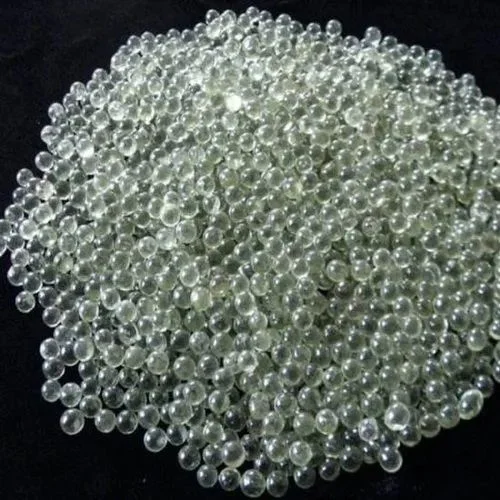
The road‑marking beads are generally supplied in sizes ranging from 0.2 mm to 1.0 mm and are designed to provide high retro‑reflectivity when embedded in pavement paint. Blasting or jetting beads are usually high‑purity silica with a Mohs hardness of around 7 and are sized between 0.5 mm and 2 mm for efficient material removal. Hollow glass microspheres are lightweight, closed‑cell spheres with wall thicknesses of 0.5 µm to 2 µm and bulk densities from 0.2 g/cm³ to 0.6 g/cm³, commonly used in composites. The high‑index beads (index 1.93 Nd) are employed in optical applications where a high refractive index is required. Grinding beads are silica‑based abrasive particles typically sized 0.1 mm to 0.5 mm and graded according to standard abrasive specifications.
Product Range and Specialties of Langfang Jintai Glass Beads, Co., Ltd
The current catalogue lists five distinct glass‑bead products, each matching a common industrial use. Road‑marking beads are sold as reflective additives for traffic paints, while blasting beads serve as abrasive media for surface preparation. Hollow microspheres are supplied as low‑density fillers, high‑index beads target optical components, and grinding beads function as fine abrasives for polishing operations. In the glass‑bead industry, standard grades are defined by particle size distribution, purity (often >99 % SiO₂), and physical properties such as density and refractive index. Typical specifications include ASTM C117 for bead grading, ISO 10545‑1 for physical properties, and DIN standards for optical index.
Buyers of these categories usually assess parameters such as particle size range (measured by sieve analysis), bulk density (g/cm³), refractive index (measured with a refractometer), and hardness (Mohs scale). For hollow microspheres, wall thickness and closed‑cell integrity are verified by microscopy and density tests. High‑index beads are often required to meet a tolerance of ±0.01 on the stated index. These technical details complement the supplier’s listed product types and help buyers compare against typical industry grades.
Trade and Export Information - Langfang Jintai Glass Beads, Co., Ltd
Chinese manufacturers of glass beads commonly export to the United States, the European Union, Southeast Asia, and the Middle East, where the products support road infrastructure, aerospace composites, and abrasive markets. The HS code family for most glass beads falls under Chapter 70, heading 7017, which covers “Other glassware, articles of glass.” Export shipments are typically packed in bulk paper bags or fiber drums, with a 20‑ft container holding approximately 10 to 12 metric tonnes depending on bead density. Buyers often request compliance with ISO 9001 quality management systems, REACH registration for chemical safety in the EU, and CE marking where applicable. Chinese exporters also provide inspection certificates from SGS or Bureau Veritas to satisfy import‑country regulations.
Typical incoterms used by Chinese glass‑bead suppliers include FOB Tianjin or CIF major ports such as Shanghai and Ningbo. Shipping logistics consider the non‑hazardous nature of the beads, allowing standard container handling without special temperature control. Seasonal demand peaks in the northern hemisphere during spring and summer, aligning with road‑marking projects, while the aerospace and composite sectors maintain steady demand for hollow microspheres year‑round.
Sourcing from Langfang Jintai Glass Beads, Co., Ltd - Buyer Guidance
When sourcing glass beads from this supplier, request a detailed product data sheet that includes particle size distribution, bulk density, silica purity, and refractive index where relevant. Verify that the supplier can provide test reports following ASTM C117 (glass‑bead grading) and ISO 10545‑1 (physical properties), as well as a REACH safety data sheet for EU compliance. Samples of 5 kg to 10 kg are standard for evaluating reflectivity, hardness, and optical performance before confirming larger orders.
Confirm the supplier’s certification status - if ISO 9001 or other quality system certificates are held, ask to see the latest audit report. Clarify packaging details (e.g., bag weight, moisture content limits) and request a pre‑shipment inspection certificate. Typical minimum order quantities for bulk glass beads range from 2 metric tonnes to 5 metric tonnes, with lead times of 30 to 45 days after order confirmation, depending on product availability.
Frequently Asked Questions About Langfang Jintai Glass Beads, Co., Ltd
What particle size ranges are offered for the road‑marking glass beads?
The road‑marking beads are typically supplied in sizes from 0.2 mm up to 1.0 mm, measured by standard sieve analysis. Size distribution curves are provided in the product data sheet.
Which standards apply to glass beads used for blasting or jetting?
Blasting beads are usually graded according to ASTM C117 for bead size and purity, and they meet ISO 10545‑1 for physical characteristics. Suppliers often provide a hardness rating of around 7 Mohs.
How is the density of hollow glass microspheres verified?
Density is measured using a pycnometer or gas displacement method, yielding bulk densities between 0.2 g/cm³ and 0.6 g/cm³. Wall thickness is checked by microscopy to ensure closed‑cell structure.
What refractive index tolerance is typical for high‑index glass beads (index 1.93 Nd)?
High‑index beads are specified at 1.93 ± 0.01, verified with a calibrated refractometer. Optical grade beads also require low inclusion levels as per DIN 589.
What packaging format is used for bulk shipments of glass beads?
Bulk shipments are usually packed in kraft paper bags (typically 20 kg to 25 kg per bag) or fiber‑reinforced drums for larger volumes. Bags are sealed to limit moisture absorption.
Which certifications should a buyer request before purchasing glass beads?
Buyers should request ISO 9001 quality management certification, REACH registration documents for EU markets, and any third‑party inspection certificates such as SGS or Bureau Veritas reports.
What is the usual lead time for an order of glass beads from this supplier?
Lead times generally range from 30 to 45 days after order confirmation, depending on product type and current production schedules.
Can samples be provided for evaluation, and what quantity is typical?
The supplier can provide sample quantities of 5 kg to 10 kg for each bead type, allowing performance testing before placing a bulk order.




 , China