Everest Holovisions Ltd. — Verified Supplier
About Everest Holovisions Ltd. - Labels, Stickers, Logos Supplier in India
Everest Holovisions Ltd. operates from India and currently lists eight distinct holographic products in its catalogue. The product lineup includes holographic hot stamping foil, hologram stickers, and holographic PET/PVC/BOPP films used for flexible packaging. Additional items are generic holograms, holographic films, holographic strips (listed twice), and holographic shrink sleeves for tamper‑evident applications. Each item falls under the broader categories of printed labels, stickers, logos and laminated foil materials. The supplier is classified as an imported tier with a harbor trust tier, indicating participation in cross‑border trade.
The two principal categories highlighted are “Labels, Stickers, Logos” and “Laminated Foil”, both of which commonly employ holographic effects for brand protection and visual impact. In the printing and packaging industry, holographic foils are typically supplied in roll formats ranging from 0.5 m to 3 m width and thicknesses of 15 - 30 µm. Hologram stickers are often die‑cut or pre‑punched to dimensions between 10 mm and 100 mm, with adhesive types suited to paper, plastic, or metal substrates. Shrink sleeves are manufactured to shrink uniformly on containers with a typical shrink ratio of 30 % to 45 % at 120 - 150 °C. The catalogue does not specify certifications, so buyers should verify compliance with common standards such as ISO 9001, ISO 14001, REACH, and RoHS where applicable.
Product Range and Specialties of Everest Holovisions Ltd.
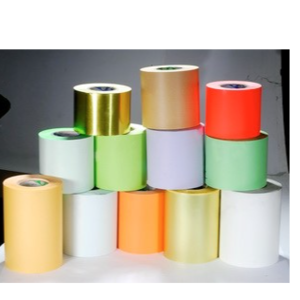
Everest Holovisions Ltd.’s catalogue comprises eight holographic products: hot stamping foil, stickers, PET/PVC/BOPP films, standalone holograms, generic holographic films, strips, and shrink sleeves. The hot stamping foil is supplied as a thin metallic laminate designed for dry‑heat transfer onto paper, cardboard or polymer substrates. Hologram stickers are pre‑adhesive labels that can be applied to product packaging, authentication tags or promotional items. The PET/PVC/BOPP film range provides flexible, transparent carriers for printing holographic graphics, while shrink sleeves offer a conformable finish for bottles and cans. Both holographic strips and films are available in various widths and can be cut to custom lengths.
In the holographic printing sector, foils are graded by visual grade (e.g., 5‑grade, 10‑grade) and by optical density, while film substrates are classified by polymer type and thickness, typically 0.025 mm to 0.1 mm. Common performance specifications include a minimum 85 % reflectivity, resistance to UV ageing of at least 1000 hours, and adhesion strength above 1 MPa on standard substrates. Shrink sleeves are usually supplied in 50 µm to 80 µm thickness with a shrink force of 1.5 - 2.5 N/cm. Buyers often request test reports for color fastness, abrasion resistance (e.g., Taber 1000 cycles), and compliance with REACH substance limits.
Trade and Export Information - Everest Holovisions Ltd.
India is a major exporter of holographic foils and specialty films, supplying markets in North America, Europe and Southeast Asia. The typical HS‑code range for these items is 3919 (self‑adhesive plates, sheets, films) and 3910 (polyethylene films) when the product is a film substrate. Export shipments are usually packed in cardboard cores or bulk rolls within 20‑ft or 40‑ft containers, with moisture barriers to prevent film deformation. Buyers in the cosmetics, consumer electronics, and security labeling sectors commonly require ISO 9001 quality management certification and REACH compliance documentation; these are standard due‑diligence items for Indian manufacturers. Incoterms such as FOB Mumbai or CIF Shanghai are frequently used, with lead times of 20‑35 days depending on order size and customs clearance.
Sourcing from Everest Holovisions Ltd. - Buyer Guidance
When sourcing holographic foils or stickers from Everest Holovisions Ltd., buyers should request product data sheets that list thickness, grade, reflectivity and adhesive type. Sample pieces cut to the intended dimensions allow verification of visual appearance, adhesion on the target substrate, and shrink performance for sleeves. Test reports for UV resistance, abrasion (Taber) and REACH substance screening should be obtained before confirming large orders. Confirm the packaging format (core diameter, roll length) and container type to ensure compatibility with existing production equipment. Verify that the supplier can provide certificates of conformity to ISO 9001 or other agreed standards, even if they are not listed in the catalogue.
Frequently Asked Questions About Everest Holovisions Ltd.
What product types does Everest Holovisions Ltd. offer?
The catalogue lists eight holographic items: hot stamping foil, hologram stickers, PET/PVC/BOPP holographic films, standalone holograms, generic holographic films, holographic strips, and holographic shrink sleeves.
Which HS codes are typically applied to these holographic products?
Holographic foils and self‑adhesive labels are usually classified under HS code 3919, while polymer films such as PET or PVC carriers fall under HS code 3910.
What specifications should a buyer check for hot stamping foil?
Buyers should verify foil thickness (15 - 30 µm), visual grade (e.g., 5‑grade), reflectivity (≥85 %), and compatibility of the adhesive with the intended substrate.
How are hologram stickers supplied and what sizes are common?
Stickers are supplied as pre‑cut die‑cut or pre‑punched sheets, with individual dimensions ranging from 10 mm to 100 mm, and adhesive formulations suitable for paper, plastic or metal surfaces.
What testing is recommended for holographic shrink sleeves?
Request shrink ratio data (30 % - 45 % at 120 - 150 °C), thickness (50 - 80 µm), and a shrink force test (1.5 - 2.5 N/cm) to confirm fit on the target container.
Which certifications are typically required for holographic packaging products from India?
Buyers usually request ISO 9001 quality management, ISO 14001 environmental management, and REACH compliance certificates; RoHS may also be relevant for electronic‑label applications.
What are the usual packaging and shipping methods for these holographic items?
Products are commonly wound on cardboard cores or packaged in bulk rolls, placed in sealed cartons or pallets, and shipped in 20‑ft or 40‑ft containers using FOB or CIF terms.




 , India