Chao'an Caitang Shencai Hardware Factory — Supplier
About Chao'an Caitang Shencai Hardware Factory - Stainless Steel Utensils Supplier in China
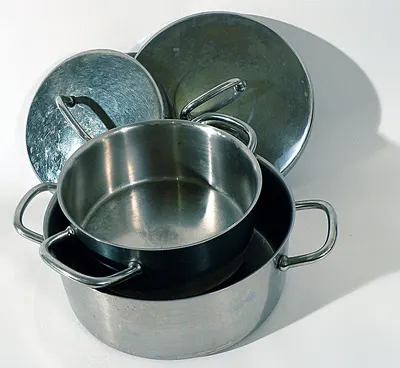
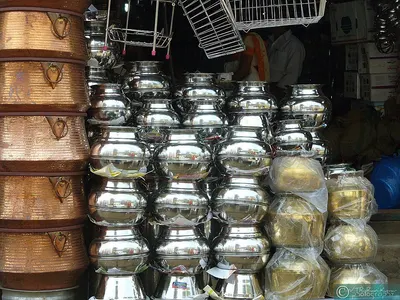
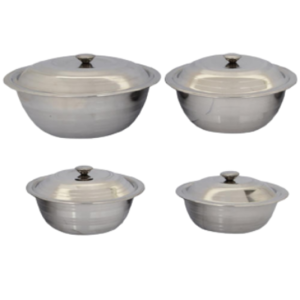
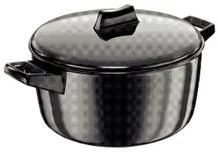
China‑based Chao'an Caitang Shencai Hardware Factory lists five distinct cookware items in its catalogue. The active product count of five includes four concrete stock‑pot sets - an 8‑piece set with stainless‑steel lid, a 4‑piece stainless‑steel set, a steamer stock‑pot set, and a stainless‑steel pot with glass lid - plus a generic detailed product description entry. All items fall under the broader categories of stainless steel utensils, kitchenware, and hotel‑restaurant equipment as indicated in the supplier’s top‑category tags.
The catalogue items are grouped under HS‑code chapters that typically cover stainless‑steel tableware and cookware, such as 7323 (stainless‑steel tableware) and 7324 (stainless‑steel cookware). The products are described as stainless‑steel, which in industry normally implies food‑grade 304 or 316 alloy, a material that meets corrosion‑resistance standards for commercial kitchen use. No additional certifications are listed for the supplier, so buyers should verify compliance with relevant food‑contact standards before purchase.
Product Range and Specialties of Chao'an Caitang Shencai Hardware Factory
The four listed stock‑pot sets comprise standard kitchen cookware sizes that range from small 1‑2 L pots up to larger 6‑8 L units used in hotel and restaurant kitchens. Industry practice for stainless‑steel pots includes a 304 grade base, polished interior, and lids that may be either stainless‑steel or tempered glass, with handles often reinforced for heat resistance. Typical specifications also cover wall thickness (often 2 - 3 mm) and a smooth, hygienic finish that complies with food‑safety regulations.
Buyers of stainless‑steel cookware generally look for International Stainless Steel Association (INSSA) grades, food‑grade certification such as FDA or EU LFGB, and surface finish grades measured in microns. In China, exporters frequently produce these items to meet the ISO 9001 quality‑management system, although the supplier’s catalogue does not state a specific certification. The product range therefore aligns with common market expectations for durable, corrosion‑resistant kitchenware suitable for commercial food service.
Trade and Export Information - Chao'an Caitang Shencai Hardware Factory
China is a global exporter of stainless‑steel cookware, with the majority of shipments destined for North America, Western Europe, and the Middle East. HS chapters 7323 and 7324 are routinely inspected by customs and may require a declaration of alloy grade and compliance with food‑contact standards. Typical export logistics involve FOB or CIF terms from ports such as Shanghai or Shenzhen, with products packed in reinforced cardboard boxes or wooden crates to protect the pots during sea freight.
Buyers should anticipate standard documentation, including a commercial invoice, packing list, and a certificate of origin. While the supplier’s facts do not list specific certifications, importers often request SGS or Bureau Veritas inspection reports, as well as material test certificates confirming stainless‑steel grade and lead‑free status. Export controls for stainless‑steel goods are minimal, but compliance with the destination country’s sanitary regulations (e.g., FDA for the US, EU food‑contact directives) is routinely required.
Sourcing from Chao'an Caitang Shencai Hardware Factory - Buyer Guidance
When sourcing from Chao'an Caitang Shencai Hardware Factory, request a detailed product data sheet that lists alloy grade (304 or 316), wall thickness, pot capacity in liters, and lid material. Buyers should also ask for a material test report and, if required by the target market, a food‑contact compliance certificate such as FDA or LFGB. Samples of the pots are typically provided in small quantities to verify dimensions, finish, and durability before committing to larger orders.
Given the supplier’s catalogue of five items, clarify the minimum order quantity (MOQ) for each pot set, which in the Chinese cookware sector usually starts at 300 - 500 pieces per SKU. Lead times for stainless‑steel cookware production in China average 30 - 45 days after order confirmation, subject to material availability. Verify packaging dimensions and weight to calculate container loading - a standard 40‑ft container can hold roughly 1,200 - 1,500 medium‑size pots when palletized.
Frequently Asked Questions About Chao'an Caitang Shencai Hardware Factory
What stainless‑steel grades are used in the stock‑pot sets?
The catalogue does not specify a grade, but Chinese cookware exporters typically use food‑grade 304 stainless steel, with 316 used for higher‑corrosion environments. Request a material test certificate to confirm the exact alloy.
Are glass lids food‑safe and compliant with international standards?
Glass lids are usually made from tempered soda‑lime glass, which meets most food‑contact regulations. Ask the supplier for a compliance statement or test report referencing FDA or EU LFGB standards.
What are the typical HS codes for these cookware items?
Stainless‑steel pots fall under HS chapter 73, most commonly HS 7324 90 (stainless‑steel cookware) or HS 7323 90 (stainless‑steel tableware). The exact sub‑heading depends on the product’s design and intended use.
Which certifications should a buyer request before purchasing?
Buyers should request an ISO 9001 quality‑management certificate, a material test report confirming alloy grade, and a food‑contact compliance certificate such as FDA, LFGB, or equivalent for the destination market.
What is the usual minimum order quantity for these products?
In the Chinese stainless‑steel cookware market, MOQs typically start at 300 pieces per SKU, though the exact number depends on pot size and packaging requirements.
How long does production take after order confirmation?
Standard lead times range from 30 to 45 days for stainless‑steel cookware, assuming no custom specifications or special finishes are required.
How are the pots packaged for international shipment?
Exporters usually pack pots in reinforced corrugated cartons, often grouped on wooden pallets with stretch‑film wrap. This protects the items during sea freight and facilitates container loading.
Which Incoterms are commonly used by this supplier?
Typical Incoterms include FOB Shanghai or Shenzhen and CIF destination port, allowing the buyer to choose the level of logistics responsibility.




 , China