Beiwei Mould Industry Co., Ltd. — Verified Supplier
About Beiwei Mould Industry Co., Ltd. - Injection Moulded Products Supplier in China
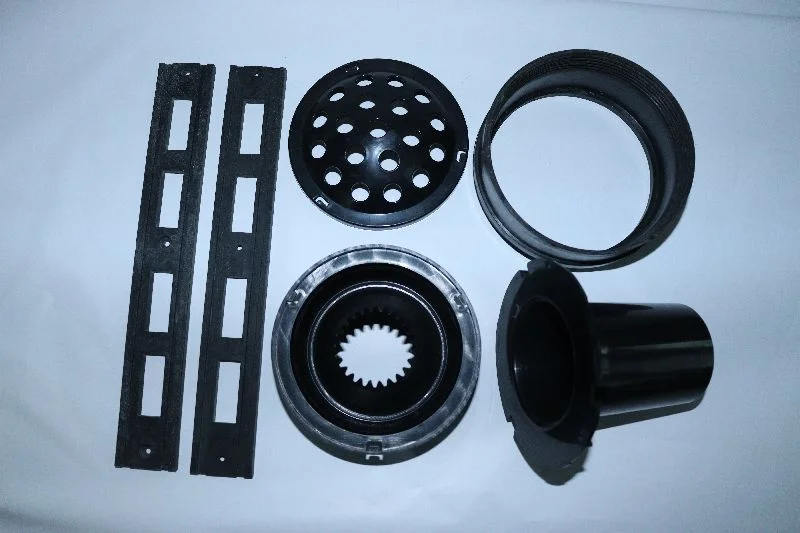
China is the manufacturing base for Beiwei Mould Industry Co., Ltd., which lists 19 active products in its catalogue. The company focuses on injection moulded products, including specialised moulds for toilet seats, helmets and face masks. Its product list comprises moulds for folding crates, toy cars, storage baskets, automotive components such as hub covers, centre consoles and air‑conditioner parts, as well as safety helmets for motorcycles and American football. Each entry refers to a specific injection mould design rather than finished goods, indicating the supplier’s role as a mould manufacturer for downstream plastic part producers.
The catalogue includes moulds for consumer and industrial applications, such as plastic milk crates, mop bucket containers, washing‑machine components and automotive parts like wheel hub and fender moulds. Additional offerings target personal protective equipment, exemplified by motorcycle helmet and face‑mask moulds, and sanitary hardware like toilet seat covers. The product titles suggest capabilities in both standard and custom‑size moulds, with applications spanning household, automotive, sports and medical sectors. No HS codes are provided for individual items, but they fall under the broader HS chapter 39 for plastic articles.
Product Range and Specialties of Beiwei Mould Industry Co., Ltd.
The listed 19 mould designs cover a spectrum of injection‑moulded plastic parts. Items such as the "Taizhou Good Price Folding Crate Mould" and "American Hot Sale Plastic Milk Crate Mould" serve logistics and retail storage, while "Toilet Seat Cover Injection Mould" and "Plastic Storage Basket Injection Mould" address sanitary and household needs. Automotive‑related entries include "Car Parts Center Console Injection Mould", "quality Hub Cover Injection Mould", "Custom Air Conditioner Injection Mould" and "quality Auto Fender Plastic Injection Mould". Protective‑equipment moulds are represented by "Professional Motorcycle Helmet Mould Maker", "American Football Helmet Mould For Sale" and "Safety Helmet Injection Mold".
In the injection‑moulded plastics industry, common base polymers are polypropylene (PP), acrylonitrile‑butadiene‑styrene (ABS) and polycarbonate (PC). Toilet‑seat moulds typically use high‑impact PP with a melt flow index (MFI) between 8 - 12 g/10 min, while storage baskets and crates often employ PP homopolymer grades with wall thicknesses of 2 - 4 mm. Automotive interior parts frequently require flame‑retardant ABS or PC/ABS blends meeting UL‑94 V‑0 standards. Helmet shells are generally produced from ABS or PC that comply with EN 1078 (for helmets) or ASTM F1163 (for football helmets), with impact energy absorption values above 100 J. Standard HS headings for these groups are 3926 (other plastic articles) and 6506 (protective helmets).
Trade and Export Information - Beiwei Mould Industry Co., Ltd.
China remains a leading exporter of injection‑moulded plastic components, supplying Europe, North America and Southeast Asia with finished parts and mould tooling. Buyers of household plastic goods such as crates, baskets and toilet‑seat components usually import under HS 3926, while safety‑equipment like helmets falls under HS 6506. Export shipments are commonly packed in 20‑ft or 40‑ft containers, with products protected by corrugated cardboard, wooden pallets and, where required, moisture‑resistant liners. Buyers often request CE marking for EU markets, UL certification for North America, and ISO 9001 quality‑management documentation from Chinese mould makers. Typical import regulations require material safety data sheets (MSDS), test reports for impact resistance (EN 1078 or ASTM F1163), and, for automotive parts, compliance with ISO/TS 16949 or IATF 16949 standards. Freight terms such as FOB Shanghai or CIF Los Angeles are standard, and customs authorities may inspect the HS code declaration, weight and packaging integrity before release.
Sourcing from Beiwei Mould Industry Co., Ltd. - Buyer Guidance
When sourcing moulds from Beiwei Mould Industry Co., Ltd., buyers should request the material specification sheet that lists the polymer grade, melt flow index and any additives used. A sample of a pilot‑run part is advisable to verify dimensional tolerance (typically ±0.2 mm) and surface finish before committing to full‑scale production. Request test reports that confirm compliance with relevant standards - for example, impact‑absorption data for helmet moulds or flame‑retardancy certificates for automotive interior parts. Verify that the supplier can provide ISO 9001 certification or equivalent quality‑management documents, as these are commonly required by overseas buyers. Clarify the minimum order quantity (often a single mould design with a pilot batch of 500 - 1 000 pieces) and lead time, which for custom moulds in China ranges from 30 to 60 days after final design approval. Confirm packaging details, such as double‑wall cartons and moisture‑proof liners, to ensure parts arrive undamaged.
Frequently Asked Questions About Beiwei Mould Industry Co., Ltd.
What product categories does Beiwei Mould Industry Co., Ltd. offer?
The supplier lists moulds for injection‑moulded products including folding crates, toy cars, storage baskets, various automotive parts, toilet‑seat covers, and protective helmets for motorcycles and American football.
How many distinct mould designs are available in the catalogue?
The catalogue contains 19 active mould designs covering the categories mentioned above.
Which material grades are typically used for the listed moulds?
Typical grades include polypropylene (PP) for crates and baskets, high‑impact PP for toilet‑seat components, ABS or PC/ABS blends for automotive interiors, and ABS or polycarbonate for helmet shells to meet safety standards.
Are there any standard certifications buyers should request?
Buyers should ask for ISO 9001 quality‑management certification, CE marking for EU markets, and, where applicable, EN 1078 or ASTM F1163 test reports for helmets.
What are common HS code headings for these products?
Household and automotive plastic parts usually fall under HS 3926 (other plastic articles), while helmets are classified under HS 6506 (protective helmets).
What is the typical lead time for a custom mould order?
Custom moulds from Chinese manufacturers generally require 30 - 60 days after design approval, depending on complexity and tool steel grade.
What packaging and shipping methods are standard?
Products are packed in double‑wall corrugated cartons on wooden pallets, often shipped in 20‑ft or 40‑ft containers under FOB Shanghai or CIF destination terms.
How can a buyer verify the mould’s performance before full production?
Request a pilot‑run sample and review dimensional tolerance, surface finish and any required test reports (impact, flame‑retardancy, etc.) to confirm the mould meets specifications.




 , China