Beifang Automotive Education — Supplier
About Beifang Automotive Education - Educational Automotive Training Supplier in China
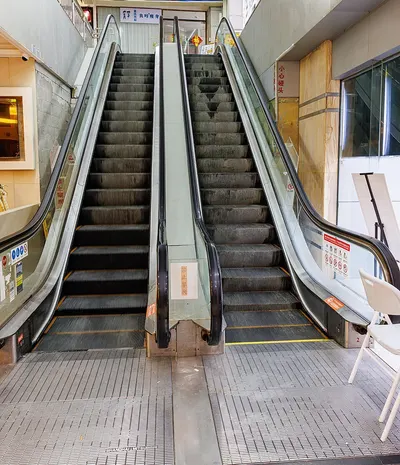
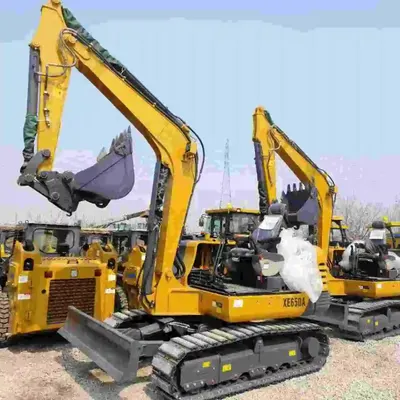
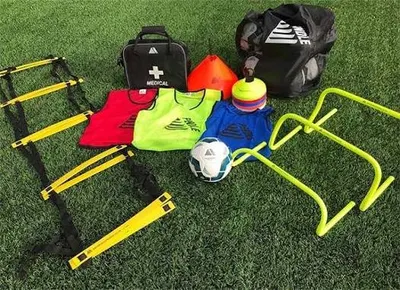
Beifang Automotive Education operates out of China and currently lists 72 distinct training and educational products. The catalogue spans categories such as Light & Medium Machinery, Tools & Instruments, Educational Material & Equipment, Elevators & Escalators, Automobile Spare Parts & Supplies, Cranes & Lifts, Industrial Gears & Gear Boxes, and Excavator Machines and Spare Parts. All items are classified under HS Chapter 90, with the majority recorded under HS code 9023.00, which covers testing, measuring and checking apparatus. The supplier’s focus is on physical teaching aids rather than consumable parts, targeting vocational schools, technical colleges and automotive OEM training departments. Materials noted in the listings include steel, aluminum, ABS plastic, PVC and copper wiring.
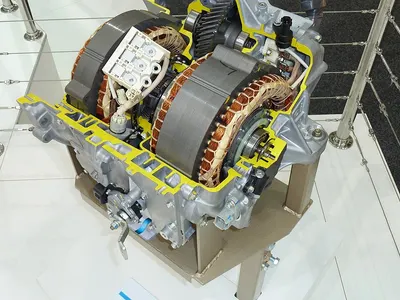
The product titles include Electric Power Steering Trainer, Hybrid Car Anatomy Model, Automotive Training Kit, Engine Gearbox Display Board, Common Rail Diesel Engine Trainer, ABS Braking System Trainer, Automotive CAN BUS Teaching Equipment and Airbag System Simulator among others. Several entries specify a steel frame combined with ABS or PVC panels, while electronic components are integrated using copper wiring. Items without a listed HS code still fall within the same 9023.00 family based on their function as training simulators. The range covers both conventional internal‑combustion and emerging electric or hybrid power‑train systems. This breadth allows institutions to demonstrate drivetrain, braking, electronic control and safety system operation in a controlled environment.
Product Range and Specialties of Beifang Automotive Education
The catalogue presents a variety of hands‑on training devices such as power‑steering trainers, hybrid vehicle anatomy models, diesel engine and common‑rail trainers, transmission disassembly kits, and electronic system simulators. The listed materials - steel frames, aluminum components, ABS plastic housings and copper wiring - are typical for durable educational apparatus, offering impact resistance and dimensional stability. In the automotive training market, kits are often built to ISO 26262 functional‑safety levels and to meet CE marking requirements for electrical safety. Common specifications include modular mounting brackets, interchangeable gear sets, and simulated sensor outputs that replicate real‑world voltage ranges (0‑12 V) for CAN‑BUS or airbag modules. Product dimensions generally fit within a 1 m × 0.6 m × 0.5 m envelope, allowing placement on standard classroom benches.
Industry practice for such equipment calls for ABS grades with a melt flow index (MFI) of 10‑20 g/10 min and steel of grade S355 for structural components. Electrical parts are usually insulated to meet IEC 60204‑1 standards, and wiring harnesses follow ISO 6722 for automotive cables. Packaging for these bulky items typically uses wooden crates with internal foam padding, sized for 20‑foot containers, and includes a material safety data sheet (MSDS) and CE declaration of conformity. Buyers often request test reports that verify torque accuracy for gearboxes (±5 %) and sensor response times under 10 ms.
Trade and Export Information - Beifang Automotive Education
China is a major exporter of automotive training equipment, leveraging its established manufacturing base and supply chain for steel, plastics and electronic components. HS code 9023.00 is routinely inspected by customs for conformity to safety standards, and shipments are commonly cleared under the Harmonised System with a requirement for a CE Declaration of Conformity or equivalent national certification. Typical export logistics involve FOB Shanghai or Ningbo, with buyers in Southeast Asia, the Middle East, Europe and North America preferring CIF terms for door‑to‑door delivery.
Importing countries frequently request documentation such as ISO 9001 quality‑management certificates, CE marks, and test reports aligned with IEC 60950‑1 for electronic safety. Large‑volume orders are packed in 20‑ft or 40‑ft containers, each crate bearing a label with the HS code, weight (often 150‑250 kg per unit) and handling instructions. Regulatory bodies in the EU and US may also require an EU‑type or FCC declaration for the electronic modules. Chinese exporters of training simulators have developed experience with freight forwarders familiar with temperature‑controlled containers when battery‑powered units are included.
Sourcing from Beifang Automotive Education - Buyer Guidance
Prospective buyers should request a detailed specification sheet that lists material grades, dimensions, power requirements (e.g., 220‑240 V, 50/60 Hz) and any modular accessories. Verify that the supplier can provide a CE Declaration of Conformity, ISO 9001 certification, and functional test reports for each electronic subsystem, such as CAN‑BUS signal accuracy or airbag deployment simulation timing.
Before confirming an order, ask for a sample or a video demonstration to assess build quality, especially the integrity of steel frames and the finish of ABS housings. Confirm the packaging format (e.g., wooden crate, palletized) and the intended Incoterm, and ensure that the supplier can supply a material safety data sheet (MSDS) and a warranty statement covering at least 12 months of operational use. Lead times for fully assembled kits typically range from 30 to 60 days after receipt of a purchase order and a confirmed design layout.
Frequently Asked Questions About Beifang Automotive Education
How can I obtain product specifications for the Electric Power Steering Trainer?
Request the technical data sheet from Beifang Automotive Education, which details the steel frame dimensions, ABS housing thickness, power rating (220 V, 50 Hz), and the simulated steering torque range (0‑30 Nm). The sheet also includes the HS code 9023.00 and material safety information.
What certifications should I verify before purchasing the Hybrid Car Anatomy Model?
Typical certifications include a CE Declaration of Conformity for electrical safety, ISO 9001 for quality management, and IEC 60204‑1 compliance for the electronic components. Ask the supplier to provide copies of these certificates and any test reports on sensor accuracy.
Are the training kits shipped in containers, and what packaging is used?
Beifang generally packs each unit in a reinforced wooden crate with internal foam padding, sized for placement in a 20‑ft container. The crate is labeled with the HS code 9023.00, gross weight (approximately 180 kg), and handling instructions.
What is the typical lead time for a complete Automotive CAN BUS Teaching Equipment set?
Lead times are usually 30‑45 days from order confirmation, depending on the availability of electronic modules and the need for custom branding. The supplier can provide a production schedule upon receipt of the purchase order.
Which documents are needed for customs clearance in the EU for these training devices?
Importers should obtain the CE Declaration of Conformity, a commercial invoice stating HS code 9023.00, and a packing list. If the unit contains battery packs, an EU‑type or FCC declaration may also be required.
Can I request a sample of the ABS Braking System Trainer before placing a bulk order?
Yes, the supplier can ship a demonstration unit; the sample will include the same steel‑frame construction and ABS housing as the production model, allowing you to evaluate build quality and functionality. Shipping costs and lead time for the sample are typically negotiated separately.
What are the minimum order quantities (MOQ) for the Engine Gearbox Display Board?
The standard MOQ is one fully assembled unit, which allows educational institutions to purchase a single display board for classroom use. Larger orders may qualify for palletized shipping and discounted freight rates.




 , China