Anhui Honeyoung Paper Printing Factory — Verified Supplier
About Anhui Honeyoung Paper Printing Factory - Stationery Supplier in China
Anhui Honeyoung Paper Printing Factory is located in Anhui province, China, and currently lists ten active products in its catalogue. All listed items fall under the stationery category, reflecting a focus on paper‑based office and school supplies. The catalogue includes PVC jacket note books, composition books, spiral notebooks, hardcover notebooks, PU leather notebooks, loose leaf pads, writing pads, drawing books, French‑line exercise books, and soft‑cover exercise books. These product types correspond to standard classifications used for notebooks and exercise books in international trade. The supplier’s trust tier is recorded as “harbor”, indicating a moderate level of verification on the platform.
Product Range and Specialties of Anhui Honeyoung Paper Printing Factory
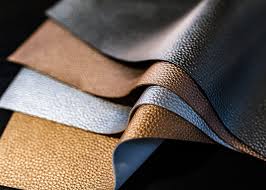
The product range covers standard notebook formats such as A4, A5 and custom sizes, typically produced with paper weights between 70 gsm and 120 gsm depending on the intended use. Spiral notebooks usually employ a metal coil binding and may include perforated pages for easy removal, while composition books are commonly sewn or glued with a durable softcover. Hardcover notebooks use a rigid board cover often laminated for wear resistance, and PU leather notebooks provide a synthetic leather finish that meets consumer expectations for a premium feel. PVC jacket note books are manufactured with a clear or coloured PVC overlay that protects the cover and is recyclable under certain regulations. Drawing books often use coated or uncoated heavier paper, around 150 gsm, to support pencils, charcoal or water‑based media, and French‑line exercise books typically use 80 gsm ruled paper suitable for primary education.
Trade and Export Information - Anhui Honeyoung Paper Printing Factory
China is the world’s largest exporter of stationery, with Anhui province hosting numerous paper printing facilities that supply North America, the European Union and Southeast Asian markets. Export shipments of notebooks and exercise books are usually classified under HS Chapter 48 and transported in 20‑foot or 40‑foot containers, where a standard 20‑ft box can hold roughly 8 000 to 10 000 units depending on packaging density. Buyers commonly require compliance with FSC (Forest Stewardship Council) or PEFC certification to demonstrate sustainable sourcing of wood‑based paper. Additional quality‑management certifications such as ISO 9001 are frequently requested by importers to ensure consistent production processes. Typical packaging includes individual product wrap or shrink‑film followed by bulk packing in double‑wall cardboard cartons, marked with the country of origin and weight.
Import regulations in the United States and the European Union often reference the ASTM D4236 standard for art‑related paper products and the EN 71 series for safety of school supplies. Customs authorities may inspect for correct HS coding, accurate weight declarations and the presence of a Certificate of Origin, especially when preferential tariff rates under China‑EU or China‑US agreements are claimed. Logistics providers usually handle shipments on CIF or FOB terms, with the supplier responsible for loading the goods onto the vessel and providing a commercial invoice, packing list and any safety data sheets if required. Seasonal demand peaks in August - September for back‑to‑school orders, prompting exporters to plan production cycles accordingly. Overall, the combination of high‑volume Chinese manufacturing capacity and established trade routes makes Anhui‑based stationery exporters competitive on lead time and container utilisation.
Sourcing from Anhui Honeyoung Paper Printing Factory - Buyer Guidance
When sourcing notebooks from Anhui Honeyoung, buyers should request a product data sheet that lists paper weight (gsm), page count, binding type, cover material and dimensions. Samples of each cover variant - PVC jacket, PU leather, hardcover and softcover - allow verification of material thickness, colour consistency and durability. Test reports for paper brightness (ISO 2471), tear resistance (ISO 3037) and ink‑holdout are standard documents that help assess quality. Buyers are advised to confirm the supplier’s FSC or PEFC status and ask for a copy of the relevant certificate, as well as any ISO 9001 quality‑management certification. Typical minimum order quantities for printed notebooks range from 5 000 to 10 000 pieces per SKU, with lead times of 20‑30 days after artwork approval.
It is prudent to verify packaging dimensions and weight per carton to ensure efficient container loading and to calculate freight costs accurately. Importers should also request a signed Certificate of Origin and, where applicable, a compliance statement for REACH or RoHS if the covers contain plasticised additives. If the buyer plans to sell in regulated school environments, confirming compliance with EN 71‑3 for heavy‑metal content in inks and coatings is advisable. Clear communication of labeling requirements, such as English product descriptions and country‑of‑origin markings, helps avoid customs delays. Finally, establishing a mutually agreed incoterm - commonly FOB Anhui or CIF destination port - clarifies responsibility for shipping and insurance.
Frequently Asked Questions About Anhui Honeyoung Paper Printing Factory
What types of notebooks does Anhui Honeyoung offer?
The catalogue lists PVC jacket note books, composition books, spiral notebooks, hardcover notebooks, PU leather notebooks, loose leaf pads, writing pads, drawing books, French‑line exercise books and soft‑cover exercise books.
What paper weights are typical for these products?
In the stationery industry, standard writing notebooks are produced with paper weights from 70 gsm to 120 gsm, while drawing books often use heavier 150 gsm coated or uncoated stock.
Which certifications should I request before purchasing?
Buyers usually ask for FSC or PEFC certification for sustainable paper, ISO 9001 for quality management, and any product‑specific safety certificates such as EN 71‑3 for school‑supply inks.
How are the products packaged for export?
Items are generally wrapped individually or shrink‑film sealed, then packed in double‑wall cardboard cartons. A 20‑ft container can accommodate roughly 8 000 - 10 000 units, depending on carton size.
What documentation is needed for customs clearance?
Standard documents include a commercial invoice, packing list, Certificate of Origin and any requested test reports (e.g., paper brightness, tear resistance). Importers may also need REACH or RoHS compliance statements for plastic components.
What are the typical MOQ and lead time?
Minimum order quantities are typically 5 000 pieces per SKU, and production lead time after artwork approval is about 20‑30 days.
Can I obtain samples before placing a full order?
Physical samples of each notebook style and cover material can be provided; sample orders are usually subject to shipping costs and may require a small handling fee.
Which markets does the supplier usually serve?
While specific target markets are not listed, Chinese stationery exporters commonly supply North America, the European Union and Southeast Asian countries.




 , China