Agriculture›
 Apparel and fashion accessories›
 Construction & real estate›💡Electronic & Electrical›🍎Food & Beverages›🛋️Home furnishing & supplies›⚗️Industrial goods & chemical›🪨Minerals & metals›📦Miscellaneous›Agriculture›Apparel and fashion accessories›Construction & real estate›💡Electronic & Electrical›🍎Food & Beverages›🛋️Home furnishing & supplies›⚗️Industrial goods & chemical›🪨Minerals & metals›📦Miscellaneous›
Weihai Jieshi Yacht Product Catalog

About Weihai Jieshi Yacht - Boats & Vessels Supplier in China
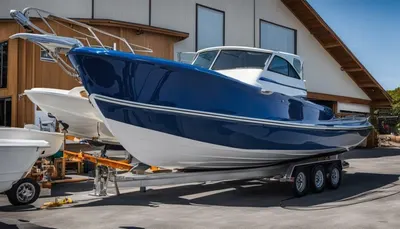
China, with a catalogue of six distinct boat and vessel items, is the source of Weihai Jieshi Yacht's listed products. The supplier’s current inventory includes the 760 Large Orange Glass Steel Boat designed for sightseeing, the 360 Long White Folding Glass Steel Ship, the 400 Black and White Color Scheme model, the 520 Sapphire Glass Steel Wear‑Resistant Rubber version, the 720 Blue Glass Steel Boat intended for fishing, and the 430 High End Plate with Thick Rubber Boat. All items fall under the Boats & Vessels category and are described using their model numbers and primary material composition of glass‑reinforced steel with rubber components where noted.
The six entries are presented without explicit HS codes, but they correspond to the HS chapter 89 family that covers boats, ships and floating structures. The product titles indicate variations in size, colour scheme, and intended use such as sightseeing, fishing or general recreational purposes. The inclusion of terms like “Wear‑Resistant Rubber” and “High End Plate” suggests additional protective features on the hulls. Weihai Jieshi Yacht lists these items as imported goods, indicating they are sourced for resale in overseas markets.
Product Range and Specialties of Weihai Jieshi Yacht
The catalogue lists six models ranging from the 360 Long White Folding Glass Steel Ship to the 720 Blue Glass Steel Boat for fishing. Model numbers (360, 400, 430, 520, 720, 760) differentiate hull dimensions, colour finishes and auxiliary features such as rubber‑lined plates or wear‑resistant coatings. Materials are primarily steel frames combined with glass panels, a construction approach that balances rigidity with corrosion resistance, while rubber elements provide impact protection.
In the global small‑craft market, steel hulls are commonly classified by thickness (typically 6 - 12 mm) and coated to meet ISO 9001 quality‑management or CE marking for European buyers. Glass‑reinforced components often adhere to ASTM A123 corrosion‑resistant standards, and rubber‑lined decks are evaluated for hardness around 60 - 70 Shore A. Buyers usually specify load capacity in tonnes, deck load limits, and stability criteria such as a minimum freeboard of 0.5 m for vessels under 10 m length.
Frequently Asked Questions About Weihai Jieshi Yacht
Which certifications should I ask Weihai Jieshi Yacht to provide for their steel‑glass boats?
Buyers normally request CE marking for European markets, ISO 9001 quality‑management certification, and any applicable SOLAS or US Coast Guard approvals. The supplier can supply copies of these certificates if they hold them.
Which HS codes apply to the products listed by Weihai Jieshi Yacht?
The boats and vessels fall under HS chapter 89, most commonly HS 8901 (boats, other vessels and floating structures) and HS 8902 for specialized ships. The exact code depends on the vessel size and function.
What are the typical minimum order quantities (MOQ) for these boat models?
MOQ often depends on the size and customization level; standard production runs start at one complete hull per model, but larger orders may be required for custom colour or rubber‑coating specifications.
What is the usual lead time from order confirmation to shipment?
Lead times range from 30 days for standard models to 60 - 90 days for customized specifications, subject to material availability and required certifications.
How are the boats packaged for export?
Export packaging generally uses marine‑grade plywood crates, stainless‑steel straps, and moisture‑resistant covers. For larger hulls, RoRo vessels are used; smaller sections may be containerised in 20‑ft or 40‑ft containers.
 China
Related Suppliers & Products
Explore similar suppliers, related products and trending categories