Tekche Ambalaj — Supplier

About Tekche Ambalaj - Disposable Containers Supplier in Turkey

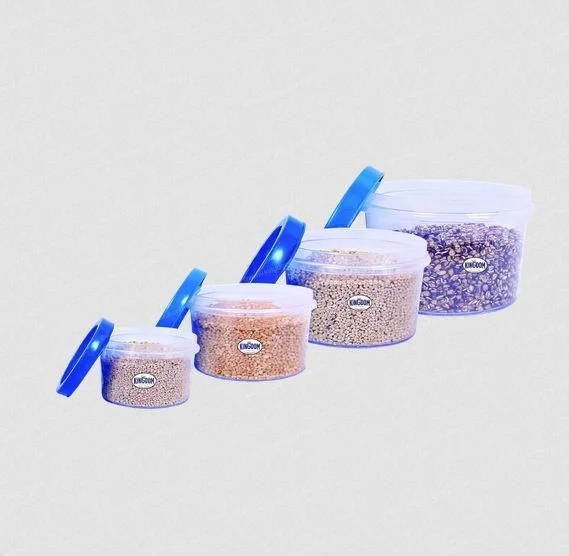
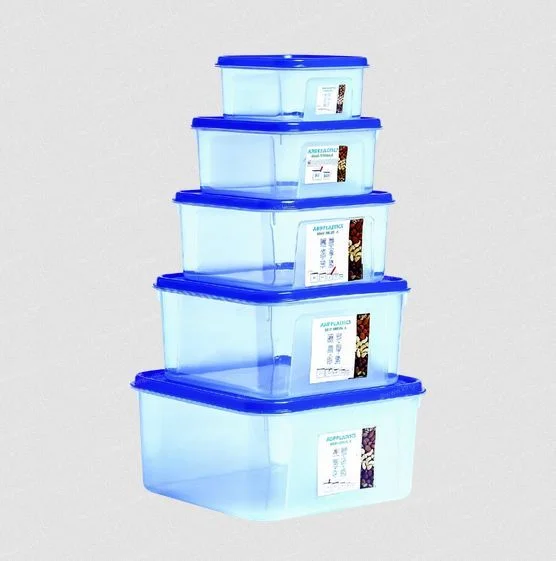
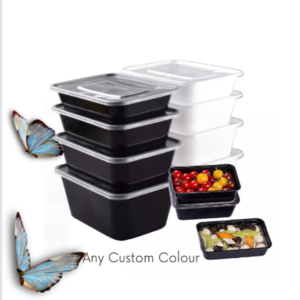
Turkey hosts Tekche Ambalaj with an active catalogue of seven distinct items. The supplier’s listing falls under the Disposable Containers and Plastic Raw Materials categories and includes a series of flat‑cover non‑leak containers ranging from 150 cc to 750 cc, a 10‑unit egg tray (10 lu Yumurta), and a PET raw‑material entry. All items are classified under HS Chapter 39, which covers plastic articles and polymeric raw materials, a standard coding used by customs for such goods. The catalogue does not disclose any additional product families or certifications, limiting the factual scope to the items enumerated.

The flat‑cover containers are described by volume only, indicating a focus on small‑to‑medium portion packaging often used in food service or retail. The inclusion of PET as a raw material suggests the ability to supply polymer pellets or pre‑forms that can be molded into further packaging. The 10‑unit egg tray is a typical reusable or disposable tray for poultry products, commonly shipped in cardboard or reusable plastic carriers. No further quantitative details such as weight per unit or container dimensions are provided in the source data.

Product Range and Specialties of Tekche Ambalaj

Tekche Ambalaj’s catalogue lists five capacity variants of flat‑cover non‑leak containers: 150 cc, 250 cc, 375 cc, 500 cc and 750 cc. In the wider industry, such containers are frequently produced from food‑grade PET or PP, meeting specifications such as a melt flow index (MFI) of 15‑30 g/10 min and a thickness of 0.2‑0.5 mm for the smaller sizes. Typical grades for food‑contact containers include PET G‑1 (clear) or PET G‑2 (amber) with compliance to FDA 21 CFR 177.1520 or EU Regulation No 10/2011. The 10 lu Yumurta tray is generally a molded‑plastic egg holder, often supplied in polycarbonate or PET with a standard egg‑size accommodation of 55‑60 mm diameter and a load capacity of about 600 g per tray. The PET raw‑material entry likely refers to PET resin pellets, which in global trade are graded by intrinsic viscosity (IV) between 0.70‑0.85 dl/g for bottle applications and 0.90‑1.10 dl/g for higher‑strength uses. Buyers usually request material safety data sheets (MSDS) and melt flow data for verification.

Industry practice for disposable plastic containers includes testing for leak resistance under a pressure of 0.1 bar for at least 30 seconds, and measuring moisture uptake below 0.05 % for food safety. Common certifications requested by importers are ISO 9001 for quality management, ISO 14001 for environmental compliance, and, where applicable, HACCP documentation for food‑contact items.

Trade and Export Information - Tekche Ambalaj

Turkey is a significant exporter of plastic packaging, with the majority of shipments destined for the European Union, the Middle East and North Africa. HS 3917 covers table, kitchen or other household articles and containers of plastics, which aligns with the flat‑cover non‑leak containers listed by Tekche Ambalaj. Export logistics typically involve 20‑ft containers holding up to 2 000 kg of PET pellets or up to 1 500 units of small‑capacity containers, while 40‑ft containers can accommodate roughly double those volumes. Buyers often specify Incoterms CIF or FOB, and may require pre‑shipment inspection under the Turkish Ministry of Trade’s export control or a third‑party SGS audit to verify compliance with EU food‑contact regulations.

Typical buyers of these products include food‑service chains, catering companies, and regional distributors of household goods. Because the catalogue does not list specific target markets, exporters from Turkey generally focus on EU markets due to tariff preferences under the EU‑Turkey Customs Union, and on Gulf Cooperation Council (GCC) countries where demand for lightweight, disposable packaging remains strong.

Sourcing from Tekche Ambalaj - Buyer Guidance

When sourcing the flat‑cover containers, buyers should request a sample batch to verify leak‑proof performance and confirm the exact wall thickness and material grade. Request the PET grade certificate, including intrinsic viscosity, melt flow index, and any food‑contact compliance statements (e.g., FDA or EU No 10/2011). For the 10 lu Yumurta tray, ask for dimensional drawings, load‑capacity test reports, and confirmation that the material meets the relevant food‑contact regulations.

For the PET raw‑material entry, obtain the material safety data sheet, a recent analytical certificate (e.g., FTIR or DSC), and evidence of recycled‑content percentage if the buyer requires sustainability credentials. Verify that the supplier can meet typical minimum order quantities of 5 000 kg for PET pellets or 10 000 units for the smallest container size, and confirm lead times of 4‑6 weeks for standard production runs. Packaging is usually in bulk poly‑bags (up to 25 kg) for raw material and in cardboard cartons (e.g., 200 units per carton) for finished containers, with palletization for sea freight.

Frequently Asked Questions About Tekche Ambalaj

What volumes are available for the flat‑cover non‑leak containers?

Tekche Ambalaj lists five volume options: 150 cc, 250 cc, 375 cc, 500 cc and 750 cc. Each size is a single‑use, leak‑proof container typically made from food‑grade PET or PP.

What material is used for the 10 lu Yumurta tray?

The catalogue refers to the tray as a plastic egg holder, commonly supplied in PET or polycarbonate with a standard egg‑size accommodation of 55‑60 mm diameter.

Does the supplier provide certification for food‑contact safety?

The facts do not list specific certifications. Buyers should request the supplier’s FDA or EU No 10/2011 compliance certificates, along with an ISO 9001 quality‑management certificate if required.

What is the typical packaging for the PET raw material?

PET resin is usually shipped in bulk poly‑bags of 20‑25 kg, stacked on Euro pallets. Export shipments often use 20‑ft containers for up to 2 000 kg of material.

Are there standard leak‑test requirements for the containers?

Industry practice requires a leak‑test at 0.1 bar pressure for at least 30 seconds. Buyers should ask the supplier to provide test reports confirming compliance.

What are common Incoterms used for shipping from Turkey?

Exporters from Turkey commonly use FOB (Free on Board) or CIF (Cost, Insurance, Freight) terms, depending on the buyer’s preference for freight responsibility.

What minimum order quantities apply?

Typical MOQ for PET pellets is around 5 000 kg, while finished containers often have a MOQ of 10 000 units for the smallest 150 cc size. Exact figures should be confirmed with the supplier.

How long is the lead time for a standard order?

Lead times for standard production runs are generally 4‑6 weeks, but may vary based on order size and material availability. Buyers should verify the schedule during quotation.


Featured Products from this Supplier

Other Suppliers in Primary Category

Top Trusted Suppliers

Related Products

Trending in Parent Category

More Suppliers in Category

Related Products

Other Suppliers

EximNext
7.2K+ live requirements
Register Free🎁 Reach global buyers
Post Requirement
🌍 Trusted by 225K+ businesses in 200+ countries|
7.2K+ active requirements right now
✉️ [email protected]
|
Sell on EximNextPost Requirement
EximNext
AgricultureApparelConstructionElectronicFoodHomeIndustrialMineralsMiscellaneous
🔥 Deals|✨ AI Match|🏭 Suppliers|📋 Buy Leads|💰 Trade Finance
7.2K+ live RFQs·194.8K+ suppliers
🎁 Reach global buyers →
EximNext
EximNext
Register Free
🎁 Reach global buyers
Sign In
📋Post Requirement💬Get Quotes✨AI Match📋RFQ Marketplace
All Categories
Services & Tools
🏭Supplier Directory🔥Today's Deals💰Trade Finance
Sell on EximNext →
AboutContactBlogHelp
Chemicals & Materials  ·  Turkey
7
products listed

Tekche Ambalaj

⚓ Harbor
Country flag , TurkeyNew supplier / no reviews yet
🛡️
54/100
Trust Score

Tekche Ambalaj Product Catalog

Showing 7 of 7 products
View all products →
150cc  Flat Cover Non-Leak Containers
⚓ Harbor
150cc Flat Cover Non-Leak Containers
Contact
MOQ: 1 Unit
250cc  Flat Cover Non-Leak Containers
⚓ Harbor
250cc Flat Cover Non-Leak Containers
Contact
MOQ: 1 Unit
375cc  Flat Cover Non-Leak Containers
⚓ Harbor
375cc Flat Cover Non-Leak Containers
Contact
MOQ: 1 Unit
500cc  Flat Cover Non-Leak Containers
⚓ Harbor
500cc Flat Cover Non-Leak Containers
Contact
MOQ: 1 Unit
750cc  Flat Cover Non-Leak Containers
⚓ Harbor
750cc Flat Cover Non-Leak Containers
Contact
MOQ: 1 Unit
10 lu Yumurta
⚓ Harbor
10 lu Yumurta
Contact
MOQ: 1 Unit
Hammadde/PET
⚓ Harbor
Hammadde/PET
Contact
MOQ: 1 Unit

About Tekche Ambalaj - Disposable Containers Supplier in Turkey

Turkey hosts Tekche Ambalaj with an active catalogue of seven distinct items. The supplier’s listing falls under the Disposable Containers and Plastic Raw Materials categories and includes a series of flat‑cover non‑leak containers ranging from 150 cc to 750 cc, a 10‑unit egg tray (10 lu Yumurta), and a PET raw‑material entry. All items are classified under HS Chapter 39, which covers plastic articles and polymeric raw materials, a standard coding used by customs for such goods. The catalogue does not disclose any additional product families or certifications, limiting the factual scope to the items enumerated.

The flat‑cover containers are described by volume only, indicating a focus on small‑to‑medium portion packaging often used in food service or retail. The inclusion of PET as a raw material suggests the ability to supply polymer pellets or pre‑forms that can be molded into further packaging. The 10‑unit egg tray is a typical reusable or disposable tray for poultry products, commonly shipped in cardboard or reusable plastic carriers. No further quantitative details such as weight per unit or container dimensions are provided in the source data.

Product Range and Specialties of Tekche Ambalaj

Tekche Ambalaj’s catalogue lists five capacity variants of flat‑cover non‑leak containers: 150 cc, 250 cc, 375 cc, 500 cc and 750 cc. In the wider industry, such containers are frequently produced from food‑grade PET or PP, meeting specifications such as a melt flow index (MFI) of 15‑30 g/10 min and a thickness of 0.2‑0.5 mm for the smaller sizes. Typical grades for food‑contact containers include PET G‑1 (clear) or PET G‑2 (amber) with compliance to FDA 21 CFR 177.1520 or EU Regulation No 10/2011. The 10 lu Yumurta tray is generally a molded‑plastic egg holder, often supplied in polycarbonate or PET with a standard egg‑size accommodation of 55‑60 mm diameter and a load capacity of about 600 g per tray. The PET raw‑material entry likely refers to PET resin pellets, which in global trade are graded by intrinsic viscosity (IV) between 0.70‑0.85 dl/g for bottle applications and 0.90‑1.10 dl/g for higher‑strength uses. Buyers usually request material safety data sheets (MSDS) and melt flow data for verification.

Industry practice for disposable plastic containers includes testing for leak resistance under a pressure of 0.1 bar for at least 30 seconds, and measuring moisture uptake below 0.05 % for food safety. Common certifications requested by importers are ISO 9001 for quality management, ISO 14001 for environmental compliance, and, where applicable, HACCP documentation for food‑contact items.

Trade and Export Information - Tekche Ambalaj

Turkey is a significant exporter of plastic packaging, with the majority of shipments destined for the European Union, the Middle East and North Africa. HS 3917 covers table, kitchen or other household articles and containers of plastics, which aligns with the flat‑cover non‑leak containers listed by Tekche Ambalaj. Export logistics typically involve 20‑ft containers holding up to 2 000 kg of PET pellets or up to 1 500 units of small‑capacity containers, while 40‑ft containers can accommodate roughly double those volumes. Buyers often specify Incoterms CIF or FOB, and may require pre‑shipment inspection under the Turkish Ministry of Trade’s export control or a third‑party SGS audit to verify compliance with EU food‑contact regulations.

Typical buyers of these products include food‑service chains, catering companies, and regional distributors of household goods. Because the catalogue does not list specific target markets, exporters from Turkey generally focus on EU markets due to tariff preferences under the EU‑Turkey Customs Union, and on Gulf Cooperation Council (GCC) countries where demand for lightweight, disposable packaging remains strong.

Sourcing from Tekche Ambalaj - Buyer Guidance

When sourcing the flat‑cover containers, buyers should request a sample batch to verify leak‑proof performance and confirm the exact wall thickness and material grade. Request the PET grade certificate, including intrinsic viscosity, melt flow index, and any food‑contact compliance statements (e.g., FDA or EU No 10/2011). For the 10 lu Yumurta tray, ask for dimensional drawings, load‑capacity test reports, and confirmation that the material meets the relevant food‑contact regulations.

For the PET raw‑material entry, obtain the material safety data sheet, a recent analytical certificate (e.g., FTIR or DSC), and evidence of recycled‑content percentage if the buyer requires sustainability credentials. Verify that the supplier can meet typical minimum order quantities of 5 000 kg for PET pellets or 10 000 units for the smallest container size, and confirm lead times of 4‑6 weeks for standard production runs. Packaging is usually in bulk poly‑bags (up to 25 kg) for raw material and in cardboard cartons (e.g., 200 units per carton) for finished containers, with palletization for sea freight.

Frequently Asked Questions About Tekche Ambalaj

What volumes are available for the flat‑cover non‑leak containers?

Tekche Ambalaj lists five volume options: 150 cc, 250 cc, 375 cc, 500 cc and 750 cc. Each size is a single‑use, leak‑proof container typically made from food‑grade PET or PP.

What material is used for the 10 lu Yumurta tray?

The catalogue refers to the tray as a plastic egg holder, commonly supplied in PET or polycarbonate with a standard egg‑size accommodation of 55‑60 mm diameter.

Does the supplier provide certification for food‑contact safety?

The facts do not list specific certifications. Buyers should request the supplier’s FDA or EU No 10/2011 compliance certificates, along with an ISO 9001 quality‑management certificate if required.

What is the typical packaging for the PET raw material?

PET resin is usually shipped in bulk poly‑bags of 20‑25 kg, stacked on Euro pallets. Export shipments often use 20‑ft containers for up to 2 000 kg of material.

Are there standard leak‑test requirements for the containers?

Industry practice requires a leak‑test at 0.1 bar pressure for at least 30 seconds. Buyers should ask the supplier to provide test reports confirming compliance.

What are common Incoterms used for shipping from Turkey?

Exporters from Turkey commonly use FOB (Free on Board) or CIF (Cost, Insurance, Freight) terms, depending on the buyer’s preference for freight responsibility.

What minimum order quantities apply?

Typical MOQ for PET pellets is around 5 000 kg, while finished containers often have a MOQ of 10 000 units for the smallest 150 cc size. Exact figures should be confirmed with the supplier.

How long is the lead time for a standard order?

Lead times for standard production runs are generally 4‑6 weeks, but may vary based on order size and material availability. Buyers should verify the schedule during quotation.

About Tekche Ambalaj - Disposable Containers Supplier in Turkey

Turkey hosts Tekche Ambalaj with an active catalogue of seven distinct items. The supplier’s listing falls under the Disposable Containers and Plastic Raw Materials categories and includes a series of flat‑cover non‑leak containers ranging from 150 cc to 750 cc, a 10‑unit egg tray (10 lu Yumurta), and a PET raw‑material entry. All items are classified under HS Chapter 39, which covers plastic articles and polymeric raw materials, a standard coding used by customs for such goods. The catalogue does not disclose any additional product families or certifications, limiting the factual scope to the items enumerated.

The flat‑cover containers are described by volume only, indicating a focus on small‑to‑medium portion packaging often used in food service or retail. The inclusion of PET as a raw material suggests the ability to supply polymer pellets or pre‑forms that can be molded into further packaging. The 10‑unit egg tray is a typical reusable or disposable tray for poultry products, commonly shipped in cardboard or reusable plastic carriers. No further quantitative details such as weight per unit or container dimensions are provided in the source data.

Product Range and Specialties of Tekche Ambalaj

Tekche Ambalaj’s catalogue lists five capacity variants of flat‑cover non‑leak containers: 150 cc, 250 cc, 375 cc, 500 cc and 750 cc. In the wider industry, such containers are frequently produced from food‑grade PET or PP, meeting specifications such as a melt flow index (MFI) of 15‑30 g/10 min and a thickness of 0.2‑0.5 mm for the smaller sizes. Typical grades for food‑contact containers include PET G‑1 (clear) or PET G‑2 (amber) with compliance to FDA 21 CFR 177.1520 or EU Regulation No 10/2011. The 10 lu Yumurta tray is generally a molded‑plastic egg holder, often supplied in polycarbonate or PET with a standard egg‑size accommodation of 55‑60 mm diameter and a load capacity of about 600 g per tray. The PET raw‑material entry likely refers to PET resin pellets, which in global trade are graded by intrinsic viscosity (IV) between 0.70‑0.85 dl/g for bottle applications and 0.90‑1.10 dl/g for higher‑strength uses. Buyers usually request material safety data sheets (MSDS) and melt flow data for verification.

Industry practice for disposable plastic containers includes testing for leak resistance under a pressure of 0.1 bar for at least 30 seconds, and measuring moisture uptake below 0.05 % for food safety. Common certifications requested by importers are ISO 9001 for quality management, ISO 14001 for environmental compliance, and, where applicable, HACCP documentation for food‑contact items.

Trade and Export Information - Tekche Ambalaj

Turkey is a significant exporter of plastic packaging, with the majority of shipments destined for the European Union, the Middle East and North Africa. HS 3917 covers table, kitchen or other household articles and containers of plastics, which aligns with the flat‑cover non‑leak containers listed by Tekche Ambalaj. Export logistics typically involve 20‑ft containers holding up to 2 000 kg of PET pellets or up to 1 500 units of small‑capacity containers, while 40‑ft containers can accommodate roughly double those volumes. Buyers often specify Incoterms CIF or FOB, and may require pre‑shipment inspection under the Turkish Ministry of Trade’s export control or a third‑party SGS audit to verify compliance with EU food‑contact regulations.

Typical buyers of these products include food‑service chains, catering companies, and regional distributors of household goods. Because the catalogue does not list specific target markets, exporters from Turkey generally focus on EU markets due to tariff preferences under the EU‑Turkey Customs Union, and on Gulf Cooperation Council (GCC) countries where demand for lightweight, disposable packaging remains strong.

Sourcing from Tekche Ambalaj - Buyer Guidance

When sourcing the flat‑cover containers, buyers should request a sample batch to verify leak‑proof performance and confirm the exact wall thickness and material grade. Request the PET grade certificate, including intrinsic viscosity, melt flow index, and any food‑contact compliance statements (e.g., FDA or EU No 10/2011). For the 10 lu Yumurta tray, ask for dimensional drawings, load‑capacity test reports, and confirmation that the material meets the relevant food‑contact regulations.

For the PET raw‑material entry, obtain the material safety data sheet, a recent analytical certificate (e.g., FTIR or DSC), and evidence of recycled‑content percentage if the buyer requires sustainability credentials. Verify that the supplier can meet typical minimum order quantities of 5 000 kg for PET pellets or 10 000 units for the smallest container size, and confirm lead times of 4‑6 weeks for standard production runs. Packaging is usually in bulk poly‑bags (up to 25 kg) for raw material and in cardboard cartons (e.g., 200 units per carton) for finished containers, with palletization for sea freight.

Frequently Asked Questions About Tekche Ambalaj
What volumes are available for the flat‑cover non‑leak containers?
Tekche Ambalaj lists five volume options: 150 cc, 250 cc, 375 cc, 500 cc and 750 cc. Each size is a single‑use, leak‑proof container typically made from food‑grade PET or PP.
What material is used for the 10 lu Yumurta tray?
The catalogue refers to the tray as a plastic egg holder, commonly supplied in PET or polycarbonate with a standard egg‑size accommodation of 55‑60 mm diameter.
Does the supplier provide certification for food‑contact safety?
The facts do not list specific certifications. Buyers should request the supplier’s FDA or EU No 10/2011 compliance certificates, along with an ISO 9001 quality‑management certificate if required.
What is the typical packaging for the PET raw material?
PET resin is usually shipped in bulk poly‑bags of 20‑25 kg, stacked on Euro pallets. Export shipments often use 20‑ft containers for up to 2 000 kg of material.
Are there standard leak‑test requirements for the containers?
Industry practice requires a leak‑test at 0.1 bar pressure for at least 30 seconds. Buyers should ask the supplier to provide test reports confirming compliance.
What are common Incoterms used for shipping from Turkey?
Exporters from Turkey commonly use FOB (Free on Board) or CIF (Cost, Insurance, Freight) terms, depending on the buyer’s preference for freight responsibility.
What minimum order quantities apply?
Typical MOQ for PET pellets is around 5 000 kg, while finished containers often have a MOQ of 10 000 units for the smallest 150 cc size. Exact figures should be confirmed with the supplier.
How long is the lead time for a standard order?
Lead times for standard production runs are generally 4‑6 weeks, but may vary based on order size and material availability. Buyers should verify the schedule during quotation.

Tekche Ambalaj
Country flag Turkey
⚓ HarborChemicals & Materials
54/100
Trust Score
7
Products
✓ Free to contact — no commission
✓ Escrow payment available
✓ Verified business identity
Compare more suppliers
Post a requirement — get 10 quotes free
Let verified suppliers compete for your business. Free, fast, no commitment.
Due Diligence
Verify this supplier's real shipping history.
Every shipment, every buyer, every port. Trade data that can't be faked.
Run due diligence →
Discover More

Related Suppliers & Products

Explore similar suppliers, related products and trending categories

Featured Products from this Supplier

Other Suppliers in Primary Category

Top Trusted Suppliers

Related Products

Trending in Parent Category

More Suppliers in Category

Stay ahead in global trade
Weekly market insights & new supplier alerts.
EximNext
Exim Next is a leading global B2B marketplace, connecting over 220,000 registered suppliers and buyers across 200+ countries. As a trusted import export marketplace, it serves as the essential B2B portal for businesses worldwide, empowering them to expand their international reach. With Exim Next, businesses can trade smarter and grow faster.
SECURE PAYMENTS
VISAMastercardPayPalSWIFTL/CEscrow
Follow us
© 2026 EximNext