Agriculture›
 Apparel and fashion accessories›
 Construction & real estate›💡Electronic & Electrical›🍎Food & Beverages›🛋️Home furnishing & supplies›⚗️Industrial goods & chemical›🪨Minerals & metals›📦Miscellaneous›Agriculture›Apparel and fashion accessories›Construction & real estate›💡Electronic & Electrical›🍎Food & Beverages›🛋️Home furnishing & supplies›⚗️Industrial goods & chemical›🪨Minerals & metals›📦Miscellaneous›
SETCO Product Catalog




About SETCO - Petroleum By Products Supplier in United States
SETCO is based in the United States and currently lists seven active products in its catalogue. The company’s portfolio falls under the Agriculture, Diesel and Petroleum By Products categories, with a focus on refined fuel oils. Its product list includes various grades of gas oil and diesel, as well as heavy fuel oils such as Mazut and D6 Virgin Fuel Oil. The listed items correspond to standard HS‑code families for petroleum oils, typically classified under Chapter 27 (e.g., HS 2710). SETCO’s catalogue does not provide proprietary certifications, so buyers should verify compliance with relevant standards.
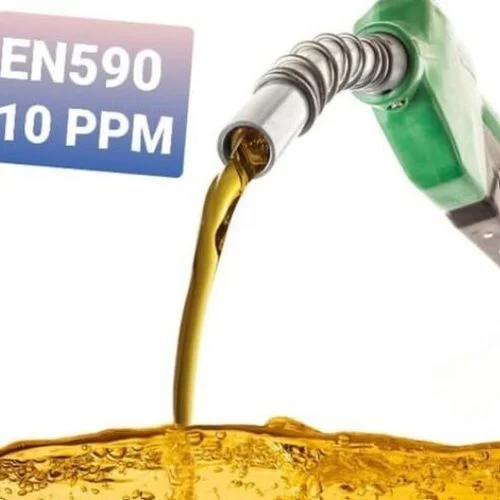
The catalogue enumerates EN590 Gas Oil, En590 Diesel Fuel, D2 Gas Oil, D2 Diesel, Mazut, Mazut M100 - Heavy Fuel Oil, and D6 Virgin Fuel Oil. EN590 and D2 products are diesel fuels that meet European and American specifications respectively, while Mazut and D6 are residual fuel oils used in marine and industrial boilers. Each product is identified by its common trade name without additional HS‑code details in the source data. Buyers can expect these fuels to be supplied in bulk, usually in tank trucks or 20‑ft and 40‑ft containers for export. The United States exports similar fuel grades to Europe, Southeast Asia and the Middle East under standard maritime and pipeline logistics.
Product Range and Specialties of SETCO
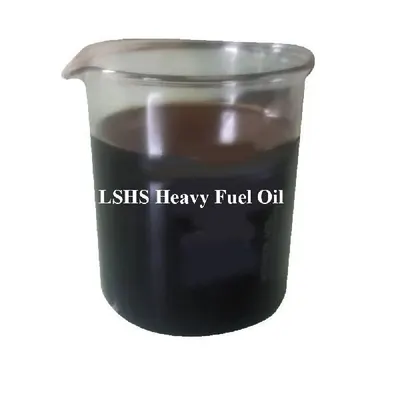
SETCO’s catalogue covers two diesel specifications - EN590 and D2 - and three heavy fuel oil grades - Mazut, Mazut M100 and D6 Virgin Fuel Oil. EN590 Gas Oil conforms to the European standard EN 590, which limits sulfur to 10 mg kg⁻¹, requires a cetane number of at least 51, and specifies a density range of 820‑845 kg m⁻³. D2 Diesel follows the ASTM D975 specification used in North America, with a maximum sulfur content of 15 mg kg⁻¹ and a cetane number not less than 48. Mazut and Mazut M100 are residual fuel oils with typical viscosities of 380‑550 cSt at 50 °C and calorific values around 40 MJ kg⁻¹, while D6 Virgin Fuel Oil is a light residual oil with a viscosity of 140‑250 cSt at 50 °C. These grades are commonly traded in bulk and classified under HS 2710.
In the global market, diesel fuels are also offered in low‑sulfur (ULSD) and biodiesel blends (B7‑B20), and heavy fuel oils may be supplied with different flash points to suit marine or power‑generation applications. Buyers often request material safety data sheets (MSDS), fuel analysis reports, and compliance certificates for each shipment.
Frequently Asked Questions About SETCO
What diesel specifications does SETCO offer?
SETCO lists EN590 Gas Oil and D2 Diesel, which correspond to the European EN 590 standard and the North American ASTM D975 specification respectively.
Which heavy fuel oil grades are available?
The catalogue includes Mazut, Mazut M100 (Heavy Fuel Oil) and D6 Virgin Fuel Oil, all classified under HS 2710 and typically used in marine boilers and power‑generation plants.
What documentation should a buyer request?
Buyers should obtain a product data sheet, a recent third‑party fuel analysis report (covering sulfur, cetane number, density and viscosity), a certificate of origin and any applicable ISO 9001 or API quality‑system certificates.
What are the usual minimum order quantities?
Bulk diesel orders commonly start at 5 000 L, while residual fuel oil such as Mazut is often supplied in batches of 20 000 L or larger, depending on the shipping method.
Which Incoterms are typically used for these fuels?
Exporters from the United States frequently use FOB, CIF or DAP, allowing the buyer to select the preferred point of risk transfer and arrange for on‑site testing.
 United States
Related Suppliers & Products
Explore similar suppliers, related products and trending categories