Rajindera International Traders — Verified Supplier
About Rajindera International Traders - Spices, Stationery and Hardware Supplier in India
Rajindera International Traders is an India-based exporter operating from the South Asian subcontinent with an active catalogue of 6 products spread across three distinct categories: whole spices (green cardamom, turmeric, red chilli whole), stationery and printing paper, and a tools-and-hardware cluster that includes cutting tools and metal hardware houseware. The spice line covers three of the most traded Indian spice commodities, all shipped in dry, bulk form and classified under HS chapter 09 (Spices, whether or not ground). The paper and stationery line falls under HS chapter 48 (Paper and paperboard; articles of paper pulp), while the tools and hardware line straddles HS chapter 82 (Tools, implements, cutlery) and HS 8308 for the metal hardware houseware. The supplier is listed at the harbor trust tier, which signals a baseline of catalogue presence without verified performance data on the platform.
The mix of agricultural commodities, paper goods and industrial metalware points to a multi-line trading operation rather than a single-vertical producer. Indian cardamom, turmeric and dry red chilli are globally benchmarked spices, with India being the world's largest producer and exporter of turmeric and a leading source of the bold red chilli varieties used in dry chilli whole form. The paper and tooling lines are typical of India's diversified merchant-export sector, where trading houses consolidate goods from multiple upstream mills, presses and foundries into consolidated export shipments. This breadth of category coverage is consistent with a merchant-trader model rather than a vertically integrated manufacturer.
Product Range and Specialties of Rajindera International Traders
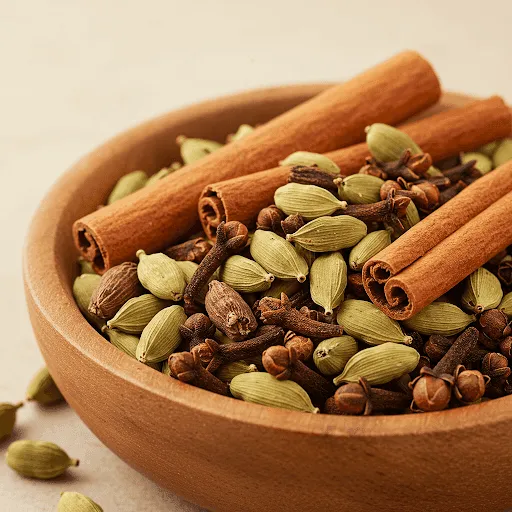
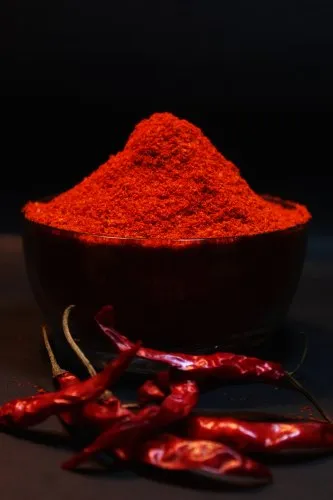
Rajindera International Traders lists six products across three trade families. In spices, the catalogue covers green cardamom (Elettaria cardamomum, the large capsules traded in HS 0908), turmeric (Curcuma longa rhizomes, traded under HS 0910 30), and red chilli whole (Capsicum annuum dried pods, HS 0904 20). Indian green cardamom is typically traded in grades such as AGEB (Alleppey Green Extra Bold, approximately 8 mm bold capsules), AGB, AGS and AGL, with bold capsules, uniform colour and high essential-oil content (typically 3-8%) being the key buyer specifications. Indian turmeric is graded by curcumin content, with the most common export specifications being Salem and Erode turmeric at curcumin levels of 2-5%, plus the higher-end Allepey finger turmeric at 5-7% curcumin and Nizamabad bulb turmeric. Moisture is usually held below 10% for whole fingers and 11% for bulbs, with extraneous matter below 2%. Red chilli whole is traded in named Indian varieties such as Teja S17, Sannam, Byadige, Guntur and Kashmiri, distinguished by ASTA colour value (typically 30-160 ASTA units depending on variety), Scoville Heat Units (often 30,000-50,000 SHU for Teja, lower for Byadige and Kashmiri) and stalk content. Buyers in this segment typically request aflatoxin and pesticide-residue test reports, ASTA colour readings, and microbiological clearance as standard documentation.
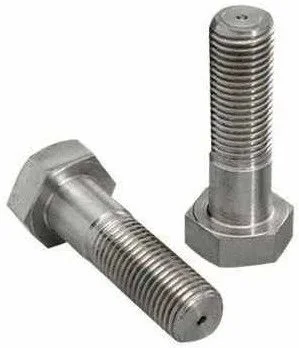
In the non-spice lines, the catalogue lists stationery (paper and paperboard products under HS chapter 48) and a tools line that bundles drill bits, carbide inserts, vernier calipers, CNC tooling and lathe tooling under HS chapter 82 (HS 8207 for interchangeable tool inserts, HS 8205 for measuring instruments such as vernier calipers). The hardware houseware line is explicitly tagged to HS 8308 and lists stainless steel 304 and 316, brass and zinc-plated steel as the constituent materials, consistent with the clasps, hooks, eyes and similar small metal fittings covered by that tariff line. Indian exports under HS 82 are dominated by HSS twist drills, carbide-tipped inserts and precision measuring instruments produced in clusters around Pune, Jamnagar, Nagpur and the Ludhiana-Jalandhar belt, while HS 8308 hardware is typically sourced from the brass and stainless-steel component hubs of Jamnagar (Gujarat) and the steel fastener clusters of Ludhiana and Jalandhar.
Trade and Export Information - Rajindera International Traders
Indian spice exports are dominated by the Kerala-Idukki cardamom belt, the Erode-Salem-Nizamabad turmeric corridor, and the Guntur-Byadgi red chilli region of Andhra Pradesh and Karnataka, and these three origins together supply the bulk of global trade in dry cardamom, turmeric and dry red chilli. The principal importing regions for Indian cardamom are the Gulf states (Saudi Arabia, UAE, Kuwait), South Asia itself, and re-export hubs in Europe; Indian turmeric flows heavily to the United States, the EU, Japan and the nutraceutical sector, while Indian red chilli whole is bought in large volumes by China, Vietnam, Thailand, Mexico, the US and the EU for both food use and oleoresin extraction. The relevant HS code families are 0908 (cardamom), 0910 (ginger, turmeric, other spices), and 0904 (pepper, chillies). Standard export documentation for these spices usually includes a Certificate of Origin from the relevant Indian Chamber of Commerce, a Phytosanitary Certificate issued by the Plant Quarantine authority, an FSSAI export clearance, and a third-party pre-shipment inspection report covering moisture, extraneous matter, curcumin or ASTA colour and microbiological parameters. Spices in this category are typically shipped in 25 kg or 50 kg jute bags, multi-wall paper bags or PP woven bags inside cartons, loaded into 20 ft FCLs (roughly 18-20 metric tons) for full-container loads.
For the paper, tools and hardware lines, typical Indian export destinations include the Middle East, Africa (especially East and West Africa for stationery and hardware), South-East Asia and Latin America. HS chapter 48 paper goods are commonly exported under FSC or recycled-content certifications, with buyers in the EU and large retail chains frequently requiring FSC chain-of-custody documentation. Tools under HS 82 and metal hardware under HS 8308 are usually shipped in cartons on palletised shrink-wrap loads, with 20 ft containers holding roughly 18-22 metric tons depending on packing density. Certifications commonly requested by buyers in these categories include ISO 9001 for quality management, material test certificates (mill certificates) for stainless steel 304/316 and brass, and where relevant, REACH or RoHS compliance for hardware sold into the EU. Standard Incoterms for Indian multi-category merchant shipments of this size are FOB, CFR and CIF, with payment typically by T/T (telegraphic transfer) or irrevocable L/C at sight for first-time buyers.
Sourcing from Rajindera International Traders - Buyer Guidance
Buyers sourcing from Rajindera International Traders should align their enquiry with the specific category they are interested in, because the documentation, grading and packaging norms differ sharply between spices, paper and metal hardware. For the spice line, request the variety name and grade (for example, AGEB cardamom, Salem or Allepey finger turmeric, Teja S17 or Byadige red chilli), the latest crop year, and a recent third-party analytical report covering moisture, extraneous matter, curcumin or ASTA colour, total ash and aflatoxin/pesticide residue. For turmeric and cardamom, ask for a curcumin percentage or essential-oil percentage sheet, and for red chilli whole, ask for the ASTA colour value and Scoville rating. For the paper and stationery line, request grammage (GSM), brightness (ISO %), shade, sheet or reel size, and FSC or recycled-content documentation if the destination market requires it. For the tools and hardware line, request material test certificates for the SS 304/316, brass or zinc-plated steel components, dimensional drawings or specifications for drill bits, inserts and vernier calipers, and any ISO 9001 documentation the supplier holds. Sample shipments of 1-5 kg for spices and small packaged samples for paper and hardware are standard practice before any container commitment.
Before placing a full order, buyers should confirm the country of origin (India), the exact port of loading (commonly Cochin for spices, Mumbai or Mundra for general cargo), the Incoterm, the payment terms, and the lead time from confirmed purchase order to bill of lading. A harbour-tier supplier should be approached with the same verification discipline as any new vendor: request a recent reference export shipment, ask for a proforma invoice and a draft purchase contract, and where possible, commission an independent pre-shipment inspection through a third-party agency such as SGS, Bureau Veritas or Intertek. For spice shipments, also confirm that the supplier can arrange Plant Quarantine and FSSAI export clearance, and for hardware under HS 8308, confirm the material grade per batch. Lead times of 15-30 days after order confirmation are typical for spices and stationery held in stock, while tools and hardware produced or sourced to order can run 30-60 days depending on specification. Minimum order quantities vary by line but are commonly one 20 ft FCL for spices and paper, and either a 20 ft FCL or a smaller consolidated pallet shipment for hardware and tools.
Frequently Asked Questions About Rajindera International Traders
Which spices does Rajindera International Traders export from India?
The spice line covers three products: green cardamom (HS 0908), turmeric (HS 0910 30) and red chilli whole (HS 0904 20). Buyers should specify the variety and grade, for example AGEB cardamom, Salem or Allepey finger turmeric, or Teja S17, Byadige or Kashmiri red chilli, and request a current analytical report.
What quality parameters should I request for the Indian turmeric and red chilli?
For turmeric, request curcumin content (typically 2-7% depending on grade), moisture below 10-11%, extraneous matter below 2% and total ash figures. For red chilli whole, request ASTA colour value (commonly 30-160 units), Scoville Heat Units, stalk and seed content, and moisture below 11%.
Which documents are typically required for an Indian spice export shipment?
Standard documents are a phytosanitary certificate from India's Plant Quarantine authority, an FSSAI export clearance, a Certificate of Origin from the relevant Chamber of Commerce, a commercial invoice, packing list and bill of lading, plus a third-party pre-shipment analytical report covering moisture, ash, colour and contaminants.
What is included in the tools and hardware line of the catalogue?
The tools line groups drill bits, carbide inserts, vernier calipers, CNC tooling and lathe tooling under HS chapter 82. The hardware houseware line is tagged to HS 8308 and lists stainless steel 304/316, brass and zinc-plated steel as the constituent materials, consistent with small metal fittings such as clasps, hooks and eyes.
How is the stationery and printing paper line typically specified?
Buyers should request grammage in GSM, brightness in ISO percentage, shade or whiteness, sheet or reel dimensions, and any FSC or recycled-content certification needed for the destination market. Paper goods fall under HS chapter 48 and are commonly shipped on pallets within 20 ft FCLs.
What is the typical packaging and container load for Indian spice exports?
Whole spices are typically packed in 25 kg or 50 kg jute, multi-wall paper or PP woven bags, often inside cartons, and loaded into 20 ft FCLs at roughly 18-20 metric tons. Private-label retail packs in 5-25 g to 1 kg are also common and require inner food-grade liners.
What Incoterms and payment terms are standard for Indian multi-category shipments?
FOB, CFR and CIF are the most common Incoterms, with payment typically by T/T or by irrevocable L/C at sight for new buyers. Port of loading is usually Cochin for spices and Mumbai, Mundra or Nhava Sheva for general cargo.
How should a buyer verify a harbour-tier Indian merchant exporter before ordering?
Request a recent reference shipment, a proforma invoice, a draft purchase contract, and a third-party pre-shipment inspection from SGS, Bureau Veritas or Intertek. For spices, also confirm the supplier can arrange Plant Quarantine and FSSAI export clearance, and for hardware, request a mill test certificate for the SS 304/316, brass or zinc-plated steel grade.




 , India