Agriculture›
 Apparel and fashion accessories›
 Construction & real estate›💡Electronic & Electrical›🍎Food & Beverages›🛋️Home furnishing & supplies›⚗️Industrial goods & chemical›🪨Minerals & metals›📦Miscellaneous›Agriculture›Apparel and fashion accessories›Construction & real estate›💡Electronic & Electrical›🍎Food & Beverages›🛋️Home furnishing & supplies›⚗️Industrial goods & chemical›🪨Minerals & metals›📦Miscellaneous›
Moore Automation Limited Product Catalog
About Moore Automation Limited - Electronic Components Supplier in China
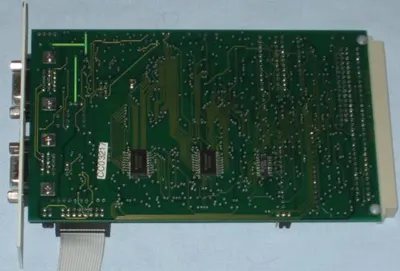
Moore Automation Limited is based in China and currently lists 811 active products across its catalogue. The product list includes electronic components such as printed circuit board assemblies, industrial‑grade PCB modules, power regulation units, and vibration monitoring devices. Several items are classified under HS chapter 85, for example HS 8537.10 for PCB assemblies and HS 8536.49 for relay modules, while vibration sensors fall under HS 9026.20 and 9031.40. The catalogue spans categories like Agriculture, Electric Components, Electric Power Supply Components, Electric Arresters, PCB, Electric Sensors, Power Regulation & Correction, and Computer Motherboards. The supplier’s listings reference materials ranging from FR‑4 epoxy glass substrates and copper traces to steel or aluminum alloy housings.
Specific entries include the GE FANUC 531X179PLMAKG1 PCB assembly (HS 8537.10) and the HITACHI LYA250A power unit (HS 8504.50) with copper windings and precision‑machined steel housing. Relay and module offerings such as the HIMA F2201 Analog Input Module and the HIMA Z7128 Module are recorded under HS 8537.10 and feature industrial‑grade PCBs with metal enclosures. Vibration monitoring products like the VIBRO METER VM600 series are listed under HS 9031.89 and 9031.40, using stainless steel housings and piezoelectric elements. Additional items such as the BENTLY sensor probes and the Hitachi XAGC12H analog input are also part of the portfolio, each mapped to the appropriate HS codes. The diversity of HS classifications reflects a focus on electronic and electromechanical components commonly sourced for automation and control systems.
Product Range and Specialties of Moore Automation Limited
The catalogue concentrates on electronic components used in automation, power regulation and industrial monitoring. PCB assemblies are typically built on FR‑4 material with copper thickness of 35 µm (1 oz) and trace widths of 0.1 mm to 0.2 mm, complying with IPC‑A‑600 Class 2 visual standards. Relay modules and input/output cards often adhere to IEC 60947‑4‑1 for contact ratings and IEC 61131‑3 for programmable logic controller compatibility. Power units such as the HITACHI LYA250A are usually rated up to 250 V and 5 A, with insulation resistance exceeding 100 MΩ. Vibration sensors and meters listed under HS 9026‑9031 commonly employ piezoelectric crystals or accelerometers with frequency response up to 10 kHz and sensitivity of 10 mV/g. Stainless‑steel housings meet IP‑67 protection against dust and water ingress, and shipments are typically packed in anti‑static bags, corrugated cartons or wooden crates for 20‑ft containers. Typical certifications requested by overseas buyers include CE marking, UL listing, RoHS compliance, and ISO 9001 quality management.
Frequently Asked Questions About Moore Automation Limited
What types of electronic components does Moore Automation Limited list in its catalogue?
The catalogue includes printed circuit board assemblies, analog and digital I/O modules, relay units, power regulation devices, and vibration monitoring sensors. Each item is identified with HS codes such as 8537.10 for PCB assemblies, 8536.49 for relay modules, 8504.50 for power units, and 9026.20 - 9031.40 for vibration equipment.
Which markets typically import the types of products offered by Moore Automation Limited?
Key import markets for these Chinese‑origin components include automotive manufacturers in Germany, process‑automation firms in the United States, and renewable‑energy equipment providers in Japan. These regions commonly source items classified under HS 85 and HS 90 series for industrial control and monitoring applications.
How can a buyer verify the material and safety compliance of a PCB assembly from this supplier?
Buyers should request the material declaration, RoHS compliance statement and an IPC‑A‑600 visual inspection report. Additional test data should confirm copper trace thickness, board thickness (typically 1.6 mm) and insulation resistance.
Which certifications are typically required for the power modules listed under HS 8504.50?
For power modules under HS 8504.50, buyers normally ask for CE marking and UL listing certificates. A RoHS compliance certificate and test reports meeting IEC 60947‑4‑1 for contact ratings are also standard.
What documentation should be requested for vibration sensors classified under HS 9031.40?
Documentation for vibration sensors should include the frequency response curve, sensitivity calibration certificate and an IP‑rating test report. A CE Declaration of Conformity referencing IEC 60745‑1 is typically required.
 China
Related Suppliers & Products
Explore similar suppliers, related products and trending categories