Mehul Enterprises — Verified Supplier
About Mehul Enterprises - Tableware Supplier in
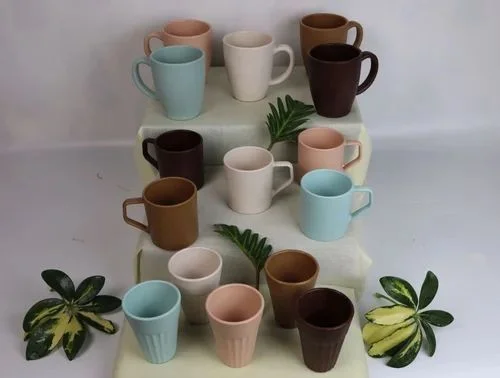
Mehul Enterprises lists 53 active products, primarily in the tableware, serving bowl and plastic item categories. The catalogue includes items such as Dinner Set, 15 Pcs Pudding Set, Clear Water Glass Peacock, Sugarcane Dish S.DLX and a variety of melamine and porcelain styled bowls and trays. Each product is presented without HS‑code details, but the naming indicates typical tableware materials like melamine, porcelain and colored glass. The supplier’s location is not disclosed in the provided data, so geographic context is omitted. The product titles suggest a focus on decorative and functional dining sets suitable for both household and hospitality use.
The listed items cover a range of designs, from the “Morel Vati” colored series to “SQ. Black Strock” patterned plates and “Lahir Dish” variants. Several entries reference melamine constructions, such as “Melamine Square Pink” and “Melamine Design - Round Rose”, while others imply ceramic or glass composition. The catalogue also includes stackable and multi‑piece sets, for example “Stackable Soup Bowl D‑2013 Black Bubbles” and “18 Pcs Soup Bowl Set”. Although no specific material percentages or dimensions are given, the product names align with common tableware specifications used in international trade.
Product Range and Specialties of Mehul Enterprises
The product portfolio comprises dinner sets, pudding sets, serving bowls, decorative plates and various melamine‑based items. In the tableware sector, melamine dishes are typically graded by impact resistance (often ≥ 30 MPa) and water absorption (< 0.5 %). Porcelain and ceramic pieces are usually classified by vitrification level and may meet ISO 13006 for decorative ceramics. Common dimensions for dinner plates range from 24 cm to 28 cm in diameter, while soup bowls often hold 300 - 500 ml. Buyers frequently request details on material composition (e.g., melamine‑formaldehyde content), dishwasher safety, and lead‑free glaze certification.
Industry standards for plastic tableware include compliance with FDA 21 CFR 177.1520 for food‑contact plastics and the European LFGB standard. Typical plastic items are produced from polypropylene (PP) or polycarbonate (PC) with melt flow index values that affect rigidity. For decorative glassware, standards such as EN 12792 for glass safety and IEC 60320 for compatibility with heating appliances are common. The catalogue’s emphasis on colored and patterned designs matches market demand for aesthetically varied dining sets used in hotels, restaurants and export‑oriented retail.
Trade and Export Information - Mehul Enterprises
Exporters of tableware and plastic dining items generally target markets in North America, Europe, the Middle East and Southeast Asia. HS‑code 6912 covers porcelain and stoneware tableware, while HS‑code 3924 applies to tableware made of plastics. Buyers often require certificates of compliance such as ISO 9001 for quality management, FDA food‑contact approval for melamine and plastic items, and CE marking for European market entry. Standard shipping practices involve packing items in molded pulp or cardboard cartons, with 20‑ft or 40‑ft containers used for bulk orders. Incoterms like FOB or CIF are typical, and customs inspections frequently verify material safety data sheets (MSDS) and conformity to the relevant HS‑code descriptions.
The origin country for Mehul Enterprises is not specified, but tableware exporters from South Asia commonly benefit from established logistics hubs and competitive manufacturing costs. Seasonal demand peaks around major holidays, prompting exporters to plan shipments ahead of Q4. Regulatory bodies such as the US FDA, EU Rapid Alert System for Food and Feed (RASFF) and China’s AQSIQ may perform random product sampling, making documented compliance essential for smooth customs clearance.
Sourcing from Mehul Enterprises - Buyer Guidance
When sourcing from Mehul Enterprises, request a detailed product specification sheet that lists material type (melamine, porcelain, glass, plastic), dimensions, weight and any surface treatment. Ask for the latest safety certificates, such as FDA food‑contact approval for melamine or LFGB compliance for plastic items, and an ISO 9001 audit report if available. Verify that the supplier can provide batch‑wise material safety data sheets (MSDS) and a test report for lead and cadmium limits, which are standard checks for tableware destined for EU or US markets.
Confirm packaging details, including the number of pieces per carton, pallet configuration and whether the items are wrapped in protective film or foam inserts. Typical minimum order quantities (MOQs) for decorative plates range from 500 pcs to 2 000 pcs, while set collections may require a full container load. Lead times for melamine and porcelain sets are usually 30‑45 days from order confirmation, subject to production scheduling and quality inspection.
Frequently Asked Questions About Mehul Enterprises
What material types are included in Mehul Enterprises' catalogue?
The catalogue lists items that are likely made from melamine, porcelain/ceramic, colored glass and food‑grade plastics, based on the product names such as “Melamine Square Pink” and “Clear Water Glass Peacock.”
Are there standard HS codes associated with these products?
Tableware made of porcelain or ceramic falls under HS 6912, while plastic tableware is classified under HS 3924. Glassware typically uses HS 7013.
Which certifications should a buyer request before purchasing?
Buyers should request FDA food‑contact approval for melamine and plastic items, LFGB compliance for European plastic tableware, and any ISO 9001 quality management certificates the supplier holds.
What are typical packaging methods for these tableware items?
Items are usually packed in cardboard cartons with internal dividers or molded pulp trays, then stacked on standard Euro pallets (120 cm × 80 cm) for container loading.
What is a common lead time for a full set order?
Lead times of 30‑45 days are common for melamine and porcelain sets, depending on order size and required quality inspections.
How can a buyer verify product safety for lead and cadmium?
Request a laboratory test report that shows compliance with the EU REACH limits (≤ 0.1 mg kg⁻¹ for lead in food‑contact ceramics) or the US FDA limits for melamine products.
What shipping options are typically used for these goods?
Exporters usually ship in 20‑ft or 40‑ft containers using FOB or CIF terms, with insurance covering breakage during transit.
Are there typical minimum order quantities for individual items?
MOQs often range from 500 pieces for single plates to a full container load (approximately 10 000‑12 000 pieces) for set collections.