Agriculture›
 Apparel and fashion accessories›
 Construction & real estate›💡Electronic & Electrical›🍎Food & Beverages›🛋️Home furnishing & supplies›⚗️Industrial goods & chemical›🪨Minerals & metals›📦Miscellaneous›Agriculture›Apparel and fashion accessories›Construction & real estate›💡Electronic & Electrical›🍎Food & Beverages›🛋️Home furnishing & supplies›⚗️Industrial goods & chemical›🪨Minerals & metals›📦Miscellaneous›
Megafood( Shanghai) Health Technological Co., Ltd.
⚓ Harbor , ChinaNew supplier / no reviews yet
Megafood( Shanghai) Health Technological Co., Ltd. Product Catalog

About Megafood( Shanghai) Health Technological Co., Ltd. - Food Chemicals Supplier in China
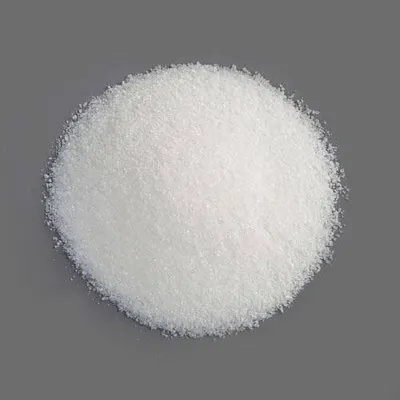
China, Shanghai, hosts Megafood( Shanghai) Health Technological Co., Ltd. with seven active products listed in its catalogue. The supplier classifies its offerings under Food Chemicals, Salt and Sodium Bicarbonate. Its product list includes encapsulated organic acids such as malic, fumaric, citric, sorbic, tartaric and also encapsulated edible salt and sodium bicarbonate. The encapsulated acids are identified with HS codes 2918.19 for malic acid, 2917.19 for fumaric acid, 2918.14 for citric acid, 2916.19 for sorbic acid and 2918.12 for tartaric acid. Each item specifies a core acid combined with a food‑grade hydrogenated vegetable oil coating.
The catalogue does not provide HS codes for encapsulated edible salt and encapsulated sodium bicarbonate, but they fall within the HS chapter 25 for salts. Materials are described as DL‑Malic Acid core with hydrogenated vegetable oil, fumaric acid (E297) with hydrogenated palm oil, citric acid with vegetable oil, sorbic acid (E200) with a food‑grade encapsulating agent, and tartaric acid (E334) with edible hydrogenated oil. All products are intended for use as food additives, where encapsulation improves stability, flowability and moisture resistance. The supplier’s active product count of seven reflects a focused portfolio within the broader food‑chemical market.
Product Range and Specialties of Megafood( Shanghai) Health Technological Co., Ltd.
Encapsulated acids in the catalogue are typical of the food‑additive sector where purity grades of 99 % or higher are standard. Buyers usually require the acid core to meet USP or EU food‑grade specifications, and the coating to be free of trans‑fat and compliant with FDA GRAS or EU Regulation 1333. Common coating thickness ranges from 0.5 mm to 2 mm, providing moisture barriers that keep the acid stable during storage and processing. Encapsulated salt and sodium bicarbonate are often supplied as free‑flowing granules, sized between 200 µm and 500 µm, suitable for bakery and beverage applications. Industry practice includes packaging in food‑grade polyethylene bags of 25 kg or 1 ton bulk containers, and shipping in 20 ft or 40 ft containers.
Frequently Asked Questions About Megafood( Shanghai) Health Technological Co., Ltd.
What product categories does Megafood list?
Megafood lists five encapsulated organic acids - malic, fumaric, citric, sorbic and tartaric - together with encapsulated edible salt and encapsulated sodium bicarbonate. All items fall under the Food Chemicals category and are intended for use as food additives.
Which HS codes are associated with the encapsulated acids?
The catalogue links specific HS codes to each encapsulated acid: 2918.19 for malic acid, 2917.19 for fumaric acid, 2918.14 for citric acid, 2916.19 for sorbic acid and 2918.12 for tartaric acid. These codes belong to the HS chapter 29 for organic chemicals.
What typical purity and coating specifications should buyers verify?
Buyers typically request acid purity of 99 % or higher and moisture content below 0.5 % as verified by laboratory analysis. The coating must be a food‑grade hydrogenated vegetable oil without trans‑fat, with a thickness generally between 0.5 mm and 2 mm.
What documentation is commonly requested for these food additives?
Standard documentation includes a Certificate of Analysis, a Material Safety Data Sheet and a Certificate of Origin. For regulatory compliance, a GRAS notice (U.S.) or EU food‑additive registration may also be required.
What are the usual packaging and container sizes for these products?
Encapsulated acids are usually packed in 25 kg food‑grade polyethylene bags and placed on pallets inside 20 ft or 40 ft containers. A full 20 ft container can hold approximately 18 ton of product, while a 40 ft container accommodates roughly double that volume.
ChinaRelated Suppliers & Products
Explore similar suppliers, related products and trending categories