Lucy — Verified Supplier
About Lucy - Injection Moulding Machinery Supplier in China
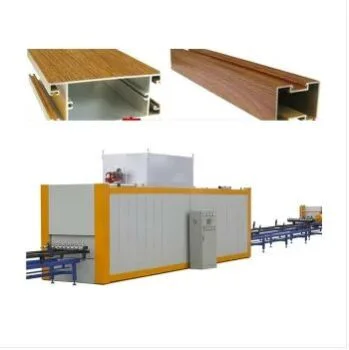
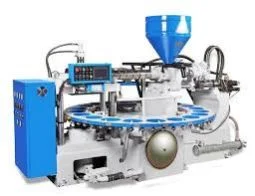
Lucy is based in China and currently lists 53 active products across several industrial segments. The catalogue groups items under categories such as Injection Moulding Machinery, Plastic Processing Machineries, Industrial Machinery, Extrusion Plants, Light & Medium Machinery, Plastic Products, and Building Construction Machineries and Equipments. The product lineup is dominated by blow‑moulding machines for water tanks, jerrycans and road barriers, as well as extrusion lines for HDPE pipe, PVC foam board and WPC profiles. Each entry corresponds to a distinct machine model rather than a finished plastic part, reflecting a focus on equipment supply for secondary processing.
The listed machines fall into the HS‑code families for industrial equipment (e.g., Chapter 84 - 8426 for metal working machines) and for plastic products (Chapter 39 - 3926 for plastic articles). The water‑tank blow‑moulding machines range from 200 L to 10 000 L capacity, while pipe‑extrusion lines cover HDPE, PVC, PPR and twin‑screw configurations. Additional offerings include PVC marble board and foam board production lines, as well as specialty extruders for WPC profiles and construction formwork. The breadth of the catalogue illustrates Lucy’s coverage of both high‑volume extrusion and low‑volume custom blow‑moulding equipment.
Product Range and Specialties of Lucy
Lucy’s catalogue contains water‑tank blow moulding machines sized from 200 L up to 10 000 L, HDPE pipe production lines, PVC twin‑screw pipe lines, PVC marble and foam board lines, and extruders for WPC profiles and construction formwork. In the global market, water‑tank blow moulders are typically rated by chamber volume (liters), melt temperature control (±2 °C), and output rate (kg/h). Buyers often specify HDPE grade 260 or 270 for potable water tanks, meeting ISO 9001‑based quality control and NSF/ANSI 61 for food‑contact safety. Pipe extrusion lines are generally designed to meet ISO 4427 for PE‑based pressure pipes and ASTM D1785 for PVC pipe dimensions, with output capacities expressed in kg/h or metres per hour.
PVC foam board production lines usually target densities between 30 kg/m³ and 45 kg/m³, board thicknesses from 3 mm to 20 mm, and fire‑retardant grades complying with EN 13501‑1. WPC profile extruders are sized by screw diameter (e.g., 80 mm) and can produce profiles with wood‑flour content up to 70 %, often requiring CE marking for construction applications. The equipment specifications listed by Lucy align with these industry benchmarks, providing the key parameters that downstream manufacturers use to size their production capacity.
Trade and Export Information - Lucy
China remains one of the world’s largest exporters of plastic processing machinery, with the majority of shipments destined for Southeast Asia, the Middle East, Africa and Eastern Europe. Machinery in the 8426 HS chapter is generally inspected under the China Compulsory Certification (CCC) system, and importers commonly request ISO 9001, CE and UL certifications to satisfy local regulatory regimes. Shipping of blow‑moulding machines and extrusion lines is typically performed in 20‑ft or 40‑ft containers, with larger turnkey plants requiring flat‑rack or open‑top container arrangements. Customs authorities in importing countries often request a test report confirming compliance with relevant standards such as ISO 14001 for environmental management and the EU REACH registration for plastic additives.
Buyers usually arrange for pre‑shipment inspection by SGS, Bureau Veritas or similar agencies, focusing on machine dimensions, serial numbers and functional testing. For water‑tank blow moulders, import licences may reference the Machinery and Equipment (Safety) Regulations, while pipe‑extrusion lines may be subject to pressure‑equipment directives. Chinese exporters typically provide a commercial invoice, packing list, Bill of Lading, and a CE Declaration of Conformity where applicable.
Sourcing from Lucy - Buyer Guidance
When sourcing equipment from Lucy, buyers should request the machine’s technical data sheet, which must list nominal capacity, power consumption (kW), melt temperature range, and control system type (PLC or CNC). A recent factory audit report confirming ISO 9001 compliance and, where relevant, CE Declaration of Conformity should be obtained before confirming an order. For blow‑moulding machines, ask for a sample tank produced under test conditions to verify wall thickness uniformity (e.g., ±0.5 mm) and material grade certification (HDPE 260).
Pipe‑extrusion lines require verification of output rate (kg/h), pipe dimension tolerances (±0.2 mm) and the presence of a built‑in cooling and haul‑off system meeting ISO 4427. Buyers should also request a functional test video or on‑site demo report, and clarify the warranty period (commonly 12 months) and availability of spare parts kits. Confirm the packaging method - typically wooden crates with E‑track for handling - and the agreed Incoterm (FOB Shanghai or CIF destination port) before finalising logistics.
Frequently Asked Questions About Lucy
What capacity ranges are covered by Lucy’s water‑tank blow moulding machines?
Lucy lists machines for tanks from 200 L up to 10 000 L, with intermediate models such as 500‑1000 L, 1000‑2000 L and 3000‑5000 L capacities.
Which pipe materials can be processed on Lucy’s extrusion lines?
The catalogue includes lines for HDPE pipe, PVC twin‑screw pipe, PPR pipe and a combined PE/PVC/PPR extrusion line.
Are the machines compliant with any international standards?
Lucy does not list specific certifications, so buyers should request ISO 9001 quality‑management certificates and CE declarations where applicable.
What are the typical shipping arrangements for Lucy’s equipment?
Large machines are usually packed in 20‑ft or 40‑ft containers, with oversized plants shipped on flat‑rack or open‑top containers, subject to FOB Shanghai or CIF terms.
What documentation should a buyer request before placing an order?
Technical data sheets, ISO 9001 audit reports, CE Declaration of Conformity (if claimed), test reports for material grades and a pre‑shipment inspection certificate are standard documents.
What are the common lead times for Lucy’s machinery?
Lead times depend on model size but generally range from 30 days for standard blow‑moulding machines to 60‑90 days for complete extrusion plant turnkey projects.
Can Lucy provide sample products made with its machines?
Buyers can ask for a sample water‑tank or pipe produced on the machine under test conditions to verify dimensions, wall thickness and material grade.
What after‑sales support does Lucy typically offer?
While not specified, buyers should confirm warranty length (often 12 months) and the availability of spare‑parts kits and on‑site installation assistance.




 , China