Jinhua Baolin Industry & Trade Co., Ltd. — Supplier
About Jinhua Baolin Industry & Trade Co., Ltd. - Industrial Machinery Supplier in China
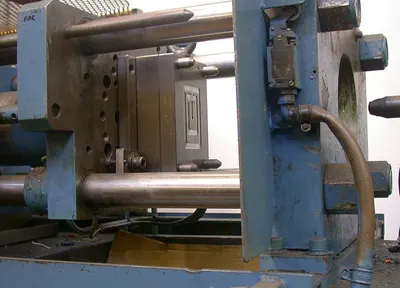
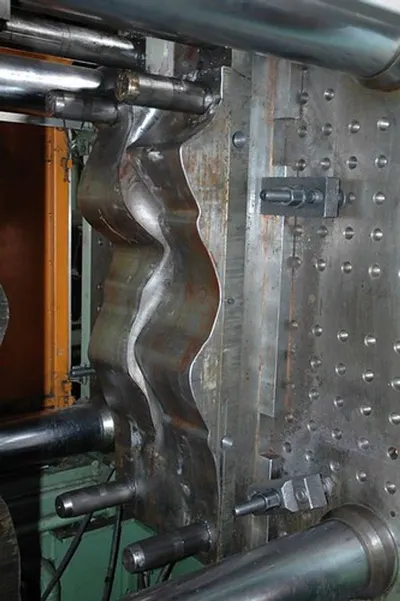
China is the origin of Jinhua Baolin Industry & Trade Co., Ltd., which currently lists five active products in its catalogue. The company focuses on industrial machinery, specifically piston casting equipment used in metal‑foundry operations. Its product portfolio is confined to machines that shape pistons through casting processes, covering a range of cavity configurations. The catalogue is organized under the industrial machinery category without additional product groups. All listed items are classified within the same product family.
Product Range and Specialties of Jinhua Baolin Industry & Trade Co., Ltd.
Piston casting machines are core components of automotive and engine component manufacturers, and they are typically rated by cavity count, hydraulic pressure capacity (often 150‑300 bar), and maximum piston weight (up to 2 kg per cavity). Standard industry specifications include ISO 9001 quality management, CE compliance for EU markets, and adherence to DIN 6603 for casting equipment. Buyers frequently encounter variants such as gravity‑fed versus pressure‑fed designs, with material construction in cast iron or fabricated steel frames. The twin and four‑cavity models listed by the supplier usually operate at cycle times of 30‑45 seconds, while single‑die and salt‑core machines may have longer cycles due to complex core insertion. Automatic machines incorporate PLC controls, enabling repeatable cycle consistency and data logging. In international trade, industrial machinery of this type generally falls under HS chapter 84, which covers nuclear reactors, boilers and machinery.
Trade and Export Information - Jinhua Baolin Industry & Trade Co., Ltd.
China ranks among the top exporters of industrial casting equipment, supplying Europe, Southeast Asia, the Middle East and North America with piston‑casting machines. HS chapter 84 captures these machines for customs reporting, and exporters often declare them under sub‑heading 8479 for other machines. Typical buyer regions require conformity to CE marking for the EU, ISO 9001 certification, and sometimes UL listing for North America. Shipping is usually arranged in 20‑ft or 40‑ft containers with machines crated to withstand vibration, and Incoterms such as FOB Shanghai or CIF major ports are common.
Export documentation often includes a commercial invoice, packing list, certificate of origin, and the relevant quality certificates. Chinese manufacturers also provide inspection reports from agencies like SGS or Bureau Veritas when requested. Because the machines are high‑value, freight is generally organized as full‑container load (FCL) to reduce handling risk, and insurance coverage is standard practice for CIF terms.
Sourcing from Jinhua Baolin Industry & Trade Co., Ltd. - Buyer Guidance
Prospective buyers should request detailed technical datasheets that list cavity dimensions, hydraulic pressure, power consumption, and cycle time for each model. Verification of compliance should include copies of ISO 9001 certification, CE declaration of conformity, and any third‑party inspection reports. It is advisable to obtain engineering drawings and, if possible, a short video of the machine in operation to confirm casting quality and automation level. Buyers should also clarify warranty length, on‑site installation support, and spare‑part availability before placing an order. Confirming the packaging style - reinforced crate or steel frame - and the chosen Incoterm will help avoid unexpected logistics costs.
Frequently Asked Questions About Jinhua Baolin Industry & Trade Co., Ltd.
What piston casting machine models are listed by Jinhua Baolin Industry & Trade Co., Ltd.?
The catalogue includes a Twin Cavity Piston Casting Machine, a Salt Core Piston Casting Machine, a Single Die Piston Casting Machine, a 4 Cavity Piston Casting Machine, and an Automatic Piston Casting Machine. Each model is defined by its cavity count and the method used to form the piston core. The list represents the full range of piston‑casting equipment offered.
Can the machines be adapted to different piston sizes or alloy specifications?
Manufacturers of piston casting equipment typically allow customization of cavity dimensions, stroke length, and hydraulic pressure to accommodate various piston diameters and alloy types. Buyers can submit engineering specifications for review, after which the supplier adjusts the die set and control parameters. Such modifications are reflected in an updated technical datasheet before production.
Which certifications are commonly required for importing piston casting machines?
Importers usually request ISO 9001 quality‑management certification and CE marking for shipments to the European Union. For North American markets, UL or CSA approval may be required, while Asian buyers often look for compliance with local safety standards. The supplier can provide copies of these certificates upon request.
What is the typical lead time from order confirmation to shipment?
Standard models with no custom tooling generally require 8 to 10 weeks from order receipt to factory dispatch. If the buyer specifies custom cavity sizes or automation features, lead time can extend to 12‑16 weeks to accommodate engineering and fabrication. Lead times are confirmed in the sales contract after final design approval.
How are the machines packaged for overseas transport?
Machines are secured in reinforced wooden crates or steel frames that include anti‑shock padding and bracing to protect hydraulic and electrical components. The crates are loaded into 20‑ft or 40‑ft containers, with weight distribution calculated to meet carrier limits. Packaging details are listed on the commercial invoice and packing list.
What are the common payment and shipping terms used for these exports?
Export transactions often employ a Letter of Credit (L/C) at sight or a 30‑day documentary collection, aligned with the buyer’s banking policies. Shipping terms such as FOB Shanghai or CIF destination port are negotiated based on the buyer’s preference and risk allocation. Insurance for the full cargo value is typically arranged under CIF terms.
What documentation should a buyer obtain before finalizing the purchase?
Buyers should request the machine’s technical datasheet, ISO 9001 and CE certificates, a pre‑shipment inspection report, and the full set of engineering drawings. A commercial invoice, packing list, certificate of origin, and bill of lading are required for customs clearance. Keeping these documents on file helps streamline the import process and future after‑sales support.




 , China