Jing Rui Da Display (Shenzhen) Co., Ltd. — Verified Supplier
About Jing Rui Da Display (Shenzhen) Co., Ltd. - LCD Display Supplier in China
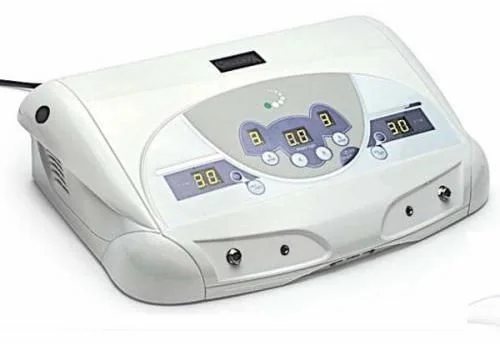
Based in Shenzhen, China, Jing Rui Da Display (Shenzhen) Co., Ltd. lists five active products on the platform. Their catalogue spans three top categories - Agriculture, Car Accessories, and Fitness Equipments - although all five items are LCD‑based display solutions. The product titles include a physiotherapy and fitness equipment display with integrated LCD, a wireless public LCD module, a Bluetooth‑enabled rear‑view mirror display, an LCD panel designed for refrigerator doors, and a TN/HTN LCD module for negative‑segment applications. These items fall within the HS‑code families 8528 (monitors and display units) and 8529 (parts of reception apparatus) that are commonly used for electronic display components.
The listed fitness‑equipment LCD typically integrates a back‑lit panel with a resolution around 800 × 480 pixels and brightness levels of 300 - 500 nits, suitable for indoor exercise machines. The wireless public LCD module is marketed for digital signage and often supports Wi‑Fi connectivity and 5 V power input. The Bluetooth rear‑view mirror display is sized for automotive use, generally 4‑inch diagonal, with a 60 Hz refresh rate and CE/FCC compliance. Refrigerator LCD panels are engineered for low‑temperature operation, rated from - 20 °C to +80 °C. The TN/HTN LCD module is described for high‑speed video or negative‑segment imaging, featuring response times near 2 ms and contrast ratios around 500:1.
Product Range and Specialties of Jing Rui Da Display (Shenzhen) Co., Ltd.
The supplier’s current catalogue comprises five LCD‑based products across three application areas. In the fitness sector, LCD modules are commonly supplied in 7‑ to 10‑inch sizes, with pixel pitches of 0.28 mm, brightness 300 - 500 nits, and viewing angles of 160 degrees. Automotive rear‑view mirror displays usually adopt 4‑inch TFT LCDs, 800 × 480 resolution, and require CE and FCC certification for safety compliance. Refrigerator displays are typically small‑format (3‑inch) panels with low power consumption (≤2 W) and operating temperature ranges that accommodate the interior of cooling appliances. TN and HTN panels used for high‑speed or negative‑segment imaging are characterized by fast response times (≤2 ms), contrast ratios of 500:1 to 800:1, and are often supplied as modules for integration into larger equipment. Across these categories, buyers frequently request specifications such as pixel density (ppi), luminance, power draw, and environmental ratings.
Trade and Export Information - Jing Rui Da Display (Shenzhen) Co., Ltd.
China remains a leading exporter of LCD display modules, with Shenzhen serving as a major manufacturing hub. Export volumes for HS 8528 and HS 8529 categories are directed principally toward North America, the European Union, and rapidly growing markets in Southeast Asia. Importers typically require CE marking for the EU, FCC certification for the United States, and RoHS compliance for electronic waste regulations worldwide. Standard shipping terms from Shenzhen include FOB or CIF, with containers sized 20 ft (≈12 m³) or 40 ft (≈22 m³) capable of holding several thousand small LCD units. Packaging standards involve anti‑static foam, moisture‑absorbing packets, and double‑wall corrugated boxes to protect sensitive screens during transit. Chinese export regulations also mandate a commercial invoice, packing list, and appropriate HS‑code declaration for customs clearance.
Sourcing from Jing Rui Da Display (Shenzhen) Co., Ltd. - Buyer Guidance
When sourcing LCD modules from this supplier, buyers should obtain a detailed datasheet that lists pixel resolution, brightness (nits), contrast ratio, power consumption, operating temperature range, and response time. Request CE, RoHS, and where applicable FCC test reports to verify regulatory compliance. Samples are advisable to assess visual quality, touch responsiveness (if applicable), and integration compatibility; most suppliers ship a single functional unit per model after a non‑disclosure agreement. Verify the minimum order quantity, which for similar Chinese LCD manufacturers ranges from 100 to 500 units, and confirm lead times of 30 - 45 days after order confirmation. Confirm packaging details, including anti‑static protection and moisture control, to reduce risk of damage during sea freight.
Frequently Asked Questions About Jing Rui Da Display (Shenzhen) Co., Ltd.
What LCD sizes are available in the catalogue?
The five listed items cover sizes from roughly 3 inches for refrigerator panels up to 10 inches for fitness‑equipment displays. Exact dimensions are provided in the supplier’s technical sheet for each model.
Which regulatory standards should be verified for these LCD modules?
Buyers should request CE and RoHS declarations for all units, and FCC certification for the Bluetooth rear‑view mirror display if the final market is the United States.
How are the LCD modules packaged for international shipment?
Modules are normally packed in anti‑static foam inserts placed inside double‑wall corrugated boxes, with moisture‑absorbing packets added for temperature‑sensitive units.
What is the typical production lead time?
Similar Chinese LCD manufacturers report a lead time of 30 to 45 days after order confirmation and receipt of any required artwork or firmware.
Can samples be obtained before placing a full order?
The supplier can provide functional samples; standard practice is to ship one unit per model after a signed non‑disclosure agreement.
Which HS codes apply to these products?
LCD display units fall under HS 8528 (monitors and projectors) and HS 8529 (parts of reception apparatus); the exact sub‑heading depends on size and functionality.
Which regions are the main importers of such LCD modules?
The United States, European Union members, and Southeast Asian countries such as Vietnam and Thailand are the primary import markets for Chinese LCD display modules.
What documentation is required for customs clearance of these items?
A commercial invoice, packing list, CE/RoHS test reports, and the correct HS‑code declaration are the standard documents needed for customs processing.




 , China