Hyperion Optics — Verified Supplier
About Hyperion Optics - Photographic & Optical Equipment Supplier in China
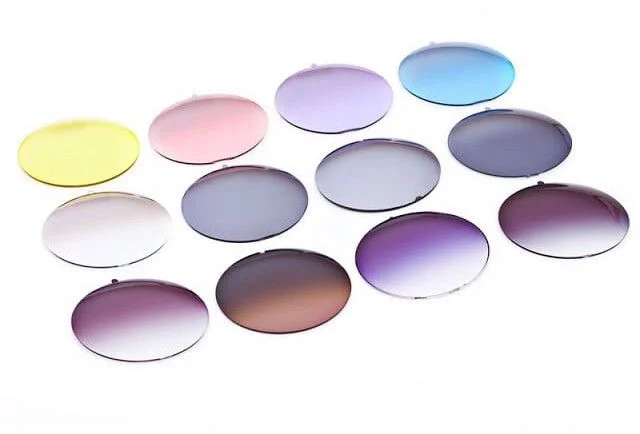
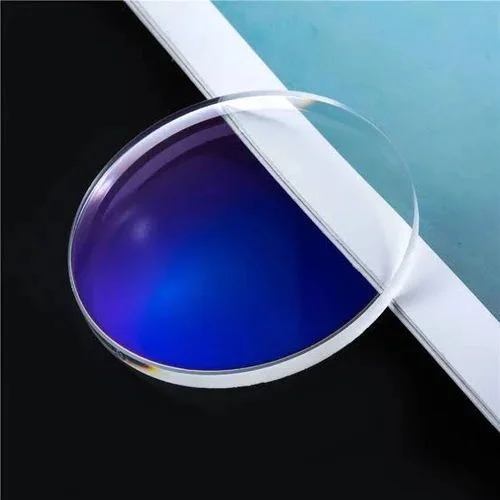
Hyperion Optics is based in China and currently lists eight active products across its catalogue. The supplier's portfolio covers photographic and optical equipment, household mirrors, and optical lenses. Products include achromatic cylindrical lenses, singlet lenses, microsphere lenses, ball and half‑ball lenses, achromatic doublet lenses, standard mirrors, cold and hot mirrors, and concave mirrors. Each item falls under the HS chapter 90 family for optical elements and mirrors. The catalogue does not specify additional product attributes beyond the type.
The eight listed items represent common optical components used in imaging systems, scientific instruments, and consumer mirror applications. Achromatic lenses combine two glass elements to correct chromatic aberration, while singlet lenses are single‑element optics for simple focusing tasks. Microsphere lenses are employed in micro‑optics for high‑resolution imaging. Ball and half‑ball lenses serve in illumination and beam shaping. Cold and hot mirrors are dichroic coatings designed to reflect or transmit specific wavelength bands, and concave mirrors provide converging reflective surfaces.
Product Range and Specialties of Hyperion Optics
Hyperion Optics lists eight specific optical components: achromatic cylindrical lenses, singlet lenses, microsphere lenses, ball and half‑ball lenses, achromatic doublet lenses, standard mirrors, cold and hot mirrors, and concave mirrors. In the optical industry, lenses are typically classified by focal length, diameter, material (e.g., BK7, fused silica), surface quality (scratch‑dig 10‑5), and transmission percentage. Achromatic lenses are commonly supplied in focal lengths from 25 mm to 200 mm with diameters of 12 mm to 50 mm and meet standard chromatic correction grades. Mirrors are generally made from glass or metal substrates with surface flatness of λ/4 or better, and dichroic cold/hot mirrors are coated to achieve reflectance above 95 % in the designated band.
Typical specifications for ball and half‑ball lenses include diameters of 5 mm to 20 mm and a refractive index around 1.5, used in illumination modules. Microsphere lenses are often produced with diameters of 1 µm to 10 µm for sub‑wavelength focusing. Buyers normally request data sheets that detail coating type, wavelength range, substrate material, and environmental tolerance such as - 20 °C to +80 °C.
Trade and Export Information - Hyperion Optics
China is a major exporter of optical elements classified under HS 9002, covering lenses, prisms, mirrors and other glass optical components. Buyers from Europe, North America and Southeast Asia regularly import these items for camera manufacturing, scientific equipment, and lighting applications. Standard export documentation includes commercial invoice, packing list, and certificate of origin; many importers also require an ISO 9001 quality management certificate and product test reports conforming to IEC 61300 for optical coatings.
Typical shipping is performed in 20 ft or 40 ft containers with protective foam or anti‑static bags to prevent damage. Incoterms such as FOB Shanghai or CIF Guangzhou are common. For dichroic mirrors, compliance with REACH and RoHS is frequently requested, especially for EU markets. Exporters from China often work with freight forwarders experienced in handling fragile optical goods to ensure minimal vibration during transport.
Sourcing from Hyperion Optics - Buyer Guidance
When sourcing from Hyperion Optics, buyers should request detailed technical data sheets that specify focal length, diameter, material, surface accuracy, transmission, and coating performance. For mirrors, surface flatness (e.g., λ/4) and reflectivity percentages across the required spectral range should be verified. Sample lenses or mirrors can be requested to assess surface quality and coating adhesion before confirming larger orders.
Buyers are advised to ask for ISO 9001 certification and any test reports that follow IEC 61300 for coating durability. Verify the supplier’s ability to provide custom sizes or coatings if needed, and confirm lead times, which for standard optical components from Chinese manufacturers typically range from 2 to 6 weeks. Packaging specifications should include anti‑static bags, bubble wrap, and sturdy cartons, with clear labeling of HS code 9002 for customs clearance.
Frequently Asked Questions About Hyperion Optics
What types of optical products does Hyperion Optics list?
The catalogue includes achromatic cylindrical lenses, singlet lenses, microsphere lenses, ball and half‑ball lenses, achromatic doublet lenses, standard mirrors, cold and hot mirrors, and concave mirrors.
How can I obtain a sample of a lens or mirror from Hyperion Optics?
Buyers can request a physical sample by contacting the supplier with the specific product name and desired dimensions; most suppliers provide a small quantity for evaluation before a full order.
Which certifications should I request from Hyperion Optics?
Ask for ISO 9001 quality management certification and any product test reports that follow IEC 61300 standards for optical coatings and surface quality.
What are the typical minimum order quantities for these optical components?
Standard optical lenses and mirrors often have MOQs ranging from 100 pieces to 500 pieces, depending on size and coating complexity; custom orders may require higher volumes.
What lead time can I expect for standard lenses?
Lead times for standard, off‑the‑shelf lenses from Chinese manufacturers usually fall between 2 and 6 weeks after order confirmation.
How are the lenses and mirrors packaged for export?
Items are typically packed in anti‑static bags or foam inserts, placed in double‑wall cartons, and loaded into containers with cushioning to protect against vibration.
Which HS code applies to Hyperion Optics' products?
The listed products fall under HS chapter 90, specifically HS code 9002 for lenses, prisms, mirrors and other optical elements of glass.
Which markets commonly import these optical components from China?
Major importers include the United States, Germany, Japan, South Korea and the United Kingdom, primarily for camera systems, scientific instruments, and lighting equipment.




 , China