Fortune Trade Development Hk Co., Ltd — Verified Supplier
About Fortune Trade Development Hk Co., Ltd - Coconut Supplier in Hong Kong
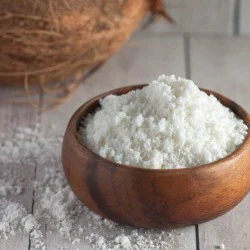
Fortune Trade Development Hk Co., Ltd operates out of Hong Kong and currently lists six active products in its catalogue. The company’s focus is on coconut and coconut by‑products, specifically various grades of desiccated coconut that are commonly classified under HS chapter 08, sub‑heading 0804.20 for desiccated coconut. All six items are differentiated by fat content and particle size, ranging from extra fine high‑fat to low‑fat and shredded grades.
The catalogue includes Extra Fine High‑fat Desiccated Coconut, Low‑Fat Desiccated Coconut, Fine Grade Desiccated Coconut, Desiccated Coconut Medium Grade, a generic Desiccated Coconut entry, and Desiccated Coconut Shred Grade. Each product falls within the broader coconut category and is listed without additional certifications in the supplied facts. The six products together represent the full scope of the supplier’s publicly disclosed coconut offerings.
Product Range and Specialties of Fortune Trade Development Hk Co., Ltd
The listed products cover the typical grade spectrum used by food manufacturers: extra fine high‑fat, fine, medium, low‑fat and shredded. In the desiccated coconut market, extra fine grades usually have a particle size below 0.5 mm and a fat content of 55‑65 %, while low‑fat variants target 45‑55 % fat and moisture below 5 %. Medium grades often have a particle size of 0.5‑1 mm and similar moisture limits. Shredded grades are measured by strand length, often 3‑5 mm, and are used for confectionery and bakery applications. Industry standards such as ISO 22000 for food safety and HACCP procedures are commonly applied to these products, although the supplier’s specific certifications are not listed in the facts.
Trade and Export Information - Fortune Trade Development Hk Co., Ltd
Exporters of desiccated coconut from Hong Kong typically ship to the European Union, the United States, the Middle East and Southeast Asian markets. The HS code 0804.20 is used for customs clearance, and shipments are frequently consolidated in 20‑foot containers holding approximately 25 tonnes (about 500 bags of 20 kg each) or 40‑foot containers with double the volume. Buyers often require certificates of analysis, microbiological test reports, and compliance with food‑safety standards such as ISO 22000, HACCP, and where applicable Halal or Kosher certification. Packaging is usually in multi‑layer polyethylene bags or food‑grade cardboard boxes, sealed to maintain moisture below 6 %. Freight terms commonly employed are FOB Hong Kong or CIF destination port, depending on the buyer’s logistics preferences.
Sourcing from Fortune Trade Development Hk Co., Ltd - Buyer Guidance
When sourcing desiccated coconut from this supplier, buyers should request a recent certificate of analysis that lists moisture, fat, and ash content for each grade. Samples of at least 5 kg per grade allow verification of particle size distribution and sensory attributes before a full order. Verify that the supplier can provide food‑safety documentation such as ISO 22000 or HACCP audit reports, and confirm any additional certifications required for the target market (e.g., Halal, Kosher, organic). Review packaging specifications to ensure the bags meet the buyer’s shelf‑life and transport requirements, and clarify lead times and minimum order quantities, which are typically expressed in full 20‑kg bags.
Frequently Asked Questions About Fortune Trade Development Hk Co., Ltd
What grades of desiccated coconut does Fortune Trade Development Hk Co., Ltd list?
The catalogue includes Extra Fine High‑fat, Low‑Fat, Fine Grade, Medium Grade, a generic Desiccated Coconut entry and a Shred Grade. Each grade is differentiated by fat content and particle size.
Which HS code is used for these coconut products?
Desiccated coconut products are classified under HS code 0804.20, which covers shredded, flaked or other processed coconut.
What typical specifications should a buyer verify for desiccated coconut?
Buyers usually check moisture content (≤6 %), fat content (45‑65 % depending on grade), particle size or strand length, and microbial limits such as total plate count and coliforms.
Are food‑safety certifications required for importing desiccated coconut?
Importers commonly require ISO 22000 or HACCP certification, and may also request Halal, Kosher or organic certificates depending on the destination market.
What packaging formats are standard for these products?
Standard packaging is food‑grade polyethylene bags of 20 kg, often stacked in cardboard cartons for container loading. Moisture‑barrier liners are used to keep the product dry.
What container capacity can be expected for a shipment?
A 20‑foot container typically holds about 25 tonnes of desiccated coconut (roughly 500 bags of 20 kg), while a 40‑foot container can accommodate double that volume.
How should a buyer request a sample?
Buyers should ask for a minimum of 5 kg of the specific grade, accompanied by a recent certificate of analysis, to evaluate moisture, fat and particle size before confirming a full order.
What documentation should be confirmed before placing an order?
Confirm the latest certificate of analysis, food‑safety audit report (ISO 22000 or HACCP), and any market‑specific certifications such as Halal or Kosher, as well as packaging and labeling compliance.




 , Hong Kong