C&E kitchenware — Verified Supplier
About C&E kitchenware - Kitchenware & Cooking Supplier in China
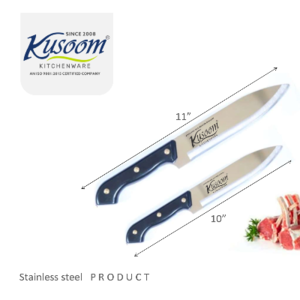
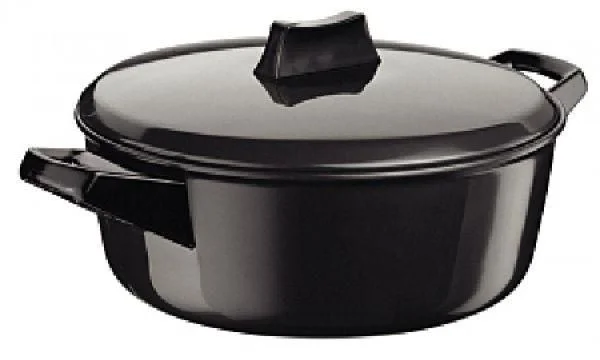
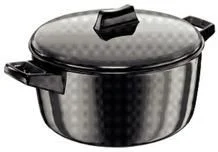
China‑based C&E kitchenware lists five active products in its catalogue. The items cover stainless steel kitchen knife set, a classic enamel Dutch oven, a Black&Gold stainless steel flatware set, a stainless steel non‑stick saucepan and stainless steel silicone kitchen utensils. All products fall under the broader categories of stainless steel utensils and kitchenware & cooking, matching the supplier’s declared top categories. The catalogue does not include any other product families, and the supplier’s trust tier is recorded as “harbor”.
The knife set consists of stainless‑steel blades with typical lengths between 15 cm and 20 cm, while the flatware set includes forks, spoons and knives made from stainless steel. The Dutch oven features an enamel coating on a steel body, and the saucepan combines a stainless‑steel base with a PTFE‑based non‑stick surface. The silicone utensils are equipped with stainless‑steel heads and silicone handles that resist temperatures up to about 230 °C. No additional product specifications are provided beyond these descriptions.
Product Range and Specialties of C&E kitchenware
The catalogue’s five items represent common segments of stainless‑steel kitchenware. In the industry, knife sets are usually made from 18/10 (or 304) stainless steel to balance corrosion resistance and edge retention. Enamel‑coated cookware such as Dutch ovens typically uses a steel core with a vitreous enamel layer that meets food‑contact standards. Flatware sets are often supplied in 18/10 or 18/8 grades and finished with polished or brushed surfaces. Non‑stick saucepans generally employ a stainless‑steel base with a PTFE or ceramic coating, and silicone kitchen utensils combine stainless‑steel tools with silicone grips rated for 200‑230 °C. Buyers commonly see these products packaged in export cartons, with 20‑ft containers holding roughly 200 - 250 flatware sets or 150 - 180 knife sets, depending on packaging density.
Trade and Export Information - C&E kitchenware
China is one of the world’s largest exporters of stainless‑steel kitchenware, supplying North America, the European Union, the Middle East and Southeast Asian markets. Typical importers require compliance with food‑safety regulations such as the EU’s LFGB, the United States’ FDA food‑contact provisions, and international standards like ISO 9001 for quality management. Commonly requested certifications include NSF International, CE marking for the EU, and SGS inspection reports. Export shipments are usually arranged under FOB or CIF Incoterms, packed in export‑grade cartons on wooden pallets, and loaded into 20‑ft or 40‑ft containers with moisture‑resistant liners to protect enamel finishes.
Sourcing from C&E kitchenware - Buyer Guidance
When sourcing from C&E kitchenware, buyers should request a material data sheet that specifies the stainless‑steel grade (e.g., 18/10, 304) for each product. Test reports for food‑contact safety, such as heavy‑metal migration and non‑stick coating durability, are standard documents to verify before order confirmation. Samples of the knife edge, enamel adhesion, and silicone heat resistance can be requested to assess quality, and buyers should confirm that any certifications (ISO 9001, NSF, CE) are up‑to‑date and applicable to the target market.
Frequently Asked Questions About C&E kitchenware
What stainless‑steel grades are used in the knife set and flatware?
The catalogue does not state the exact grade, but industry practice for knives and flatware is 18/10 (approximately 70 % iron, 18 % chromium, 10 % nickel) or 304 stainless steel. Buyers should request a grade certificate to confirm the material.
Is the enamel coating on the Dutch oven food‑safe?
Enamel cookware intended for food contact must meet FDA or EU LFGB standards. Request the supplier’s enamel compliance test report to verify safety.
Which certifications can the supplier provide for these products?
No certifications are listed in the supplied facts. Typical certifications for stainless‑steel kitchenware include ISO 9001, NSF, CE marking and SGS inspection reports; buyers should ask the supplier to supply any that apply.
How are the silicone kitchen utensils tested for heat resistance?
Silicone handles are usually tested to withstand temperatures up to 230 °C in accordance with ASTM D412 or ISO 11357. Ask for a heat‑resistance test report.
What packaging formats are used for export?
Products are generally packed in export cartons, placed on wooden pallets, and loaded into 20‑ft or 40‑ft containers. Carton dimensions are typically 600 mm × 400 mm × 300 mm for flatware sets.
What is the typical minimum order quantity (MOQ) for each product?
The facts do not specify an MOQ. In this segment, suppliers often set MOQs of 500 units for knives, 300 units for flatware sets, and 200 units for cookware, but the exact figure should be confirmed with the supplier.
What lead time should a buyer expect from order to shipment?
Lead times for stainless‑steel kitchenware from Chinese manufacturers usually range from 30 to 60 days, depending on order size and any required certifications.
What documentation is needed for customs clearance of these goods?
Standard documentation includes a commercial invoice, packing list, certificate of origin, and any applicable food‑contact safety certificates. If the buyer’s market requires CE or LFGB compliance, the relevant test reports should be attached.




 , China