Agriculture›
Apparel and fashion accessories›
Construction & real estate›💡Electronic & Electrical›🍎Food & Beverages›🛋️Home furnishing & supplies›⚗️Industrial goods & chemical›🪨Minerals & metals›📦Miscellaneous›
Agriculture›
Apparel and fashion accessories›
Construction & real estate›💡Electronic & Electrical›🍎Food & Beverages›🛋️Home furnishing & supplies›⚗️Industrial goods & chemical›🪨Minerals & metals›📦Miscellaneous›

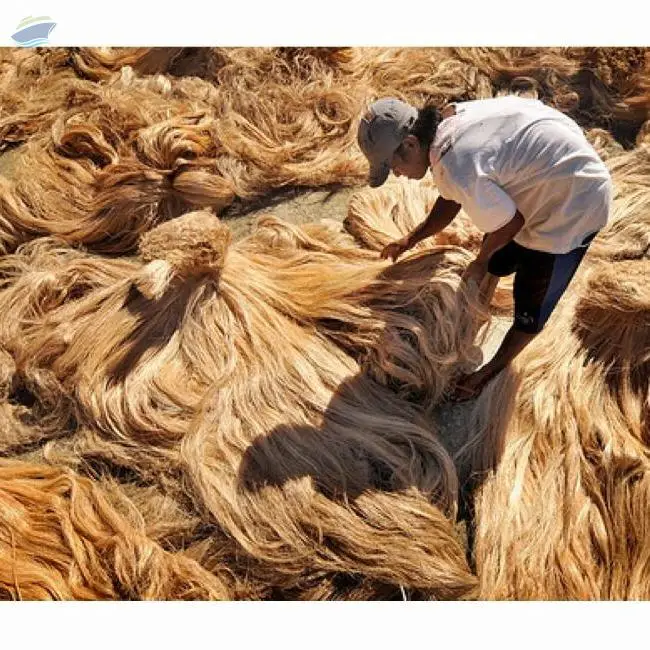
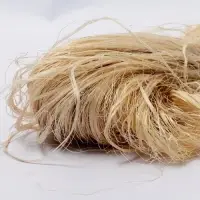
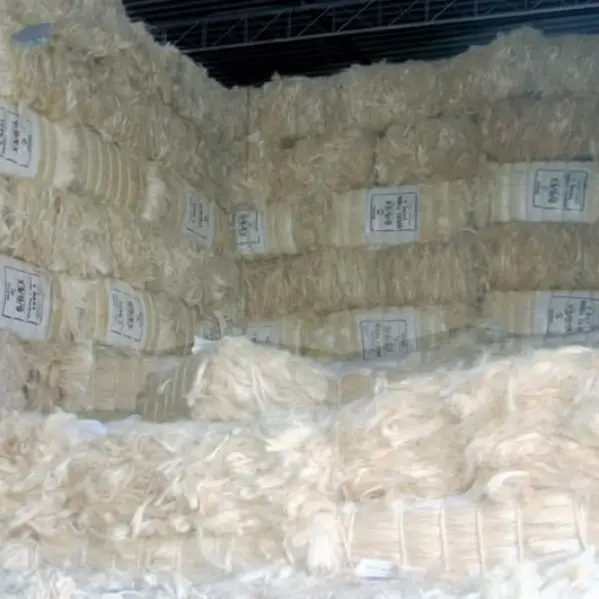
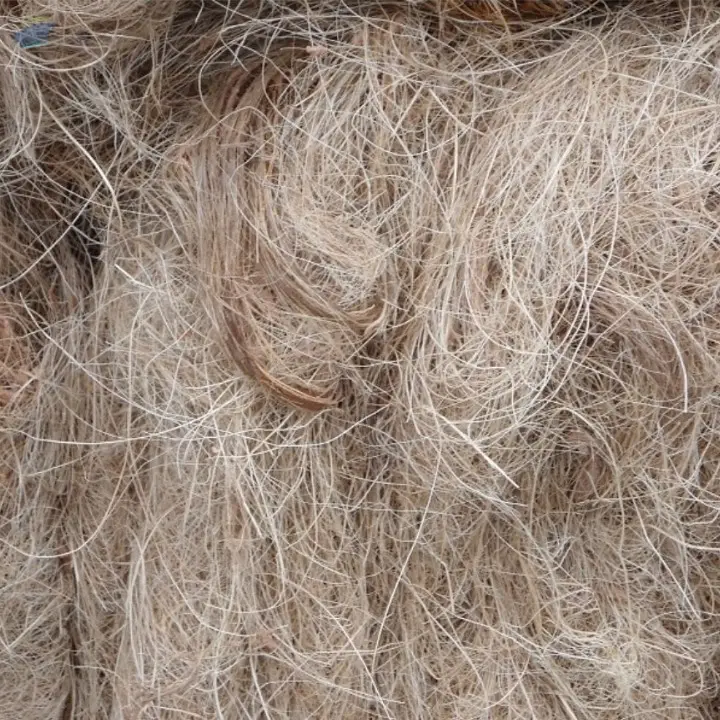
PT. Sumber Rezeki Utama Fajar produces abaca fiber from Musa textilis Nee, a banana species cultivated specifically for its extraction-grade bast fibers. The raw material reaches maturity at 18 to 24 months and yields two to three harvests annually, with each hectare producing between 1,000 and 2,000 kilograms of fiber. The extracted fibers measure 1.5 to 2.5 meters in length and are classified as mechanically strong, a property that positions them favorably against synthetic alternatives in demanding applications. The supplier's monthly production capacity stands at 6,000 kilograms, sourced from approximately 300 hectares of farmland in the Talaud Region of North Sulawesi Province.
The fiber derives from the leaf sheaths of the abaca plant, where bundles of cellulose-rich vascular tissue are separated from the pith through a combination of hand-stripping and mechanical processing. Cellulose content in abaca bast fiber typically ranges from 60 to 70 percent, with lignin at 8 to 13 percent and hemicellulose at 17 to 22 percent, giving the material its characteristic strength-to-weight ratio and resistance to saltwater degradation. The supplier also maintains development plots in Pandeglang (Banten), Ambon (Maluku), and Malang (East Java), diversifying their cultivation base across Indonesia's archipelago. Standard industry practice grades abaca fiber by color, cleanliness, and tensile performance, with premium lots exhibiting minimal bark and uniform golden-brown hue.
Primary buyers include manufacturers of specialty papers (currency, tea bag, and filter papers), marine cordage producers, and composite material fabricators seeking natural fiber reinforcement. The textile and handicraft sectors utilize abaca for woven floor coverings, wall panels, and fashion accessories. Trade terms specify FOB Tanjung Priuk Port, Jakarta, with transactions denominated in US dollars. Sample quantities of 10 kilograms minimum are available at buyer expense, shipped by air. Export documentation includes Certificate of Origin, Phytosanitary Certificate, and Fumigation Certificate. Container loads accommodate 8,000 kilograms in a 20-foot unit or 16,000 kilograms in a 40-foot unit.
| Botanical Source | Musa textilis Nee (Abaca Banana) |
| Plant Maturity at Harvest | 18 - 24 months |
| Annual Harvest Frequency | 2 - 3 times per year |
| Fiber Yield per Hectare | 1,000 - 2,000 kg/ha (supplier-stated) |
| Fiber Length | 1.5 - 2.5 meters |
| Mechanical Strength Grade | Stronger (supplier classification) |
| Monthly Production Capacity | 6,000 kilograms |
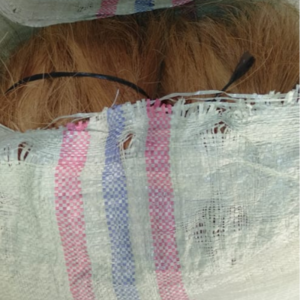
| Bale Weight | 125 kg/bale |
| Bale Dimensions | 100 cm x 60 cm x 60 cm |
| Container 20' Capacity | 8,000 kg (typical loading) |
| Container 40' Capacity | 16,000 kg (typical loading) |
| HS Code | 5305.00.23 |
| Primary Cultivation Area | Talaud Region, North Sulawesi Province |
| Development Areas | Pandeglang (Banten); Ambon (Maluku); Malang (East Java) |
| Export Documentation | Certificate of Origin, Phytosanitary Certificate, Fumigation Certificate |
| Port of Loading | Tanjung Priuk Port, Jakarta |
| Incoterms | FOB (Incoterms 2020) |
| Currency | US Dollar |
| Sample Minimum | 10 kg (cost borne by buyer, air delivery) |
PT. Sumber Rezeki Utama Fajar operates from Cluster Puri Permata 1 Blok G No. 2 in Larangan Selatan, Larangan, Kota Tangerang, Indonesia. The supplier holds organic tier status and voyage trust tier classification within the marketplace system. The response rate stands at 0.00 percent with zero average response hours recorded, indicating that prospective buyers should anticipate direct outreach rather than platform-mediated rapid response. The company's cultivation operations center on approximately 300 hectares in the Talaud Region of North Sulawesi, with additional development across three other Indonesian provinces.
The supplier's listed contact is Mr. Mochammad Fajar, reachable by mobile and WhatsApp at 62-878-8004-5445. The business model appears oriented toward made-to-order production rather than spot-market sales, with estimated time to port of loading contingent upon receipt of signed sales contract and purchase order. The profile does not indicate factory audit certifications, ISO accreditation, or third-party verification status. Buyers should independently verify production capacity claims, actual fiber grading protocols, and quality consistency across harvest batches before committing to volume orders.
| Business Type | Supplier |
| Year Established | Recently Joined |
| Employees | Contact Supplier |
| Annual Revenue | Contact Supplier |
| Main Products | View Products Tab |
| Major Markets | Global |
| Response Time | <4h |
| Response Rate | New Supplier |
Before placing an order with PT. Sumber Rezeki Utama Fajar, verify the supplier's legal registration (NPWP and SIUP in Indonesia), bank account authenticity, and whether the Talaud farmland ownership is documented or leased. Request a current phytosanitary certificate sample and confirm the certifying authority is recognized by your country's import regulator. Given the 0.00 percent platform response rate, conduct a video factory or farm inspection via direct contact, and request references from prior export buyers with contactable details. Validate that the fiber grading system used matches your application requirements, as abaca for currency paper demands stricter cleanliness standards than cordage-grade fiber.
Logistics planning requires confirmation of actual lead times from contract signature to port of loading at Tanjung Priuk, Jakarta. The supplier states ETD depends on receiving signed sales contract and purchase order, so build contingency into your supply chain. FOB terms place ocean freight, marine insurance, and destination charges on the buyer; negotiate whether loading costs at Tanjung Priuk are included. Payment terms are unstated, so propose a structure that balances risk, such as 30 percent advance with 70 percent against shipping documents, or utilize documentary credit for initial transactions. Container bookings for 20-foot (8,000 kg) or 40-foot (16,000 kg) loads should account for Indonesian port congestion patterns, particularly during monsoon months when Tanjung Priuk throughput may slow.
Quality assurance on arrival should include sampling from multiple bales for moisture content (target below 12 percent to prevent mold), color uniformity, and absence of bark or foreign matter. Engage an independent inspection agency (SGS, Bureau Veritas, or local Indonesian equivalent) for pre-shipment inspection at the packing location or at port. Documentation review must cover the Certificate of Origin, Phytosanitary Certificate, and Fumigation Certificate for completeness and authenticity. For ongoing supply relationships, establish a retained sample protocol comparing each shipment against an approved reference sample, with agreed tolerance limits for fiber length distribution, moisture, and visual grade.
Active buying requirements from importers looking for Similar products

Compare alternatives, find similar products and connect with verified suppliers
When sourcing Abaca Fiber for your business, securing the right balance of quality and cost is essential. PT. Sumber Rezeki Utama Fajar, a verified supplier based in Indonesia, offers this product for international export. By purchasing directly from the manufacturer or authorized exporter, buyers can negotiate favorable FOB prices starting at $5.3/Bags and manage bulk orders with a minimum order quantity (MOQ) of 1 Bags. This product is a staple in the Textile Fibers sector with strong demand from importing countries worldwide.
Importing Abaca Fiber requires careful attention to shipping logistics, customs compliance, and secure payment terms. PT. Sumber Rezeki Utama Fajar offers flexible shipping options such as Full Container Load (FCL) or Less than Container Load (LCL) via sea freight. Common payment methods for international B2B transactions include Letter of Credit (L/C), Telegraphic Transfer (T/T), and Documents against Payment (D/P). All transactions and RFQs are facilitated through EximNext, a leading online B2B marketplace designed to make cross-border trade secure and efficient.
Finding trustworthy partners is the foundation of successful importing. The supplier of this Abaca Fiber has been verified on our platform. Whether you are a distributor, wholesaler, or procurement manager, you can request a free quotation, ask for product samples, and finalize your bulk purchase with confidence. EximNext hosts thousands of verified manufacturers and exporters across 200+ countries. Explore similar products in the Textile Fibers category and connect with top-tier exporters on our comprehensive B2B marketplace. Start your sourcing journey today.
Importing Abaca Fiber requires careful attention to shipping logistics, customs compliance, and secure payment terms. Common shipping options include Full Container Load (FCL) or Less than Container Load (LCL) via sea freight. Buyers should verify import duties in their destination country. Common payment methods include Letter of Credit (L/C), Telegraphic Transfer (T/T), and Documents against Payment (D/P).
The current listed wholesale price for Abaca Fiber from PT. Sumber Rezeki Utama Fajar is $5.3/Bags on FOB terms from Indonesia. Prices may vary depending on order volume, packaging, and destination. For the most accurate bulk quote, send a direct RFQ to PT. Sumber Rezeki Utama Fajar through EximNext.
The supplier, PT. Sumber Rezeki Utama Fajar, has set a Minimum Order Quantity (MOQ) of 1 Bags for Abaca Fiber. For sample requests or smaller trial orders, contact the supplier directly through our platform's inquiry system.
The HS Code classification for Abaca Fiber depends on the specific grade and form. Contact PT. Sumber Rezeki Utama Fajar through EximNext for the exact HS Code and customs documentation required for your destination country.
To import Abaca Fiber from Indonesia, negotiate shipping terms (FOB, CIF, or EXW) directly with PT. Sumber Rezeki Utama Fajar. Ensure you have the necessary import licenses for Textile Fibers products in your destination country.
Yes, PT. Sumber Rezeki Utama Fajar is a verified supplier on EximNext. You can view their complete company profile, business registration details, certifications, and export history before placing a bulk order.
For a complete technical data sheet or Certificate of Analysis (COA), send an inquiry directly to PT. Sumber Rezeki Utama Fajar through EximNext.
PT. Sumber Rezeki Utama Fajar offers Abaca Fiber with standard export packaging. Custom packaging, private labeling, and OEM/ODM options may also be available for large wholesale orders.
Abaca Fiber is actively imported by buyers worldwide. Request a destination-specific CIF or CFR quote from PT. Sumber Rezeki Utama Fajar through our platform.
PT. Sumber Rezeki Utama Fajar maintains international quality certifications. These ensure that the Abaca Fiber meets international quality, safety, and regulatory standards required for cross-border trade.
Click "Request Quotation" on this product page, specify your required quantity, preferred shipping terms, and destination country. PT. Sumber Rezeki Utama Fajar will respond with a detailed wholesale quote including FOB pricing, lead time, and payment options.
Common payment methods include Letter of Credit (L/C), Telegraphic Transfer (T/T), Documents against Payment (D/P), and Escrow services. Confirm accepted terms directly with PT. Sumber Rezeki Utama Fajar.
Discover more products in Textile Fibers from verified suppliers worldwide.