Xinqi Chemical Plant — Supplier

About Xinqi Chemical Plant - Industrial Chemicals Supplier in China

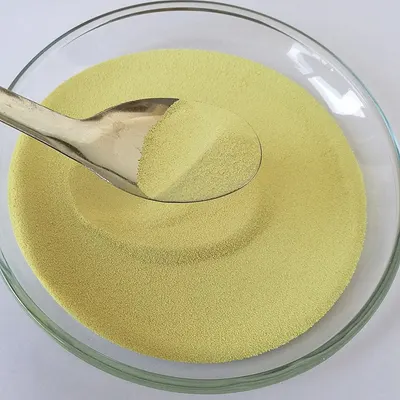
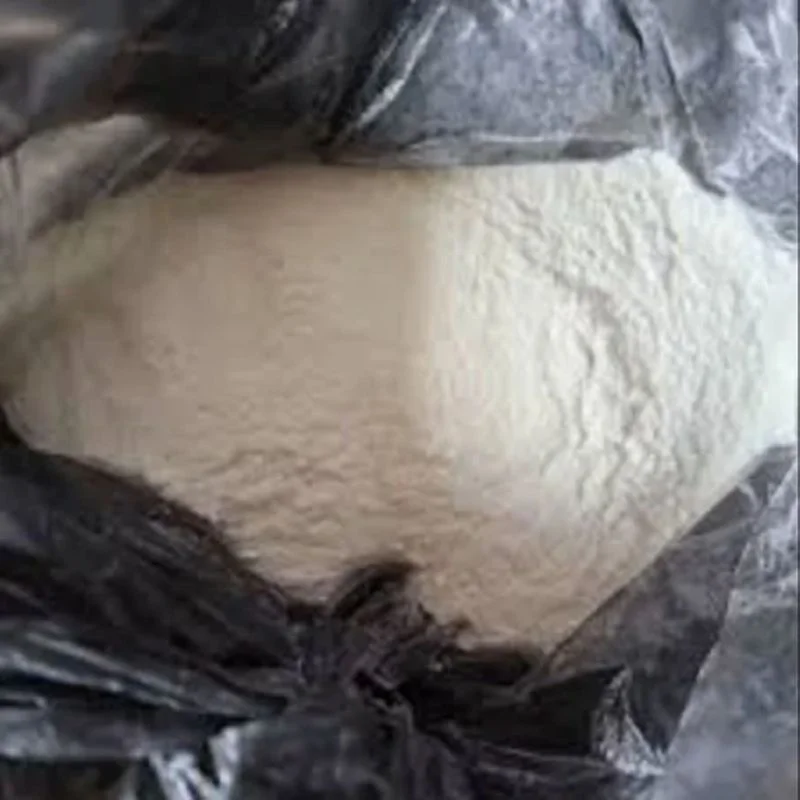
Xinqi Chemical Plant is located in China and currently lists five distinct chemical products in its catalogue. The company classifies its offerings under the categories Chemicals & Allied Products and Industrial Chemicals. The listed items include an anionic polyacrylamide flocculant (HS 3908.90), a cationic polyacrylamide powder (HS 3908.10), a light‑yellow polyaluminium chloride powder (HS 3824.99), a non‑ionic polyacrylamide powder (HS 3906.90) and a white polyaluminium chloride powder (HS 2828.90). Each product entry specifies the primary material, such as anionic polyacrylamide polymer or polyaluminium chloride with 28‑30 % Al₂O₃. The catalogue does not provide additional corporate details beyond the product list.

The five products cover water‑treatment and flocculation applications. APAM and NPAM are water‑soluble polymers used as flocculants, while CPAM provides cationic charge for sludge conditioning. The two PAC variants are aluminum‑based coagulants with a defined Al₂O₃ content. HS codes place the polymer products in chapter 39 (organic chemicals) and the PAC products in chapters 38 and 28 (inorganic chemicals). No further manufacturing capacity or certification information is supplied.

Product Range and Specialties of Xinqi Chemical Plant

Xinqi’s catalogue lists APAM, NPAM, and CPAM as polymer powders, each supplied as a dry powder. In the broader market, anionic polyacrylamide is commonly offered in molecular weights ranging from 1 × 10⁶ to 10 × 10⁶ g mol⁻¹ and charge densities of 10‑30 % for flocculation efficiency. Cationic polyacrylamide typically appears with a degree of cationic charge between 5‑30 % and molecular weights of 0.5‑5 × 10⁶ g mol⁻¹. Non‑ionic polyacrylamide grades are often characterized by low charge and are used where a neutral polymer is required.

The two PAC products are described as powders with an Al₂O₃ content of 28‑30 %. Industry specifications for polyaluminium chloride usually require an Al₂O₃ content of 28‑30 % and a moisture content below 5 % to ensure consistent coagulant performance. PAC is typically shipped in 25 kg or 1 ton bulk bags, and buyers often request a certificate of analysis confirming Al₂O₃ percentage and particle size distribution.

Trade and Export Information - Xinqi Chemical Plant

China is a major exporter of water‑treatment chemicals, and shipments of polyacrylamide polymers and PAC are frequently directed to South‑East Asian, African, and European markets. The HS‑8 codes 3908, 3906, 3824 and 2828 are monitored by customs authorities for compliance with REACH, GHS, and local environmental regulations. Buyers usually require a Material Safety Data Sheet (MSDS) and, where applicable, proof of compliance with the EU’s Regulation on the Registration, Evaluation, Authorisation and Restriction of Chemicals (REACH).

Typical packaging for the listed powders includes 25 kg polypropylene bags for polymers and 1 ton bulk bags for PAC, allowing consolidation into a 20‑foot container (approximately 20‑24 tons) or a 40‑foot container (up to 40 tons). Commonly requested certifications include ISO 9001 quality management, third‑party test reports, and, for PAC, a certificate of analysis confirming Al₂O₃ content. Incoterms such as FOB Shanghai or CIF Los Angeles are standard for these bulk chemical shipments.

Sourcing from Xinqi Chemical Plant - Buyer Guidance

When sourcing from Xinqi Chemical Plant, buyers should request the latest MSDS, a detailed product specification sheet, and a certificate of analysis for each batch. For polymer products, specifications to verify include molecular weight, charge density (for APAM and CPAM), moisture content, and particle size distribution; for PAC, the Al₂O₃ percentage and moisture level are critical.

Typical minimum order quantities for polymer powders range from 1 metric ton, while PAC is often ordered in 5‑10 metric‑ton increments. Lead times of 30‑45 days are common for production and packaging. Buyers are advised to confirm the agreed HS code, packaging dimensions, and any required pre‑shipment inspections before finalising the contract.

Frequently Asked Questions About Xinqi Chemical Plant

What types of polyacrylamide does Xinqi offer?

Xinqi lists an anionic polyacrylamide (APAM) under HS 3908.90, a cationic polyacrylamide powder (CPAM) under HS 3908.10, and a non‑ionic polyacrylamide (NPAM) under HS 3906.90.

What is the typical Al₂O₃ content for the PAC products?

Both PAC powders are specified with an Al₂O₃ content of 28‑30 %, which aligns with standard industry specifications for polyaluminium chloride coagulants.

Which documentation should a buyer request before purchasing?

Buyers should request a Material Safety Data Sheet, a product specification sheet, and a certificate of analysis that confirms key parameters such as molecular weight for polymers or Al₂O₃ percentage for PAC.

What are the common packaging formats for these chemicals?

Polymer powders are generally packed in 25 kg polypropylene bags, while PAC powders are commonly shipped in 1 ton bulk bags; both can be consolidated into 20‑foot or 40‑foot containers.

What HS codes are associated with Xinqi’s products?

The catalogue assigns HS 3908.90 to APAM, HS 3908.10 to CPAM, HS 3906.90 to NPAM, HS 3824.99 to the light‑yellow PAC, and HS 2828.90 to the white PAC.

Which certifications are typically required for these chemical exports?

Importers usually ask for ISO 9001 quality management certification, third‑party test reports, and REACH or GHS compliance documentation, although Xinqi’s specific certifications are not listed.

What are typical lead times and minimum order quantities?

Standard lead times are 30‑45 days, with minimum order quantities of about 1 metric ton for polymer powders and 5‑10 metric tons for PAC, depending on the buyer’s requirements.

Featured Products from this Supplier

Other Suppliers in Primary Category

Top Trusted Suppliers

Related Products

Trending in Parent Category

More Suppliers in Category

Related Products

Other Suppliers

EximNext
7.1K+ live requirements
Register Free🎁 Reach global buyers
Post Requirement
🌍 Trusted by 225K+ businesses in 200+ countries|
7.1K+ active requirements right now
✉️ [email protected]
|
Sell on EximNextPost Requirement
EximNext
AgricultureApparelConstructionElectronicFoodHomeIndustrialMineralsMiscellaneous
🔥 Deals|✨ AI Match|🏭 Suppliers|📋 Buy Leads|💰 Trade Finance
7.1K+ live RFQs·194.8K+ suppliers
🎁 Reach global buyers →
EximNext
EximNext
Register Free
🎁 Reach global buyers
Sign In
📋Post Requirement💬Get Quotes✨AI Match📋RFQ Marketplace
All Categories
Services & Tools
🏭Supplier Directory🔥Today's Deals💰Trade Finance
Sell on EximNext →
AboutContactBlogHelp
Chemicals & Materials  ·  China
5
products listed

Xinqi Chemical Plant

⚓ Harbor
Country flag , ChinaNew supplier / no reviews yet
🛡️
54/100
Trust Score

Xinqi Chemical Plant Product Catalog

Showing 5 of 5 products
View all products →
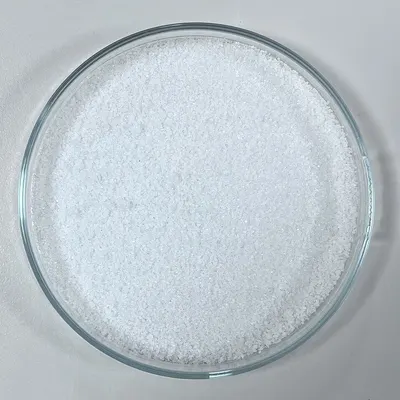
White Powder Nonionic Polyacrylamide NPAM
⚓ Harbor
White Powder Nonionic Polyacrylamide NPAM
Contact
MOQ: 1 Unit
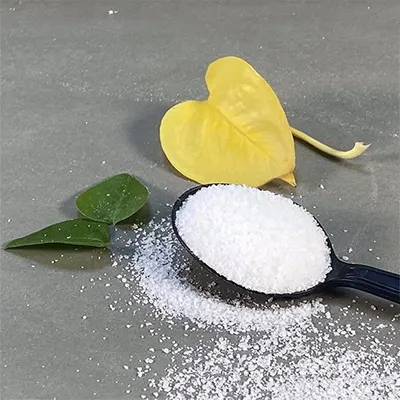
White Powder Polyaluminium Chloride PAC
⚓ Harbor
White Powder Polyaluminium Chloride PAC
Contact
MOQ: 1 Unit
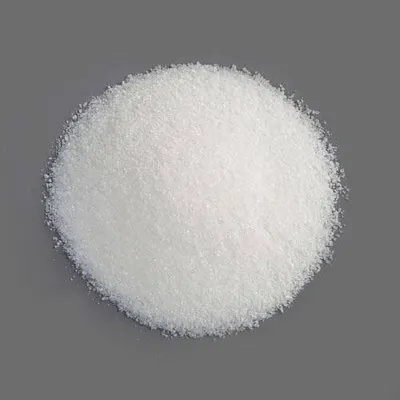
Flocculant Anionic Polyacrylamide APAM
⚓ Harbor
Flocculant Anionic Polyacrylamide APAM
Contact
MOQ: 1 Unit
Polymer Powder Cationic Polyacrylamide CPAM
⚓ Harbor
Polymer Powder Cationic Polyacrylamide CPAM
Contact
MOQ: 1 Unit
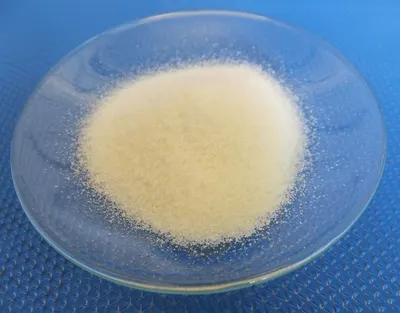
Light Yellow Powder Polyaluminium Chloride PAC
⚓ Harbor
Light Yellow Powder Polyaluminium Chloride PAC
Contact
MOQ: 1 Unit

About Xinqi Chemical Plant - Industrial Chemicals Supplier in China

Xinqi Chemical Plant is located in China and currently lists five distinct chemical products in its catalogue. The company classifies its offerings under the categories Chemicals & Allied Products and Industrial Chemicals. The listed items include an anionic polyacrylamide flocculant (HS 3908.90), a cationic polyacrylamide powder (HS 3908.10), a light‑yellow polyaluminium chloride powder (HS 3824.99), a non‑ionic polyacrylamide powder (HS 3906.90) and a white polyaluminium chloride powder (HS 2828.90). Each product entry specifies the primary material, such as anionic polyacrylamide polymer or polyaluminium chloride with 28‑30 % Al₂O₃. The catalogue does not provide additional corporate details beyond the product list.

The five products cover water‑treatment and flocculation applications. APAM and NPAM are water‑soluble polymers used as flocculants, while CPAM provides cationic charge for sludge conditioning. The two PAC variants are aluminum‑based coagulants with a defined Al₂O₃ content. HS codes place the polymer products in chapter 39 (organic chemicals) and the PAC products in chapters 38 and 28 (inorganic chemicals). No further manufacturing capacity or certification information is supplied.

Product Range and Specialties of Xinqi Chemical Plant

Xinqi’s catalogue lists APAM, NPAM, and CPAM as polymer powders, each supplied as a dry powder. In the broader market, anionic polyacrylamide is commonly offered in molecular weights ranging from 1 × 10⁶ to 10 × 10⁶ g mol⁻¹ and charge densities of 10‑30 % for flocculation efficiency. Cationic polyacrylamide typically appears with a degree of cationic charge between 5‑30 % and molecular weights of 0.5‑5 × 10⁶ g mol⁻¹. Non‑ionic polyacrylamide grades are often characterized by low charge and are used where a neutral polymer is required.

The two PAC products are described as powders with an Al₂O₃ content of 28‑30 %. Industry specifications for polyaluminium chloride usually require an Al₂O₃ content of 28‑30 % and a moisture content below 5 % to ensure consistent coagulant performance. PAC is typically shipped in 25 kg or 1 ton bulk bags, and buyers often request a certificate of analysis confirming Al₂O₃ percentage and particle size distribution.

Trade and Export Information - Xinqi Chemical Plant

China is a major exporter of water‑treatment chemicals, and shipments of polyacrylamide polymers and PAC are frequently directed to South‑East Asian, African, and European markets. The HS‑8 codes 3908, 3906, 3824 and 2828 are monitored by customs authorities for compliance with REACH, GHS, and local environmental regulations. Buyers usually require a Material Safety Data Sheet (MSDS) and, where applicable, proof of compliance with the EU’s Regulation on the Registration, Evaluation, Authorisation and Restriction of Chemicals (REACH).

Typical packaging for the listed powders includes 25 kg polypropylene bags for polymers and 1 ton bulk bags for PAC, allowing consolidation into a 20‑foot container (approximately 20‑24 tons) or a 40‑foot container (up to 40 tons). Commonly requested certifications include ISO 9001 quality management, third‑party test reports, and, for PAC, a certificate of analysis confirming Al₂O₃ content. Incoterms such as FOB Shanghai or CIF Los Angeles are standard for these bulk chemical shipments.

Sourcing from Xinqi Chemical Plant - Buyer Guidance

When sourcing from Xinqi Chemical Plant, buyers should request the latest MSDS, a detailed product specification sheet, and a certificate of analysis for each batch. For polymer products, specifications to verify include molecular weight, charge density (for APAM and CPAM), moisture content, and particle size distribution; for PAC, the Al₂O₃ percentage and moisture level are critical.

Typical minimum order quantities for polymer powders range from 1 metric ton, while PAC is often ordered in 5‑10 metric‑ton increments. Lead times of 30‑45 days are common for production and packaging. Buyers are advised to confirm the agreed HS code, packaging dimensions, and any required pre‑shipment inspections before finalising the contract.

Frequently Asked Questions About Xinqi Chemical Plant

What types of polyacrylamide does Xinqi offer?

Xinqi lists an anionic polyacrylamide (APAM) under HS 3908.90, a cationic polyacrylamide powder (CPAM) under HS 3908.10, and a non‑ionic polyacrylamide (NPAM) under HS 3906.90.

What is the typical Al₂O₃ content for the PAC products?

Both PAC powders are specified with an Al₂O₃ content of 28‑30 %, which aligns with standard industry specifications for polyaluminium chloride coagulants.

Which documentation should a buyer request before purchasing?

Buyers should request a Material Safety Data Sheet, a product specification sheet, and a certificate of analysis that confirms key parameters such as molecular weight for polymers or Al₂O₃ percentage for PAC.

What are the common packaging formats for these chemicals?

Polymer powders are generally packed in 25 kg polypropylene bags, while PAC powders are commonly shipped in 1 ton bulk bags; both can be consolidated into 20‑foot or 40‑foot containers.

What HS codes are associated with Xinqi’s products?

The catalogue assigns HS 3908.90 to APAM, HS 3908.10 to CPAM, HS 3906.90 to NPAM, HS 3824.99 to the light‑yellow PAC, and HS 2828.90 to the white PAC.

Which certifications are typically required for these chemical exports?

Importers usually ask for ISO 9001 quality management certification, third‑party test reports, and REACH or GHS compliance documentation, although Xinqi’s specific certifications are not listed.

What are typical lead times and minimum order quantities?

Standard lead times are 30‑45 days, with minimum order quantities of about 1 metric ton for polymer powders and 5‑10 metric tons for PAC, depending on the buyer’s requirements.

About Xinqi Chemical Plant - Industrial Chemicals Supplier in China

Xinqi Chemical Plant is located in China and currently lists five distinct chemical products in its catalogue. The company classifies its offerings under the categories Chemicals & Allied Products and Industrial Chemicals. The listed items include an anionic polyacrylamide flocculant (HS 3908.90), a cationic polyacrylamide powder (HS 3908.10), a light‑yellow polyaluminium chloride powder (HS 3824.99), a non‑ionic polyacrylamide powder (HS 3906.90) and a white polyaluminium chloride powder (HS 2828.90). Each product entry specifies the primary material, such as anionic polyacrylamide polymer or polyaluminium chloride with 28‑30 % Al₂O₃. The catalogue does not provide additional corporate details beyond the product list.

The five products cover water‑treatment and flocculation applications. APAM and NPAM are water‑soluble polymers used as flocculants, while CPAM provides cationic charge for sludge conditioning. The two PAC variants are aluminum‑based coagulants with a defined Al₂O₃ content. HS codes place the polymer products in chapter 39 (organic chemicals) and the PAC products in chapters 38 and 28 (inorganic chemicals). No further manufacturing capacity or certification information is supplied.

Product Range and Specialties of Xinqi Chemical Plant

Xinqi’s catalogue lists APAM, NPAM, and CPAM as polymer powders, each supplied as a dry powder. In the broader market, anionic polyacrylamide is commonly offered in molecular weights ranging from 1 × 10⁶ to 10 × 10⁶ g mol⁻¹ and charge densities of 10‑30 % for flocculation efficiency. Cationic polyacrylamide typically appears with a degree of cationic charge between 5‑30 % and molecular weights of 0.5‑5 × 10⁶ g mol⁻¹. Non‑ionic polyacrylamide grades are often characterized by low charge and are used where a neutral polymer is required.

The two PAC products are described as powders with an Al₂O₃ content of 28‑30 %. Industry specifications for polyaluminium chloride usually require an Al₂O₃ content of 28‑30 % and a moisture content below 5 % to ensure consistent coagulant performance. PAC is typically shipped in 25 kg or 1 ton bulk bags, and buyers often request a certificate of analysis confirming Al₂O₃ percentage and particle size distribution.

Trade and Export Information - Xinqi Chemical Plant

China is a major exporter of water‑treatment chemicals, and shipments of polyacrylamide polymers and PAC are frequently directed to South‑East Asian, African, and European markets. The HS‑8 codes 3908, 3906, 3824 and 2828 are monitored by customs authorities for compliance with REACH, GHS, and local environmental regulations. Buyers usually require a Material Safety Data Sheet (MSDS) and, where applicable, proof of compliance with the EU’s Regulation on the Registration, Evaluation, Authorisation and Restriction of Chemicals (REACH).

Typical packaging for the listed powders includes 25 kg polypropylene bags for polymers and 1 ton bulk bags for PAC, allowing consolidation into a 20‑foot container (approximately 20‑24 tons) or a 40‑foot container (up to 40 tons). Commonly requested certifications include ISO 9001 quality management, third‑party test reports, and, for PAC, a certificate of analysis confirming Al₂O₃ content. Incoterms such as FOB Shanghai or CIF Los Angeles are standard for these bulk chemical shipments.

Sourcing from Xinqi Chemical Plant - Buyer Guidance

When sourcing from Xinqi Chemical Plant, buyers should request the latest MSDS, a detailed product specification sheet, and a certificate of analysis for each batch. For polymer products, specifications to verify include molecular weight, charge density (for APAM and CPAM), moisture content, and particle size distribution; for PAC, the Al₂O₃ percentage and moisture level are critical.

Typical minimum order quantities for polymer powders range from 1 metric ton, while PAC is often ordered in 5‑10 metric‑ton increments. Lead times of 30‑45 days are common for production and packaging. Buyers are advised to confirm the agreed HS code, packaging dimensions, and any required pre‑shipment inspections before finalising the contract.

Frequently Asked Questions About Xinqi Chemical Plant
What types of polyacrylamide does Xinqi offer?
Xinqi lists an anionic polyacrylamide (APAM) under HS 3908.90, a cationic polyacrylamide powder (CPAM) under HS 3908.10, and a non‑ionic polyacrylamide (NPAM) under HS 3906.90.
What is the typical Al₂O₃ content for the PAC products?
Both PAC powders are specified with an Al₂O₃ content of 28‑30 %, which aligns with standard industry specifications for polyaluminium chloride coagulants.
Which documentation should a buyer request before purchasing?
Buyers should request a Material Safety Data Sheet, a product specification sheet, and a certificate of analysis that confirms key parameters such as molecular weight for polymers or Al₂O₃ percentage for PAC.
What are the common packaging formats for these chemicals?
Polymer powders are generally packed in 25 kg polypropylene bags, while PAC powders are commonly shipped in 1 ton bulk bags; both can be consolidated into 20‑foot or 40‑foot containers.
What HS codes are associated with Xinqi’s products?
The catalogue assigns HS 3908.90 to APAM, HS 3908.10 to CPAM, HS 3906.90 to NPAM, HS 3824.99 to the light‑yellow PAC, and HS 2828.90 to the white PAC.
Which certifications are typically required for these chemical exports?
Importers usually ask for ISO 9001 quality management certification, third‑party test reports, and REACH or GHS compliance documentation, although Xinqi’s specific certifications are not listed.
What are typical lead times and minimum order quantities?
Standard lead times are 30‑45 days, with minimum order quantities of about 1 metric ton for polymer powders and 5‑10 metric tons for PAC, depending on the buyer’s requirements.

Xinqi Chemical Plant
Country flag China
⚓ HarborChemicals & Materials
54/100
Trust Score
5
Products
✓ Free to contact — no commission
✓ Escrow payment available
✓ Verified business identity
Compare more suppliers
Post a requirement — get 10 quotes free
Let verified suppliers compete for your business. Free, fast, no commitment.
Due Diligence
Verify this supplier's real shipping history.
Every shipment, every buyer, every port. Trade data that can't be faked.
Run due diligence →
Discover More

Related Suppliers & Products

Explore similar suppliers, related products and trending categories

Featured Products from this Supplier

Other Suppliers in Primary Category

Top Trusted Suppliers

Related Products

Trending in Parent Category

More Suppliers in Category

Stay ahead in global trade
Weekly market insights & new supplier alerts.
EximNext
Exim Next is a leading global B2B marketplace, connecting over 220,000 registered suppliers and buyers across 200+ countries. As a trusted import export marketplace, it serves as the essential B2B portal for businesses worldwide, empowering them to expand their international reach. With Exim Next, businesses can trade smarter and grow faster.
SECURE PAYMENTS
VISAMastercardPayPalSWIFTL/CEscrow
Follow us
© 2026 EximNext